How Often Should You Trim Trees? A Schedule by Species
How often to trim trees in Northern California: pruning intervals for oaks, redwoods, fruit trees and fast-growing evergreens. Call (213) 468-5153.
Why Pruning Frequency Depends on Species, Age & Location
One of the most common questions Peninsula homeowners ask our arborists is: 'How often should I have my trees trimmed?' The short answer is that there is no universal, one-size-fits-all calendar for tree pruning. A fast-growing blue gum eucalyptus towering over a property line demands vastly different care than a slow-growing century-old heritage valley oak or an ornamental Japanese maple.
Pruning frequency is determined by four primary biological and operational variables: botanical species growth rates, maturity stage (young training vs mature maintenance), structural proximity to high-value targets (roofs, chimneys, utility drops), and microclimate wind exposure. Establishing an evidence-based pruning cycle preserves tree health, prevents storm failures, and saves thousands of dollars in unnecessary cutting. Understanding tree biology—specifically how trees store starches in root zones and compartmentalize pruning wounds (CODIT)—ensures cuts promote long-term structural resilience rather than decay.
Need Hands-On Arborist Help in Redwood City?
Call (213) 468-5153 to speak directly with our team. We provide rapid emergency dispatch and free written estimates across San Mateo County.
Native Oaks (Coast Live Oak & Valley Oak): 3 to 5 Year Cycle
California native oaks are resilient, slow-growing hardwoods adapted to Mediterranean drought cycles. Over-pruning native oaks is far more damaging than under-pruning:
• Recommended Maintenance Frequency: Mature coast live oaks and valley oaks should be professionally evaluated and pruned every 3 to 5 years. Cyclical care should focus on selective crown thinning (removing no more than 15% to 20% of live foliage), end-weight reduction on long heavy horizontal limbs, and eliminating deadwood over 2 inches in diameter. Pruning cuts must preserve the branch collar and branch bark ridge without flush-cutting. • Strict Seasonal Pruning Windows: Never prune native oaks during spring (March through June) when sap flow attracts wood-boring bark beetles and Phytophthora ramorum spores. Schedule oak maintenance during deep winter dormancy (December–February) or mid-summer dry periods (July–August). Never expose interior scaffold limbs to sudden summer sun scald through over-thinning.
Coast Redwoods (Sequoia sempervirens): 3 to 5 Year Cycle
Redwoods grow rapidly in height while accumulating significant deadwood along lower and interior branch scaffolding:
• Recommended Pruning Frequency: Suburban landscape redwoods benefit from structural trimming every 3 to 5 years. Pruning should focus on removing interior deadwood, maintaining 10-foot vertical clearance away from residential rooflines and solar panels, and inspecting upper crowns for co-dominant stems and heavy bark inclusions. • Avoid Heavy Crown Thinning: Unlike hardwoods, redwoods should never undergo aggressive interior crown thinning, which removes foliage needed to buffer against wind loads and traps moisture. Pruning should focus on deadwood removal, clearance from buildings, and selective thinning of competing leaders to reduce wind sail.
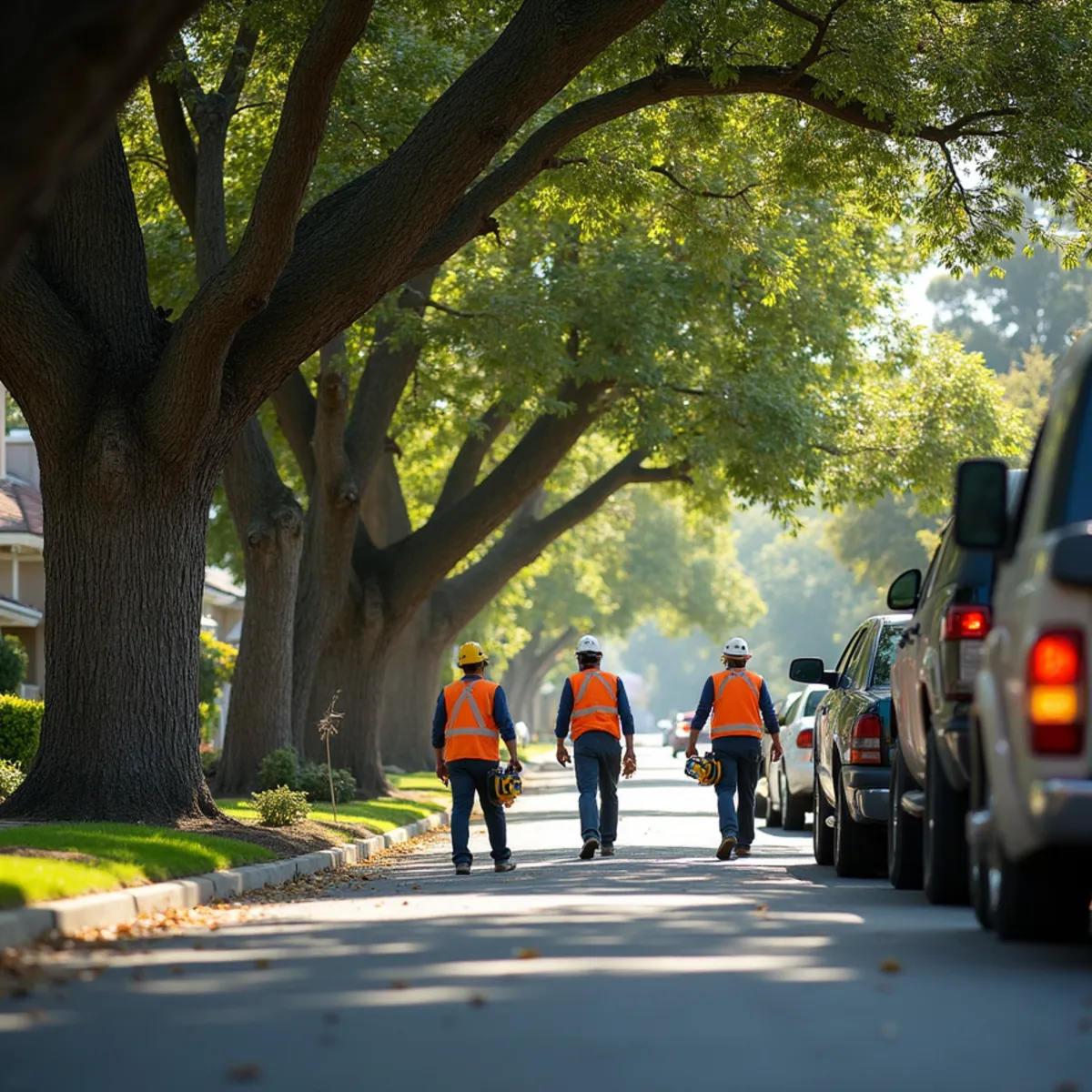
Fast-Growing Deciduous Hardwoods: 2 to 3 Year Cycle
Common Peninsula landscape hardwoods—including Liquidambar (American sweetgum), red maples, sycamores, birch, and Chinese pistache—are vigorous seasonal growers:
• Recommended Pruning Frequency: These species require structural maintenance every 2 to 3 years. Rapid annual shoot elongation produces crowded interior water sprouts, narrow branch angles, and crossing limbs that rub and create wound entries for fungal cankers. • Winter Dormant Pruning: Deciduous hardwoods are ideally pruned in mid-winter after complete autumn leaf drop. Bare canopies allow climbers to identify defective branch unions, decay cavities, and structural imbalances easily. Neglecting regular structural thinning allows top-heavy co-dominant leaders to form, which can tear out during gusty winter storms.
High-Risk Pyrogenic Trees: 1 to 2 Year Cycle
Fast-growing softwoods and volatile pyrogenic species require frequent cyclical maintenance to mitigate extreme property risks:
• Blue Gum Eucalyptus (1 to 2 Years): Because eucalyptus can push 4 to 8 feet of shoot growth annually and sheds massive scaffold limbs in summer, biennial safety trimming and end-weight reduction are vital. • Monterey Pine & Cypress (2 to 3 Years): Aging coastal pines require deadwood elimination and pitch canker hazard inspections every 2 years to prevent storm blow-down. • Domestic Fruit Trees (Annual Winter Pruning): Deciduous fruit trees (apple, peach, plum, apricot) require annual winter structural shaping and spur thinning to stimulate productive fruit yields and maintain manageable ladder heights.
Creating a Proactive Tree Care Calendar for Your Property
Rather than guessing when to call a tree crew, partner with an ISA Certified Arborist to establish a customized multi-year property maintenance calendar:
Our team conducts comprehensive on-site tree evaluations across Redwood City, San Carlos, and San Mateo. We inspect every mature tree on your parcel, provide an itemized species-by-species maintenance schedule, and coordinate pruning visits during optimal biological windows. This proactive strategy ensures your urban canopy remains beautiful, healthy, and storm-resilient for generations. We maintain digital records of every pruning cycle, tracking tree vigor and canopy development over decades. Proactive cyclical maintenance prevents catastrophic canopy failures, lowers lifetime tree care costs, and ensures your trees comply with local municipal codes.
Related Services & Coverage Areas
Related Services
Nearby Service Areas
Frequently Asked Questions
Trimming mature shade trees annually strips away essential photosynthetic foliage, depleting starch reserves and triggering weak epicormic shoot growth. Most mature shade trees should only be pruned every 3 to 5 years.
Schedule Your Tree Assessment Today
Call (213) 468-5153 for prompt arborist inspections, permit assistance, and transparent estimates in Redwood City and the Peninsula.