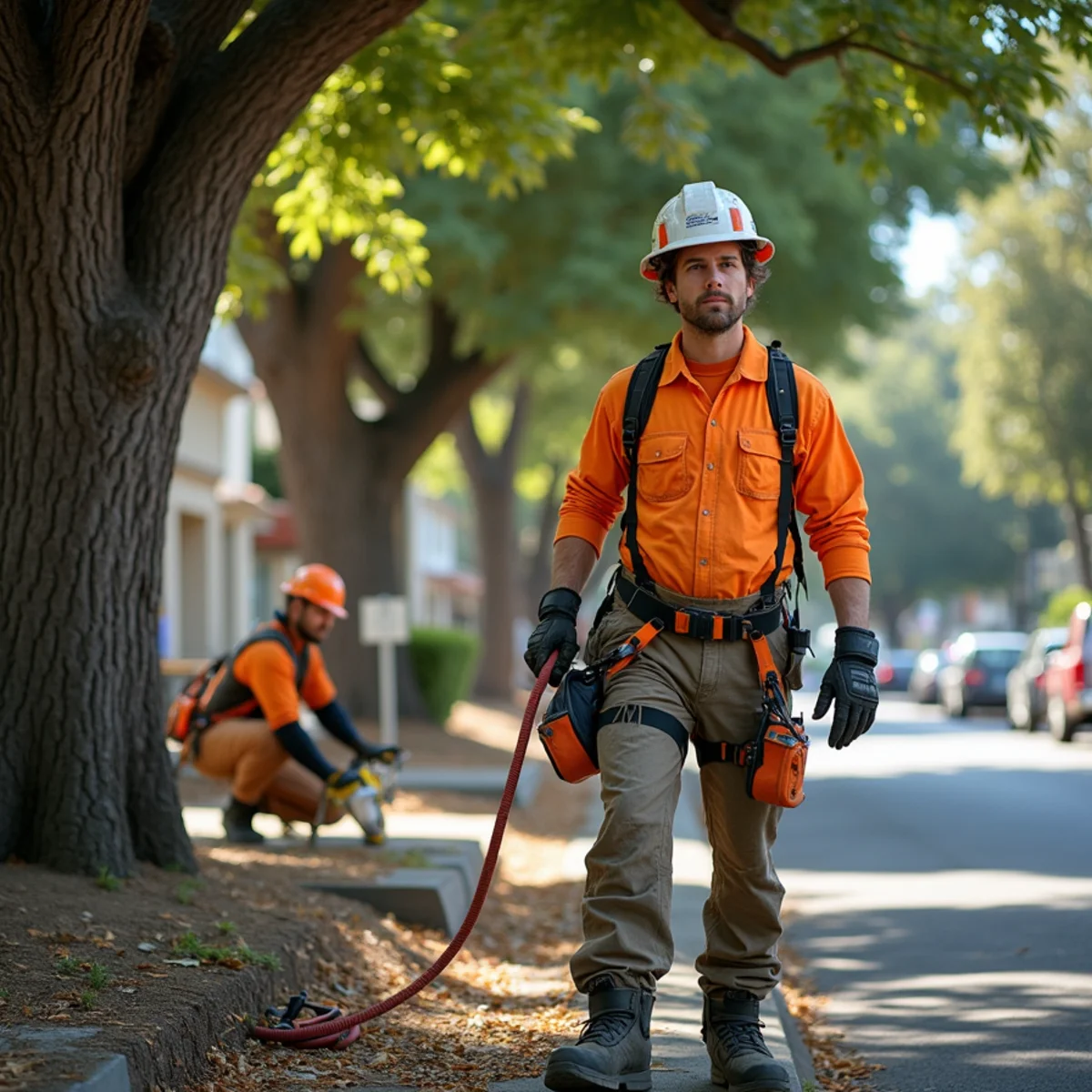
Identifying the Symptoms: When Is Tree Service Redwood City Necessary in Redwood City?
Common Signs & Warning Indicators
- Overgrown branches rubbing against asphalt shingles, cedar shake roofs, stucco siding, or solar panels
- Cracked, splitting, or dead limbs hanging under tension in mature coast live oak, coast redwood, or eucalyptus canopies
- Aggressive surface roots lifting concrete sidewalks, brick driveways, or invading residential foundation perimeters
- Basal decay, fungal conks, or hollow trunk resonances signaling compromised structural integrity
- Severe tree lean and soil upheaval developing after winter atmospheric river storms and saturated clay soils
Local Peninsula Environmental Triggers
Redwood City sits in a distinct geographic transition zone between San Francisco Bay marshlands and the steep Santa Cruz Mountain foothills. Wet winter atmospheric rivers saturate expansive clay soils, causing shallow root systems of mature Monterey pines and blue gum eucalyptus to heave on hillside slopes in Emerald Hills and Farm Hill. Conversely, hot Mediterranean summers create severe moisture stress, triggering sudden limb drops in eucalyptus and making native coast live oaks vulnerable to wood-boring bark beetles and sudden oak death. Meanwhile, dense residential tracts in Woodside Plaza, Friendly Acres, and Redwood Shores bring tight rooflines, underground utilities, and overhead power service drops that leave zero tolerance for uncontrolled falling timber.
Under California law and local municipal ordinances, property owners bear legal responsibility for hazardous trees that threaten adjacent roadways, sidewalks, power lines, or neighboring structures. Early intervention by an ISA Certified Arborist prevents emergency failures during severe coastal weather.
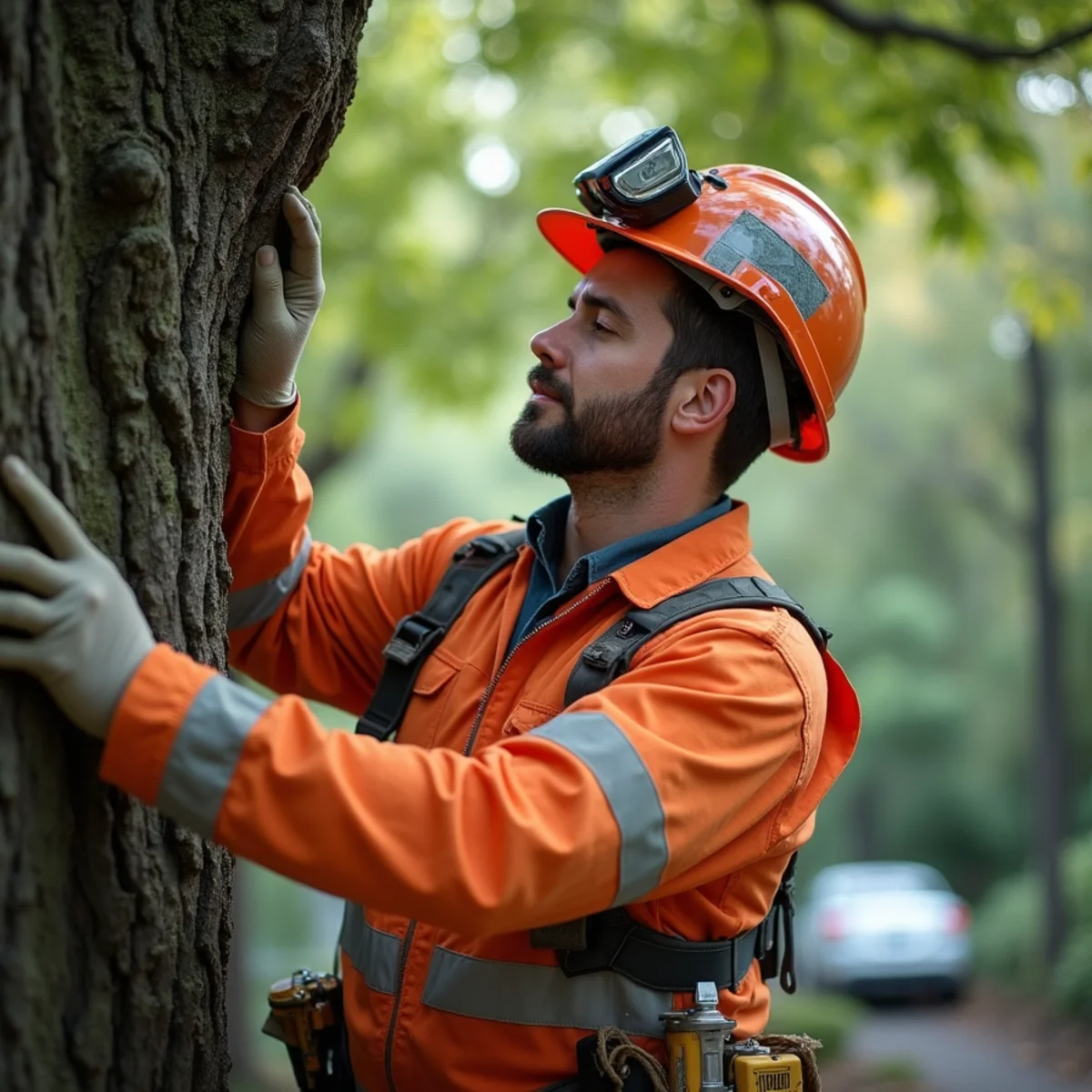
What to Do First: The First-30-Minutes Tree Emergency Checklist
When a storm strikes or a tree fails, prioritize human safety before initiating cleanup. Follow these essential field steps:
Action Checklist Before Cleanup
- 1Evacuate the immediate drop zone and move family members, tenants, pets, and visitors away from leaning trunks, split branches, and structural impact areas.
- 2Scan for downed, sagging, or severed overhead power lines from a minimum 30-foot perimeter. Never touch tree limbs, fences, parked vehicles, or standing water near wires.
- 3Contact PG&E or call 911 immediately if energized power lines, utility sparking, active fire, or blocked public roads are involved before any tree crew initiates extraction.
- 4Capture wide-angle and close-up photographs of the tree failure, structural impacts, property boundaries, and access corridors from safe ground-level vantage points.
- 5Refrain from climbing onto roofs, pulling on suspended limbs, driving beneath leaning timber, or operating chainsaws under complex branch tension.
- 6Notify your homeowner insurance provider prior to major debris removal to confirm photo requirements, deductible rules, and adjuster inspection timelines.
- 7Call our local Redwood City dispatch line at (213) 468-5153 with species details, lean angle, structural targets, and driveway or backyard gate dimensions.
What to Tell Our Dispatcher
Having these property details ready helps us deploy the appropriate crane, rigging blocks, or line-clearance equipment immediately:
- Exact address and neighborhood (e.g., Emerald Hills hillside, Woodside Plaza tract, or Redwood Shores waterfront lot).
- Hazard classification: standing leaning tree, severed split trunk, limb resting on roof, or timber entangled in service drop.
- Structure and target status: whether living areas, driveways, sidewalks, or neighbor property lines are impacted.
- Physical property access: gate widths, hillside driveway slope grades, flagstone walkways, or overhead obstructions.
- Photos and video: whether clear images can be texted safely to (213) 468-5153 for rapid remote equipment triage.
Common Tree Hazards in Redwood City: Causes, Signs & Immediate Safety Steps
Use this diagnostic reference to identify hazardous structural conditions and coordinate safe next steps without putting family or property at risk:
| Cause | Warning Signs | Immediate Response | Who to Call | Documentation |
|---|---|---|---|---|
| Power-line contact or utility line proximity | Branches, trunk, or debris touching wires; sparking; damaged transformer pole; energized-looking fencing or vehicles | Keep everyone back at least 30 feet; do not touch branches or metal fences; block pedestrian access from a safe distance | Call PG&E and emergency services (911) first; then call our qualified line-clearance tree team | Photograph exclusively from safe distance; note time, street address, and affected utility service drop |
| Severe wind, rain, or atmospheric river failure | Split primary trunk, massive hanging bough, uprooted root ball, blocked driveway, roof or car impact | Evacuate impact rooms immediately; do not climb onto roof or operate chainsaws; secure property perimeter | Call 911 if structural collapse or life safety is threatened; call (213) 468-5153 for emergency tree extraction | Capture wide-angle ground photos showing failure point, structural framing damage, and yard access routes |
| Hillside root instability & soil saturation | Soil mounding or cracking at trunk base, exposed sheared roots, sudden tree lean, shifting retaining wall | Keep all individuals away from downhill trajectory; avoid parking vehicles or operating equipment near root zone | Contact our ISA Certified Arborist team immediately at (213) 468-5153 for structural stability assessment | Take photos from multiple uphill and side angles; document recent rainfall saturation and slope angle |
| Deadwood, fungal decay, or heavy branch overhang | Large dead limbs, cracked heavy branch unions, bracket fungi (conks) on trunk flare, recurring unprovoked branch drop | Cordon off ground area beneath canopy spread; avoid parking or walking under canopy during windy weather | Schedule an on-site arborist evaluation for selective crown thinning or deadwood removal | Photograph upper canopy architecture, bark inclusion crevices, and proximity to building rooflines |
| Excavation, vehicle impact, or construction conflict | Severed anchor roots after trenching, severe trunk bark gouging, leaning toward house following foundation work | Halt all construction machinery and excavation near root protection zone; restrict access to impact sector | Call our arborist to inspect tree vitality and Redwood City Public Works if protected tree permits apply | Photograph trench proximity to trunk, severed root diameters, and overall canopy condition prior to disturbance |
Request an On-Site Assessment for Tree Service Redwood City
Speak with our local Redwood City dispatch team at (213) 468-5153 to discuss your tree situation and schedule an arborist evaluation.
Our Methodological Standards for Tree Service Redwood City
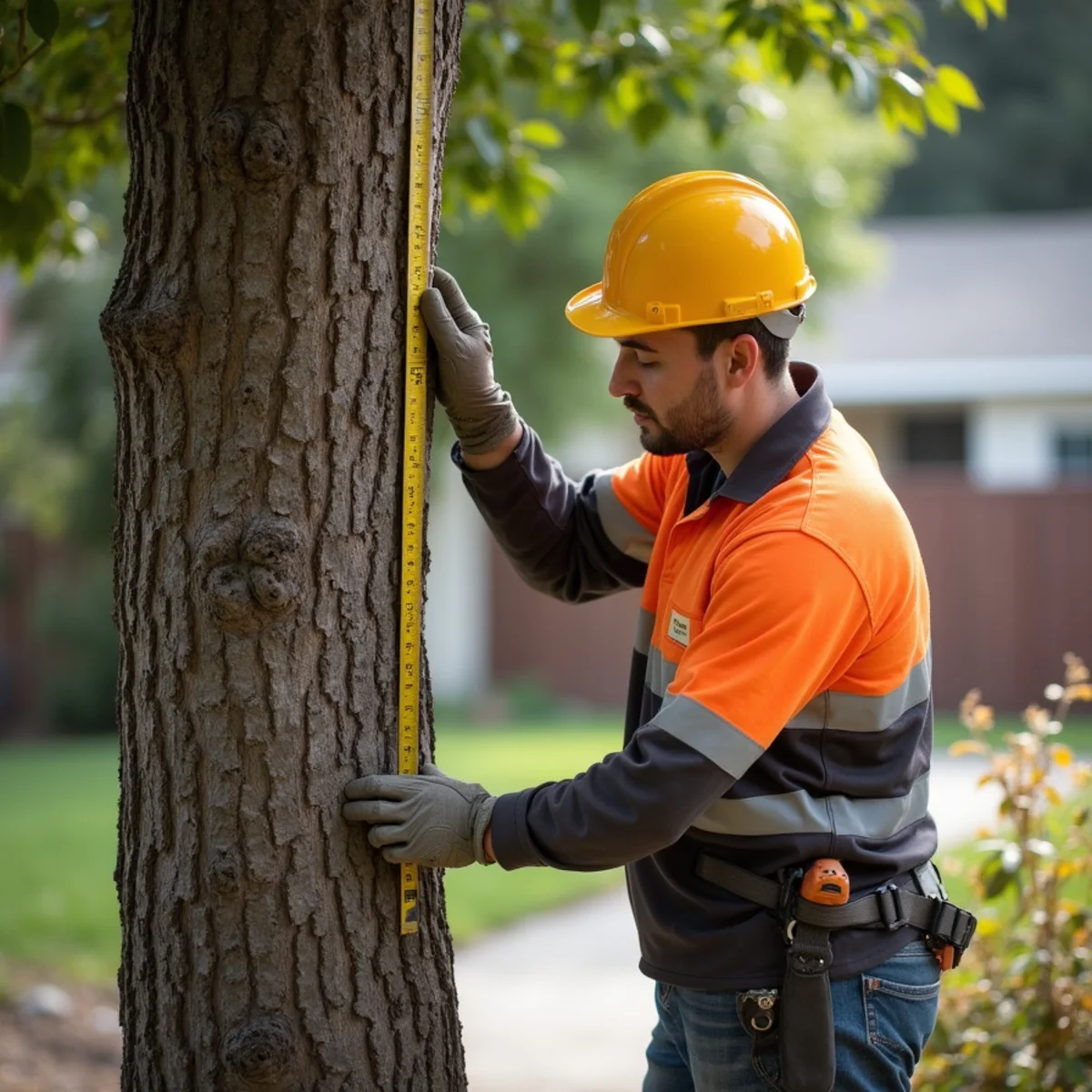
Our ISA Certified Arborists follow ANSI A300 standards for tree care practices and ANSI Z133 arboricultural safety protocols. We perform systematic Level 2 visual risk assessments: sounding trunks for internal decay voids, inspecting branch attachments for included bark defects, measuring trunk diameter at breast height (12 inches DBH threshold per Redwood City Public Works), examining root collar flares, evaluating slope stability, and mapping safe landing zones and equipment access routes.
Low-Impact Aerial Rigging
Utilizing specialized friction lowering brakes, high-strength arborist lines, and mechanical advantage pulleys to lower heavy branches smoothly in tight zero-lot-line residential yards without lawn impact.
ANSI A300 Standard Pruning
Executing directional crown thinning, deadwood removal, and roof clearance pruning that enhances tree structural architecture without damaging the living cambium layer or causing epicormic sprouting.
Hydraulic Stump Excavation & Grinding
Sweeping carbide cutting wheels 8 to 12 inches below grade to eliminate structural root balls, pulverize lateral roots, and prepare soil for immediate turf, paving, or specimen replanting.
City Permit & Arborist Documentation
Drafting permit-ready arborist hazard reports, CAD tree protection zone fencing plans, and mitigation filings satisfying Redwood City Public Works and Planning requirements.
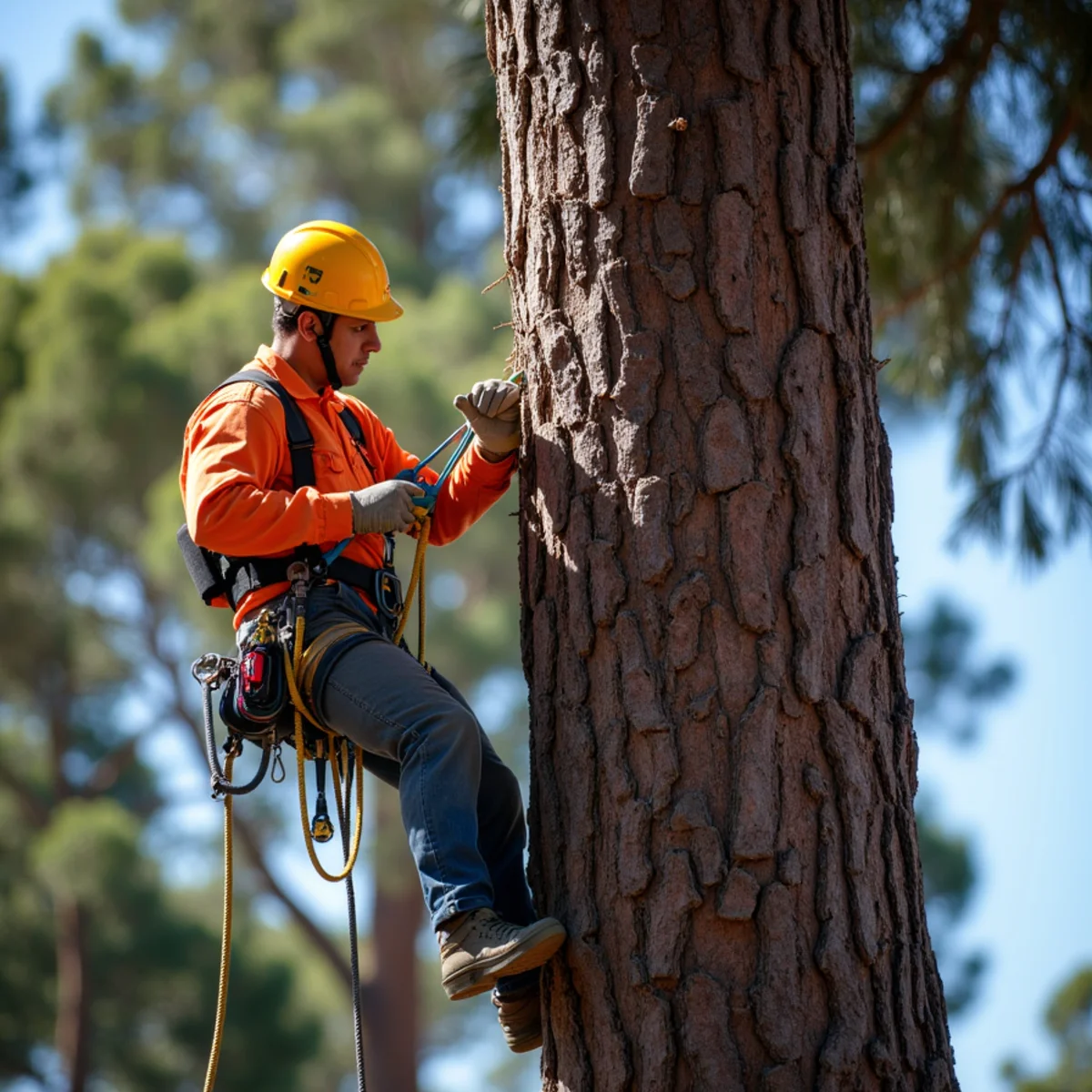
Step-by-Step Execution: From Inspection to Final Cleanup
On-Site Evaluation & Hazard Assessment
Our lead arborist inspects the tree, measures DBH, evaluates slope access, and discusses property priorities with the homeowner.
Itemized Proposal & Permit Verification
We deliver a firm written estimate breaking down rigging, equipment staging, permit paperwork, and hauling with zero hidden fees.
Ground Protection & Safety Setup
Our ground technicians place composite outrigger pads, turf protection mats, and establish pedestrian drop zones before equipment fires up.
Precision Aerial Rigging & Execution
Certified climbers or bucket technicians dismantle or prune the canopy using controlled ropes, lowering sections systematically.
Wood Chipping, Haul-Off & Immaculate Rake-Out
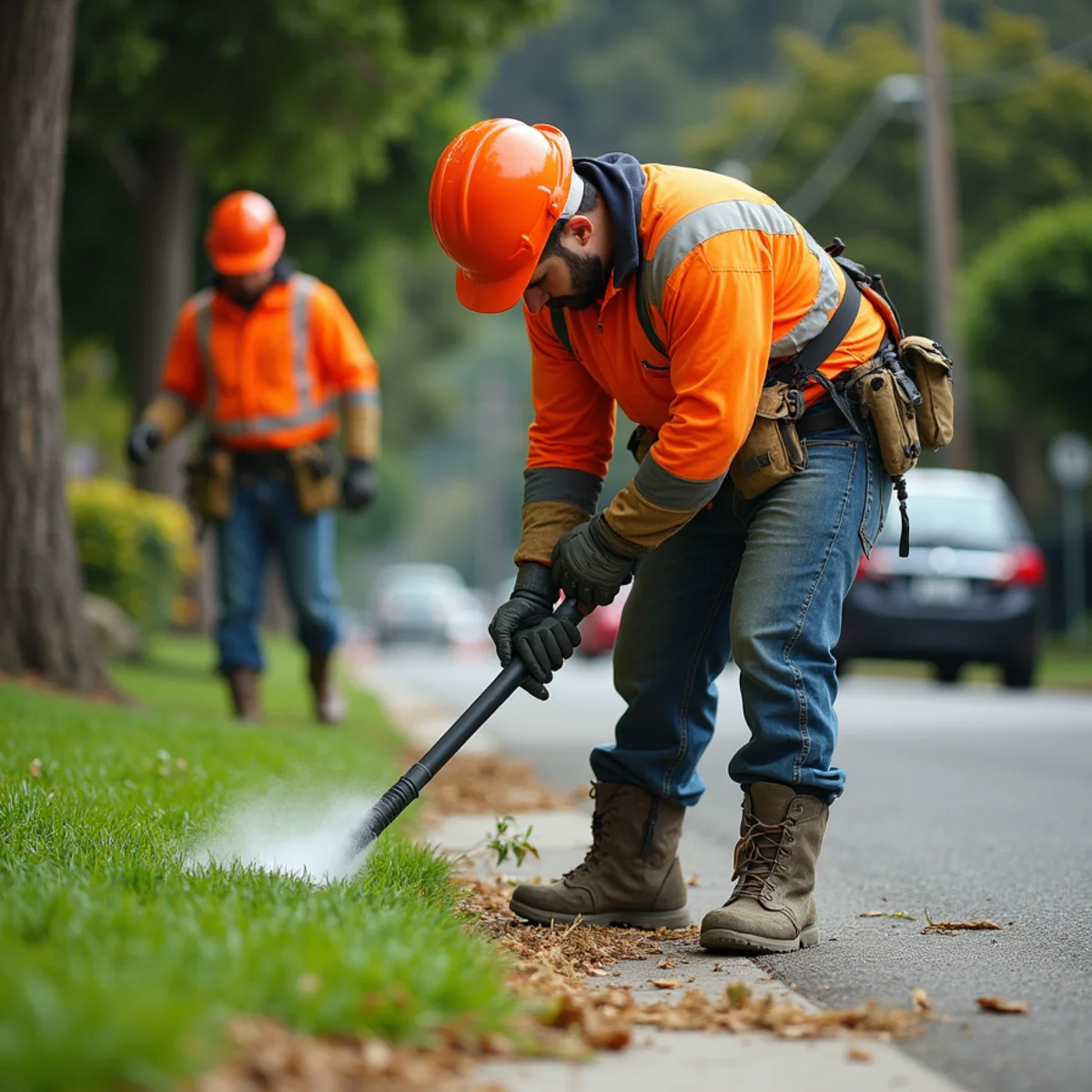
We feed branches through commercial chippers, haul away timber rounds, and blow clear all roofs, gutters, driveways, and lawns.
How Much Does Tree Service Cost in Redwood City?
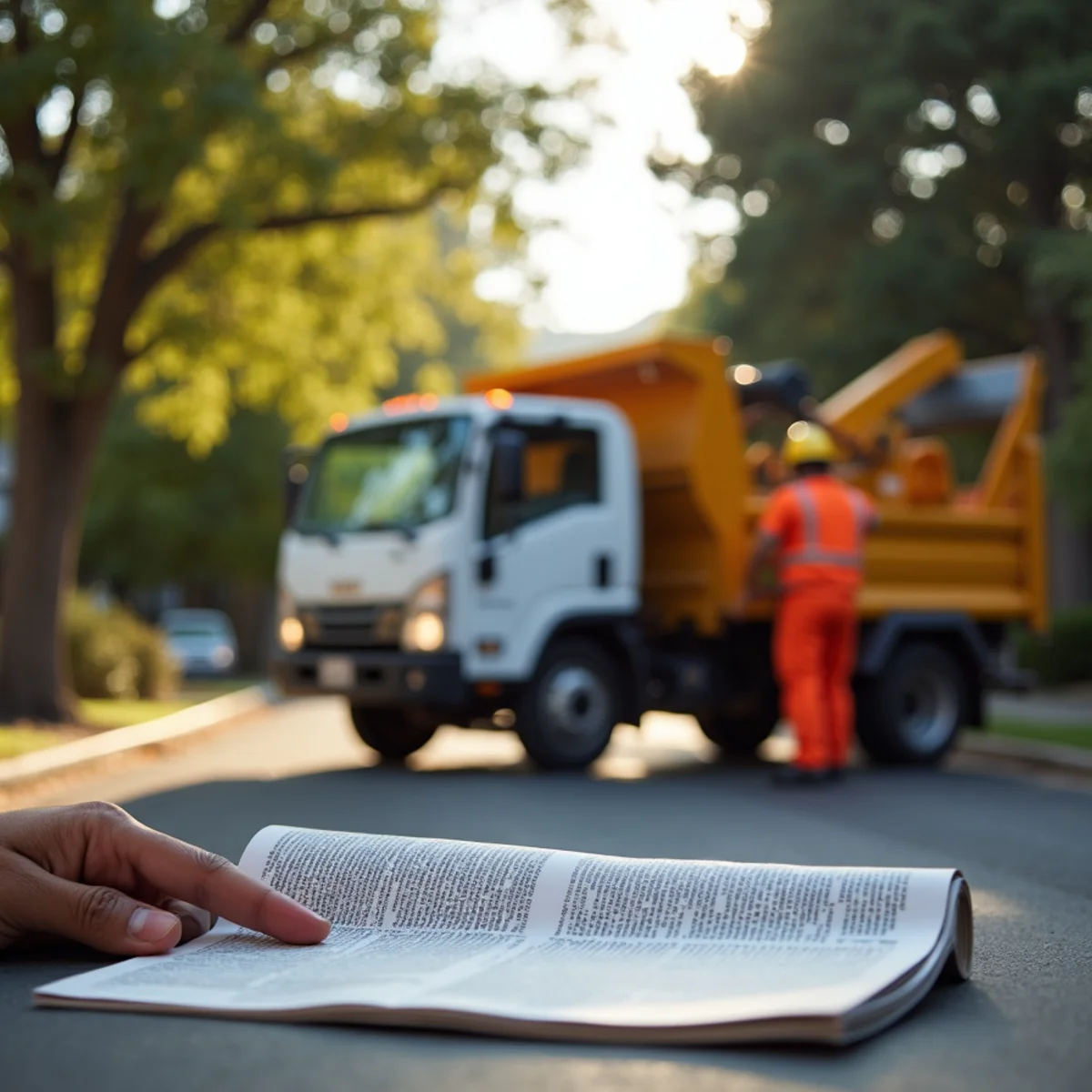
In accordance with California consumer protection standards, we do not quote arbitrary flat rates. Every estimate is custom-engineered based on the physical realities of your property:
Published regional guides place standard removals between $500 and $1,800 depending on species, trunk diameter, and drop zone clearance.
Tall coast redwoods and blue gum eucalyptus requiring crane mobilization or complex rope rigging typically range from $1,800 to $4,500+.
Published Bay Area contractor rates for fully equipped, insured 3-person crews with chipper and aerial lift equipment.
Varies based on tree height, degree of deadwood, roofline clearance requirements, and ANSI A300 structural thinning scope.
Depends on trunk diameter, surface root chasing length, grinding depth (6 to 12 inches below grade), and wood chip hauling.
Local Species & Redwood City Neighborhood Risk Profiles
Every Redwood City neighborhood presents distinct geological, architectural, and access dynamics that dictate equipment staging and rigging methods:
Steep Canyon Slopes, Seasonally Shifting Clay Soils & Heavy Canopy
Properties in Emerald Hills feature steep hillside topography, expansive clay soils that shrink in summer and heave in winter, narrow winding roads, and dense canopies of mature coast live oaks and blue gum eucalyptus. Sectional removal requires specialized high-angle rope rigging, friction lowering brakes, and precision crane picks to prevent timber from rolling downhill or impacting neighboring rooflines.
Hillside Residential Lots & Zero-Lot-Line Drop Zones
Climbing toward Stulsaft Park, Farm Hill homes often feature steep backyard slopes with terraced landscaping and zero-lot-line fences. Crews must rig timber piece-by-piece using mechanical advantage pulleys and carry rounds through narrow side gates, ensuring turf and hardscape protection throughout.
High Groundwater Table, Wind Shear & Lagoon-Side Rigging
Built on reclaimed bay marshlands, Redwood Shores has a shallow groundwater table that prevents trees from establishing deep taproots. Afternoon wind shear off San Francisco Bay frequently destabilizes top-heavy Monterey pines and cypress trees. Waterfront and lagoon-side properties require specialized rigging to prevent debris from falling into waterways.
Mature Urban Canopies, Tight Bungalow Lots & Sidewalk Clearance
Featuring classic mid-century ranch homes and older Craftsman bungalows, Woodside Plaza and Friendly Acres present tight side-yard access, extensive sidewalk networks, and overhead service drops. Tree work focuses on crown raising for roofline clearance, managing aggressive root systems that lift concrete flatwork, and immaculate debris cleanup.
Heritage Oaks, Mature Coast Redwoods & Historic Architecture
Characterized by historic homes and sprawling native coast live oaks, Mount Carmel tree care demands strict adherence to Redwood City preservation ordinances, seasonal pruning windows to prevent fungal spread, and delicate deadwood removal around historic tile roofs.
Key Tree Species Considerations in Redwood City
Blue Gum Eucalyptus (Eucalyptus globulus)
Known for unprovoked 'summer limb drop' during prolonged heat, extreme timber density, and high volatile oil content that exacerbates wildfire hazard. Requires careful weight reduction and sectional rigging rather than whole-branch felling.
Coast Redwood (Sequoia sempervirens)
Towering heights (70–100+ feet) paired with shallow, spreading root systems. Saturated winter clay soils make tall specimens susceptible to windthrow, while summer drought triggers upper canopy needle browning and deadwood accumulation.
Coast Live Oak (Quercus agrifolia)
Protected heritage native species vulnerable to Sudden Oak Death (Phytophthora ramorum), wood-boring bark beetles, and root rot if overwatered in summer. Pruning should be restricted to dry summer/fall months to minimize pathogen infection courts.
Municipal Permit Compliance & Contractor Credentials
Redwood City Municipal Code Section 29 protects all private trees measuring 12 inches or greater in trunk diameter, measured between 6 and 36 inches above natural grade (or at standard 54-inch DBH). Removing a protected tree requires a formal permit and an arborist justification report documenting that the tree is dead, dying, structurally unsound, damaging property, or in conflict with approved improvements. A replacement tree planting plan or in-lieu canopy fee may be required. All tree contracting work must adhere to California CSLB C-61/D49 licensing regulations.
Questions to Verify Before Hiring Any California Tree Service Contractor:
- Verify active CSLB C-61/D49 Tree Service license number (#1084291) directly on the California Contractors State License Board lookup portal.
- Confirm active workers' compensation insurance coverage to ensure full liability protection for crew members working on your property.
- Confirm general liability policy minimums ($2,000,000 commercial aggregate) protecting dwellings, vehicles, and neighboring property.
- Verify ISA Certified Arborist credentials (#WE-12849A) for diagnostic inspections, risk ratings, and tree protection plans.
- Require a line-item written estimate that itemizes labor, rigging equipment, crane mobilization, permit fees, stump grinding, and cleanup.
- Verify adherence to national safety standards ANSI A300 (tree pruning practices) and ANSI Z133 (arboricultural operations safety).
Frequently Asked Questions About Tree Service Redwood City
We provide complete tree care services across Redwood City, including hazardous tree removal, structural pruning and trimming, stump grinding, permit-ready arborist hazard reports, 24/7 storm damage cleanup, lot clearing, and hauling. Every residential and commercial project begins with a structured hazard evaluation, followed by an itemized written estimate detailing labor, rigging, disposal, and property protection.
Related Tree Services, Local Guides & Service Areas
Helpful Tree Care Articles
Primary Service Locations
Get a Free Estimate for Tree Service Redwood City
Call (213) 468-5153 to speak directly with our arborist team. We answer calls around the clock and provide fast on-site evaluations across Redwood City and San Mateo County.