
What to Do When a Tree Falls on Your House in Redwood City
Tree fell on your house in Redwood City? Step-by-step emergency guide: safety, PG&E lines, crane picks & insurance claims. Call (213) 468-5153 now.
Step 1: Immediate Occupant Safety & Evacuation Protocol
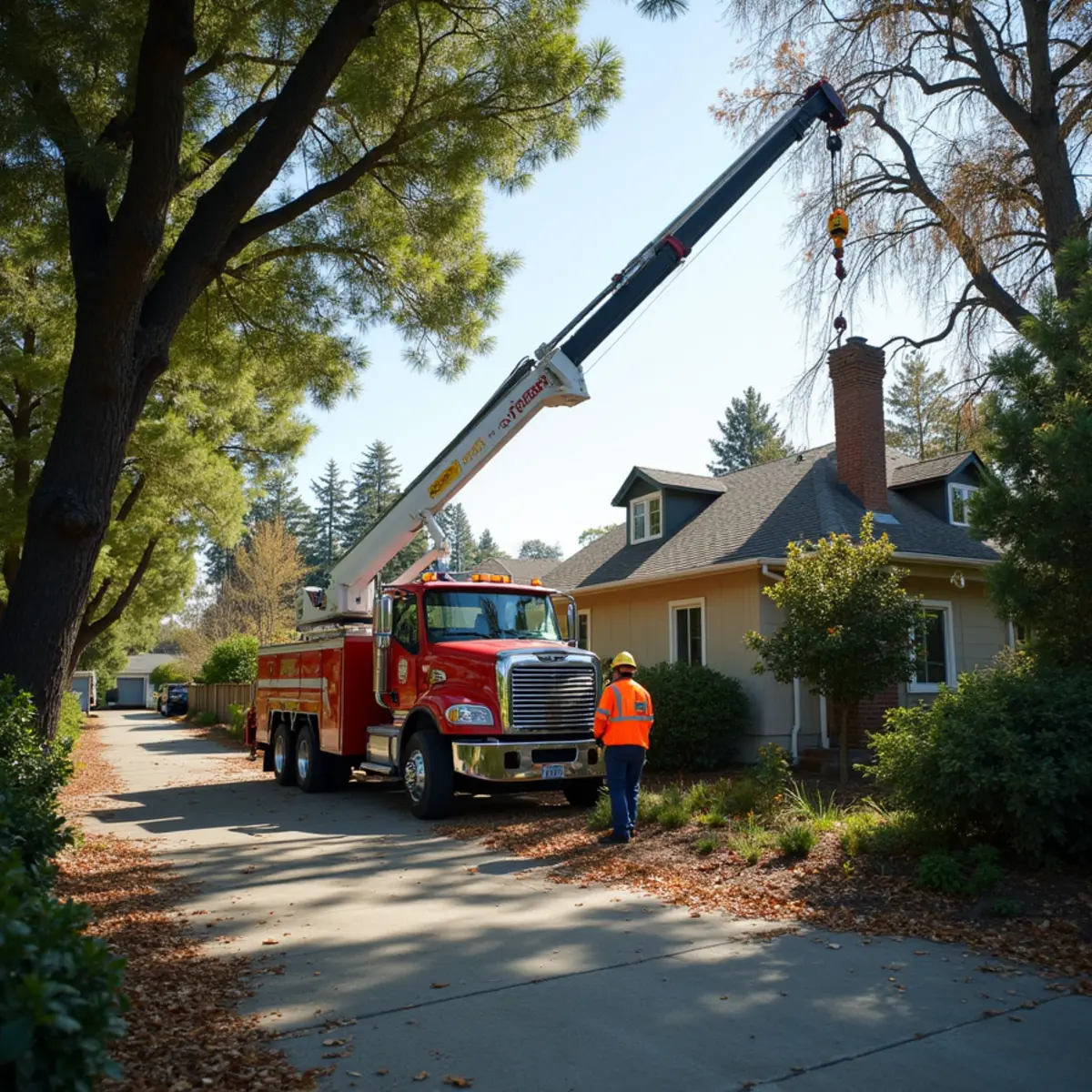
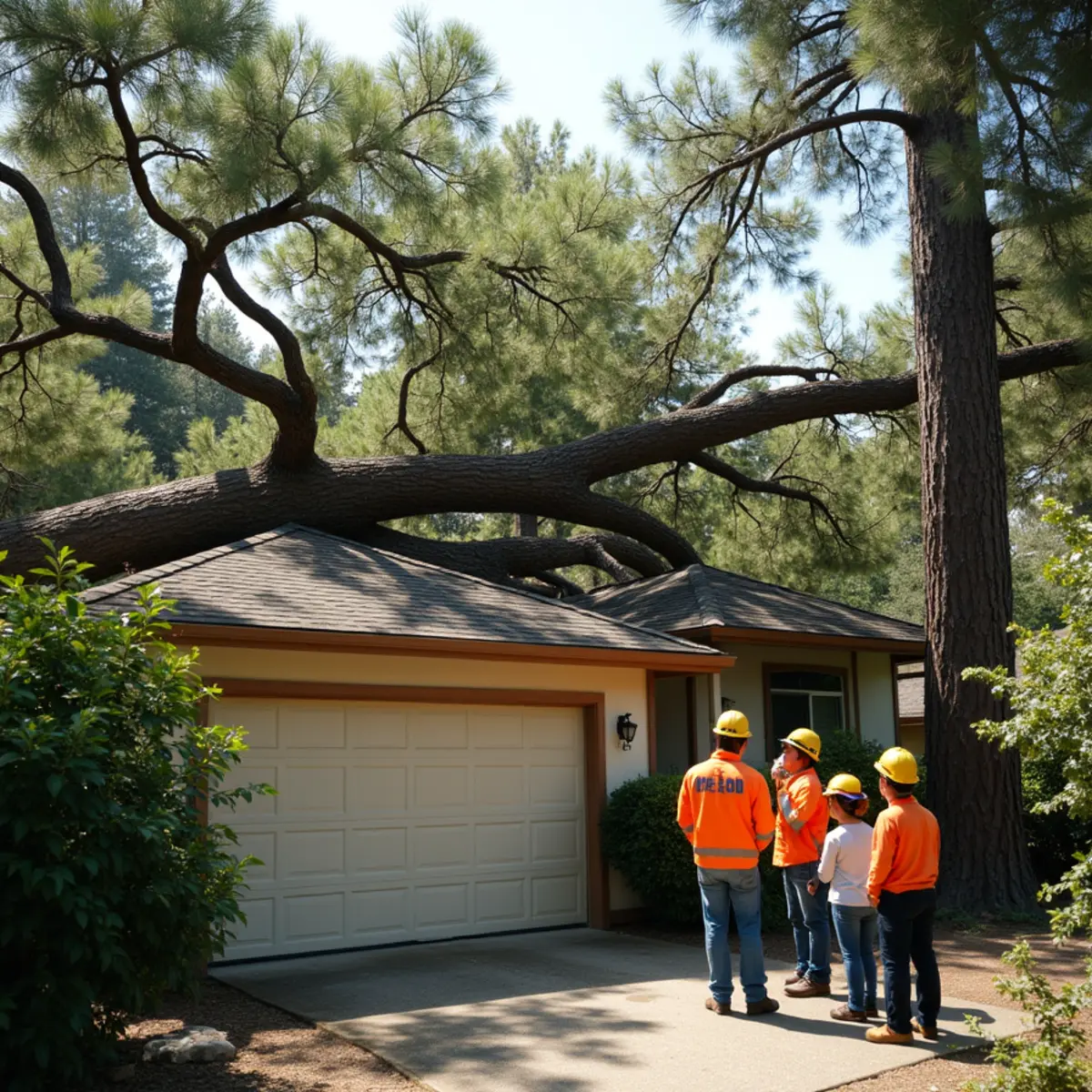
When a multi-ton tree or massive limb crashes into a residential roof, your absolute first priority is immediate human safety. Do not remain inside to inspect the ceiling or salvage personal property. Structural shockwaves from a high-impact tree strike frequently shatter load-bearing ceiling rafters, shear electrical conduits within wall cavities, crack natural gas supply pipes, and dislodge heavy clay roofing tiles that can collapse into living areas without warning.
Evacuate all household members and pets from rooms beneath and adjacent to the impact zone immediately. If the tree struck during an active winter atmospheric river storm, ground saturated soils around your foundation may also have destabilized. If you smell natural gas, hear a hissing sound, or observe flickering circuit breakers, evacuate the residence entirely, retreat to a safe location at least 100 feet away, and call 911 immediately from a mobile phone.
Need Hands-On Arborist Help in Redwood City?
Call (213) 468-5153 to speak directly with our team. We provide rapid emergency dispatch and free written estimates across San Mateo County.
Step 2: Checking Electrical Hazards & Downed Service Drops
Peninsula winter windstorms across Redwood City and neighboring San Carlos regularly bring down mature trees across overhead electrical service lines. Never attempt to inspect roof damage from an attic hatch, second-story window, or exterior ladder if electrical wires are down, frayed, or entangled in tree branches. Wet tree canopies, saturated wooden roof decking, and metal gutters act as highly efficient electrical conductors.
Treat all downed electrical wires as fully energized and deadly. Establish a minimum perimeter of 30 feet from any downed line or wire-entangled tree. Immediately contact PG&E at 1-800-743-5000 to report the downed service line and request emergency disconnection. Do not permit any tree removal crew to start cutting timber until PG&E line technicians or an electrical inspector confirms the service drop has been de-energized.
Step 3: Why Professional Crane-Assisted Extraction Is Vital
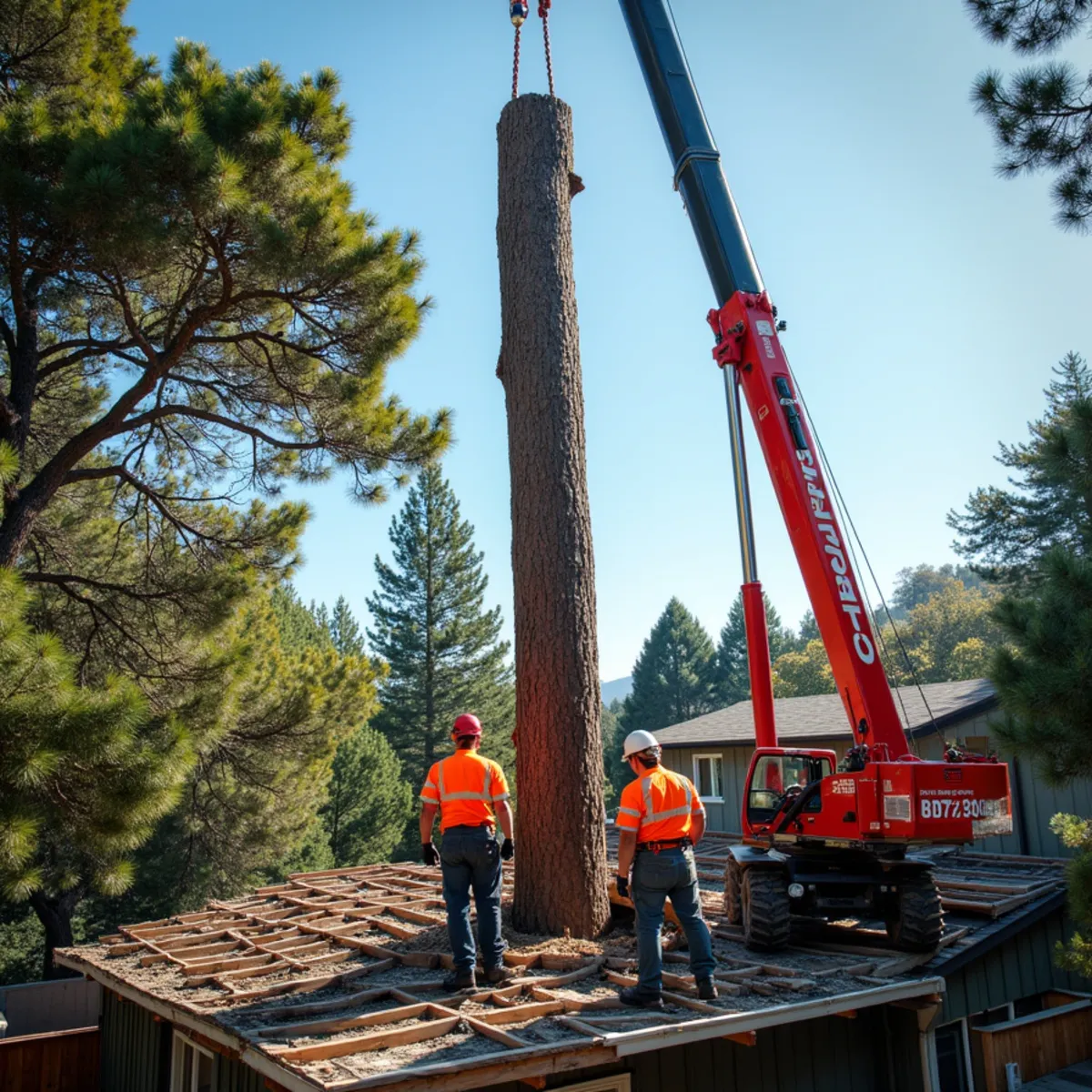
Removing a multi-ton tree resting on a fractured residential roof structure requires specialized physics and precision rigging. It is fundamentally different from standard ground-level tree felling. When a trunk comes to rest across rafters, the timber is under tremendous, unpredictable mechanical tension and compression. Inexperienced tree cutters who start severing limbs with a chainsaw from the roof can trigger a catastrophic secondary collapse, allowing the unsupported trunk to punch straight through ceiling drywall into interior rooms below.
Our emergency arborists deploy mobile hydraulic cranes and heavy-duty friction rigging blocks to hoist timber vertically off structural framing. By securing the center of mass with synthetic tree slings before making strategic relief cuts, we lift multi-ton log sections upward into the air without dragging heavy bark across roof shingles or transferring shifting weight onto compromised roof trusses. This mechanical precision prevents thousands of dollars in avoidable secondary structural damage.
Step 4: Comprehensive Insurance Documentation & Claims Filing
Before any tree crew begins cutting or clearing debris, thoroughly document the incident to protect your California homeowners insurance claim. Take extensive photos and wide-angle video footage from safe ground-level vantage points around the property. Capture the tree trunk base, the point of structural failure, the angle of the lean across the roofline, and visible damage to eaves, roof decking, gutters, chimneys, and siding.
Under standard California HO-3 homeowners policies, tree damage to an insured structure (dwelling or detached garage) is covered under Coverage A, while the cost of lifting the tree off the house is covered under emergency structural preservation. Most policies also include a specific debris removal allowance. Keep all emergency invoices separate: our dispatch office provides itemized, insurance-compliant arborist invoices that clearly differentiate emergency structural extraction and safety tarping from off-site wood haul-away, ensuring your claims adjuster can process the claim without dispute.
Step 5: Emergency Weatherproofing & Structural Tarping
Once the fallen timber has been lifted cleanly off the roofline, immediate weatherproofing is essential. In the San Francisco Bay Area, fallen trees almost always occur during extended multi-day atmospheric river storms. Even a few hours of rain penetration through cracked roof decking will saturate blown-in attic insulation, buckle drywall ceilings, and ruin hardwood flooring, leading to extensive mold contamination.
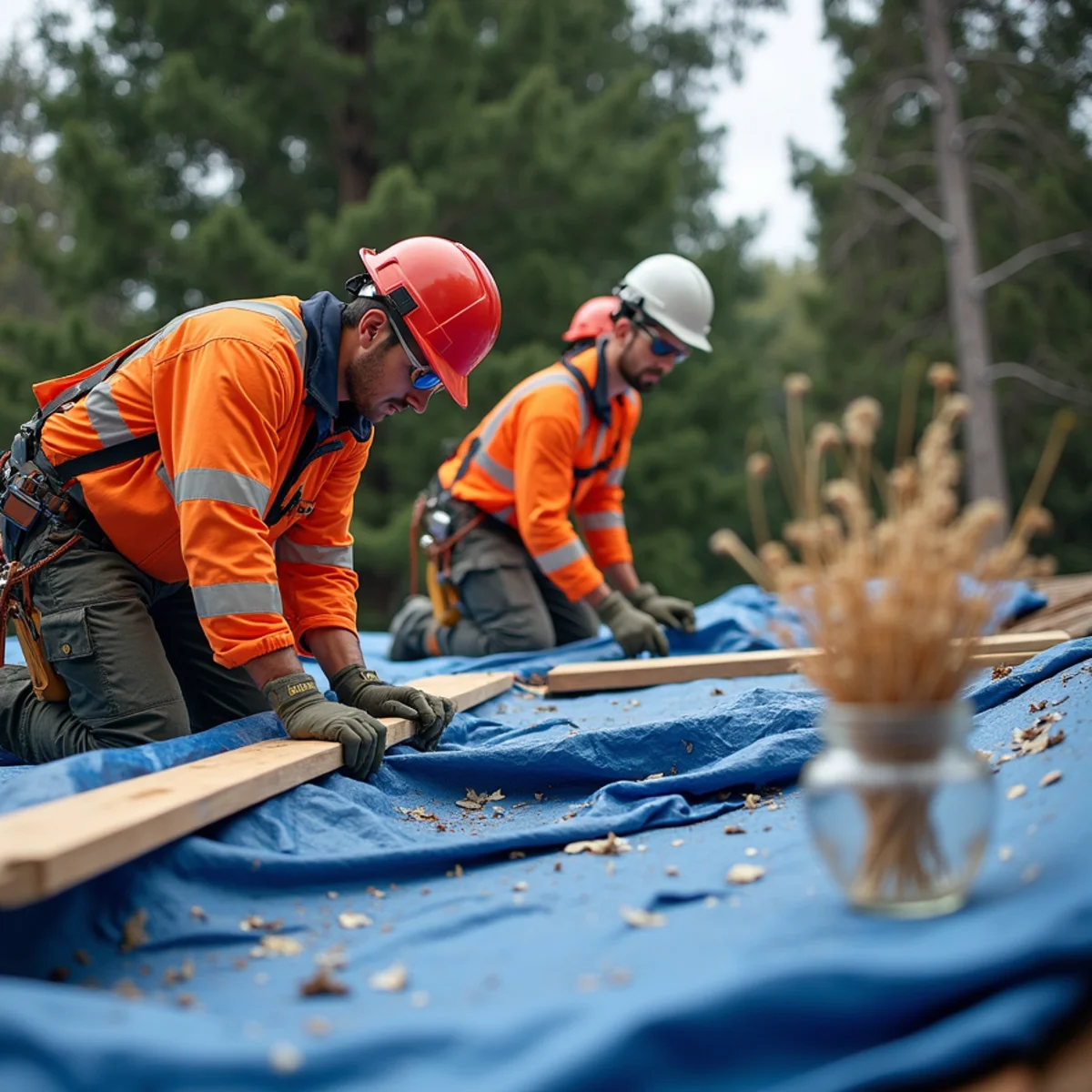
Our emergency crew installs commercial-grade heavy-duty tarps across all roof punctures and exposed trusses. Tarps are secured using 2x4 wood batten strips screwed directly into solid structural points, ensuring wind gusts up to 50 mph cannot rip the protective barriers away. This critical containment stabilizes your living environment until permanent roofing contractors can complete structural repairs.
Step 6: Redwood City Emergency Tree Permits & Post-Incident Inspection
Under Redwood City Municipal Code Chapter 29, trees with a trunk diameter of 12 inches or greater at breast height are classified as protected trees. When a protected tree falls or causes an imminent hazard, Redwood City allows emergency removal to protect life and property without prior permit approval, provided that photographic documentation and an ISA Certified Arborist certification are submitted retroactively to the city within 72 hours.
Following the extraction, our certified arborists perform a comprehensive Level 2 Tree Risk Assessment on all remaining mature trees on your property. Soil saturation and windthrow forces that felled one tree frequently loosen root plates or cause structural cracks in neighboring coast live oaks, redwoods, and pines that appear upright from the ground.
Related Services & Coverage Areas
Related Services
Nearby Service Areas
Frequently Asked Questions
No. Never attempt to cut branches from a tree resting on a house. Trees on structures are balanced under complex mechanical loads. Severing even a single branch can release stored kinetic energy, causing the trunk to roll violently or plunge through your ceiling rafters.
Schedule Your Tree Assessment Today
Call (213) 468-5153 for prompt arborist inspections, permit assistance, and transparent estimates in Redwood City and the Peninsula.