
What to Put in a Commercial Tree Care Contract
Key terms for a commercial tree service contract: scope of work, liability insurance, ISA certification and storm dispatch SLAs. Call (213) 468-5153.
Why Commercial Properties Require Dedicated Tree Contracts
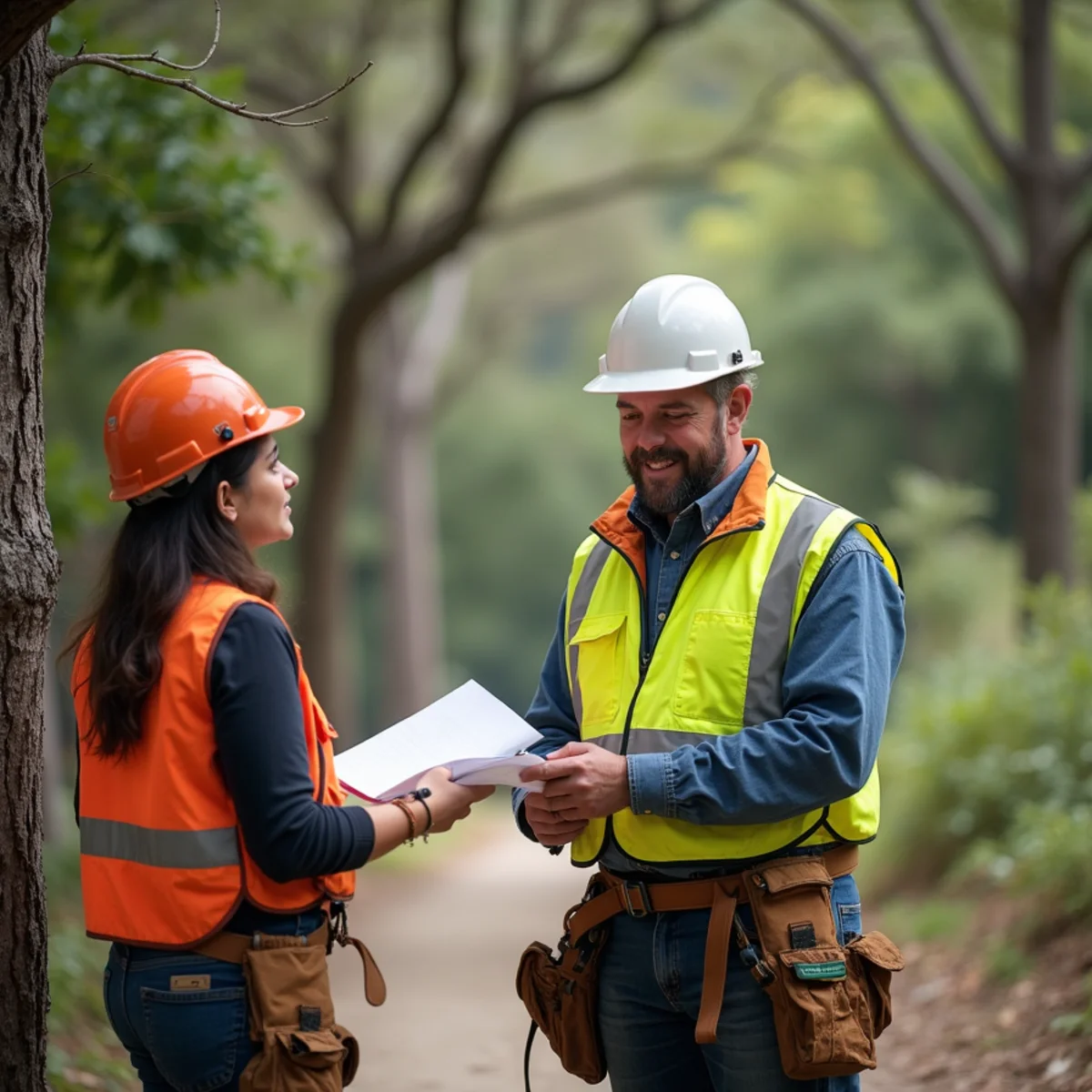
Commercial real estate managers overseeing office parks, tech campuses, medical centers, retail centers, and industrial facilities across Silicon Valley and San Mateo County face distinct property management challenges. While routine landscape contractors handle turf mowing, hedge trimming, and sprinkler heads, mature tree canopies require specialized industrial machinery, structural risk management, and rigorous safety standards.
Relying on general landscapers to prune 60-foot trees creates severe liability exposure. Landscaping workers lack ANSI A300 training, often topping branches, stripping bark with weed whackers, or pruning near energized lines. A dedicated commercial tree service contract establishes legally enforceable performance standards, protects asset values, and mitigates premises liability. Unmanaged tree risks threaten tenant parking stalls, delivery corridors, and corporate customer safety, directly risking lease renewals and insurance premiums.
Need Hands-On Arborist Help in Redwood City?
Call (213) 468-5153 to speak directly with our team. We provide rapid emergency dispatch and free written estimates across San Mateo County.
Scope of Work: Pruning Standards & Clearance Specifications
A professionally drafted commercial tree care agreement must define unambiguous operational scopes rather than vague terms like 'trim trees as needed':
• Explicit Adherence to ANSI A300 & ANSI Z133: The contract must state that all tree pruning adheres strictly to ANSI A300 (Part 1) Pruning Standards and ANSI Z133 Safety Standards. Prohibit flush cuts, topping, and lion-tailing explicitly, preserving branch bark ridges and natural branch collars. • Precise Pedestrian & Vehicular Clearance Heights: Mandate specific vertical clearance standards across the campus: minimum 8 to 10 feet of vertical clearance over pedestrian sidewalks and entry plazas; minimum 14 to 16 feet of vertical clearance over parking bays, loading docks, internal access drives, and emergency fire lanes to accommodate delivery semi-trucks and fire apparatus. • Light Fixture & Security Camera Sightlines: Include quarterly clearance sweeps around exterior LED parking lot lighting poles, traffic signs, directional wayfinding, and security surveillance cameras to ensure clear lines of sight. • Storm Drain & Utility Buffer Clearances: Mandate bi-annual canopy trimming around primary storm drains, rooftop gutters, and utility service drop lines to prevent water ponding and structural short circuits.
Mandatory Insurance, Licensing & Indemnification Clauses
Commercial property owners must protect themselves against catastrophic liability with strict contractor vetting clauses:
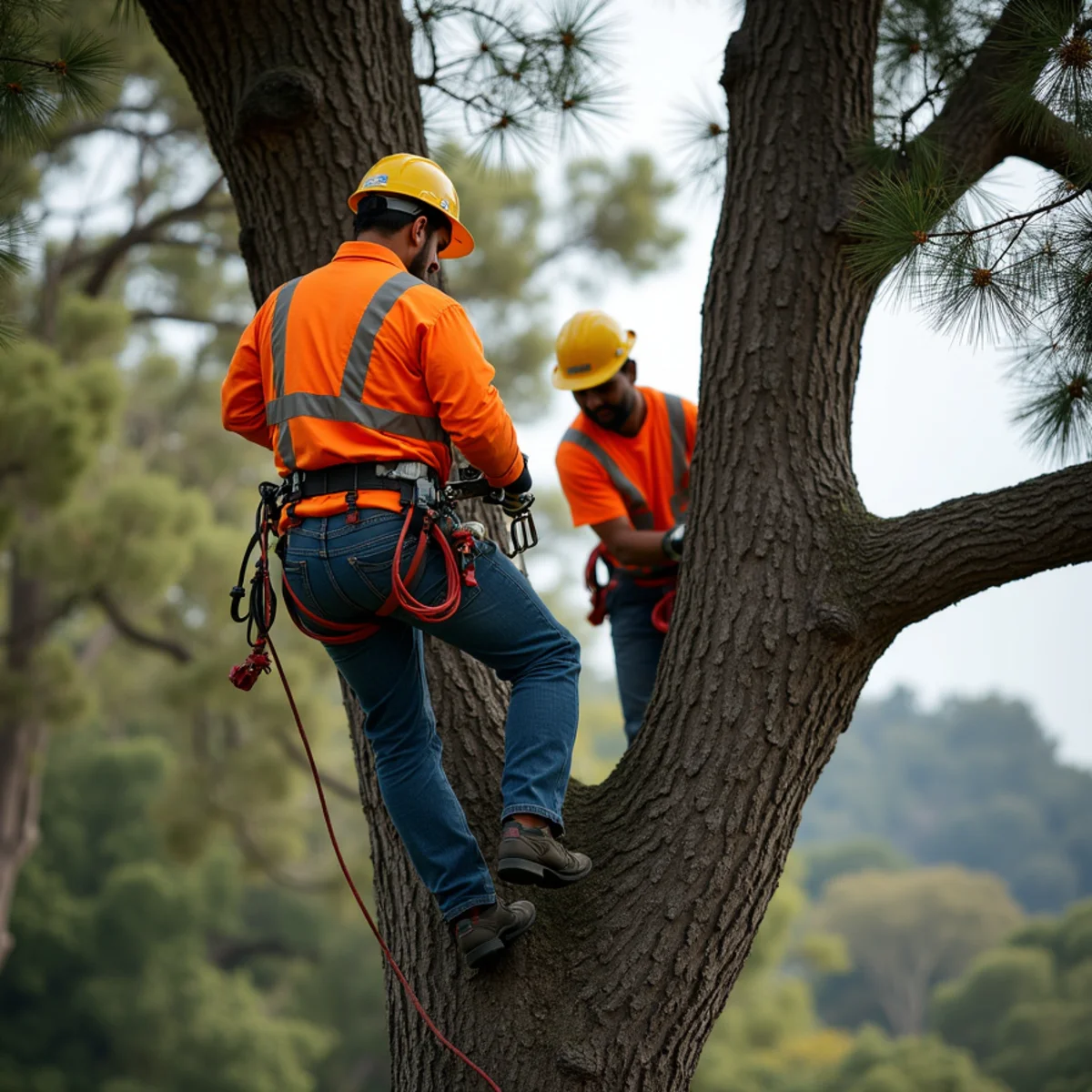
• California CSLB C-61/D49 Specialty License: Verify active licensing in the Tree Service specialty classification (License #1084291). General contractor licenses (Class B) or handyman exemptions do not meet legal requirements for commercial tree work. • Comprehensive General Liability Insurance: Require minimum $2,000,000 to $5,000,000 in Commercial General Liability coverage, with the property management firm and property ownership entity named as Additional Insured on a primary and non-contributory basis. • Statutory California Workers' Compensation: Insist on a formal Certificate of Insurance showing active workers' comp coverage for all crew members. Tree work is among the highest-risk occupations in the country; uninsured worker injuries create immediate homeowner/property owner liability. • Broad-Form Indemnification: Include hold-harmless provisions protecting the client from property damage, pedestrian injury claims, or utility service strikes.
Emergency Storm Response SLAs & Guaranteed Response Times
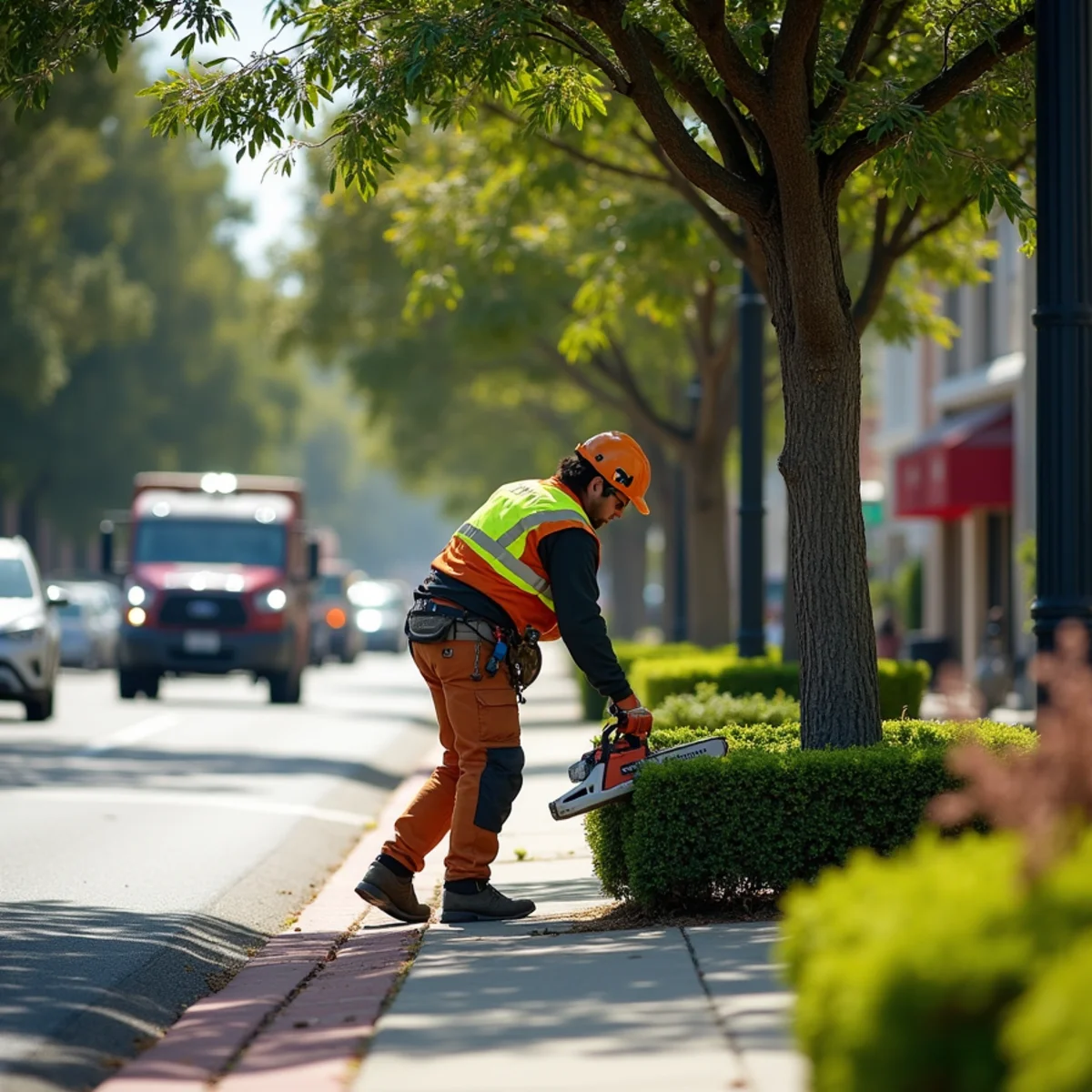
When an atmospheric river storm brings down multi-ton timber across primary commercial parking lots or fire lanes, business continuity is immediately disrupted. A strong commercial contract features a clear Service Level Agreement (SLA):
• Guaranteed Emergency Dispatch Windows: Stipulate a 2-hour maximum on-site arrival time for hazardous structural strikes and access-blocking emergencies across San Mateo County. • Equipment Availability: Confirm the contractor maintains direct access to specialized commercial machinery, including mobile hydraulic cranes, 75-foot bucket trucks, self-propelled whole-tree chippers, and heavy winching systems. • Traffic Control & Site Logistics: Ensure the contractor provides certified MUTCD traffic control flaggers, heavy safety cones, pedestrian diversion barriers, and security badge compliance for corporate tech campuses. • Pre-Negotiated Emergency Rate Sheets: Avoid price gouging during regional natural disasters by incorporating fixed hourly crew and equipment rate sheets directly into the annual contract.
Tree Inventory, GIS Mapping & Capital Planning Deliverables
Modern commercial facility management relies on data-driven capital planning. Ensure your contract includes professional arboricultural deliverables:
Require the contractor to deliver a comprehensive digital GIS tree inventory cataloging every tree on the campus by tag number, GPS coordinates, species, DBH, physiological health score, and risk rating. The agreement should incorporate a rolling 3-to-5 year tree care budget forecast that enables asset managers to project capital expenditures accurately for board or ownership approval. Furthermore, require formal plant appraisals using the Council of Tree and Landscape Appraisers (CTLA) trunk formula method to substantiate casualty loss tax deductions and insurance claims after severe storm events.
Waste Disposal, Bio-Security & Site Cleanliness Protocols
A commercial property's visual appeal directly impacts tenant retention and corporate brand image. The contract must enforce strict job site protocols:
Require daily site broom-sweeping, blowing of sidewalks, and complete haul-away of wood debris before 5:00 PM each business day. Include bio-security sanitation rules requiring chainsaw sterilization between infected trees to prevent spreading Sudden Oak Death or pitch canker across campus grounds.
Related Services & Coverage Areas
Related Services
Nearby Service Areas
Frequently Asked Questions
A fixed-price annual contract establishes predictable monthly billing for scheduled rotational pruning, inspections, and priority storm response. Time-and-materials agreements bill per hour/equipment for ad-hoc projects, which often results in unexpected cost spikes during storm season.
Schedule Your Tree Assessment Today
Call (213) 468-5153 for prompt arborist inspections, permit assistance, and transparent estimates in Redwood City and the Peninsula.