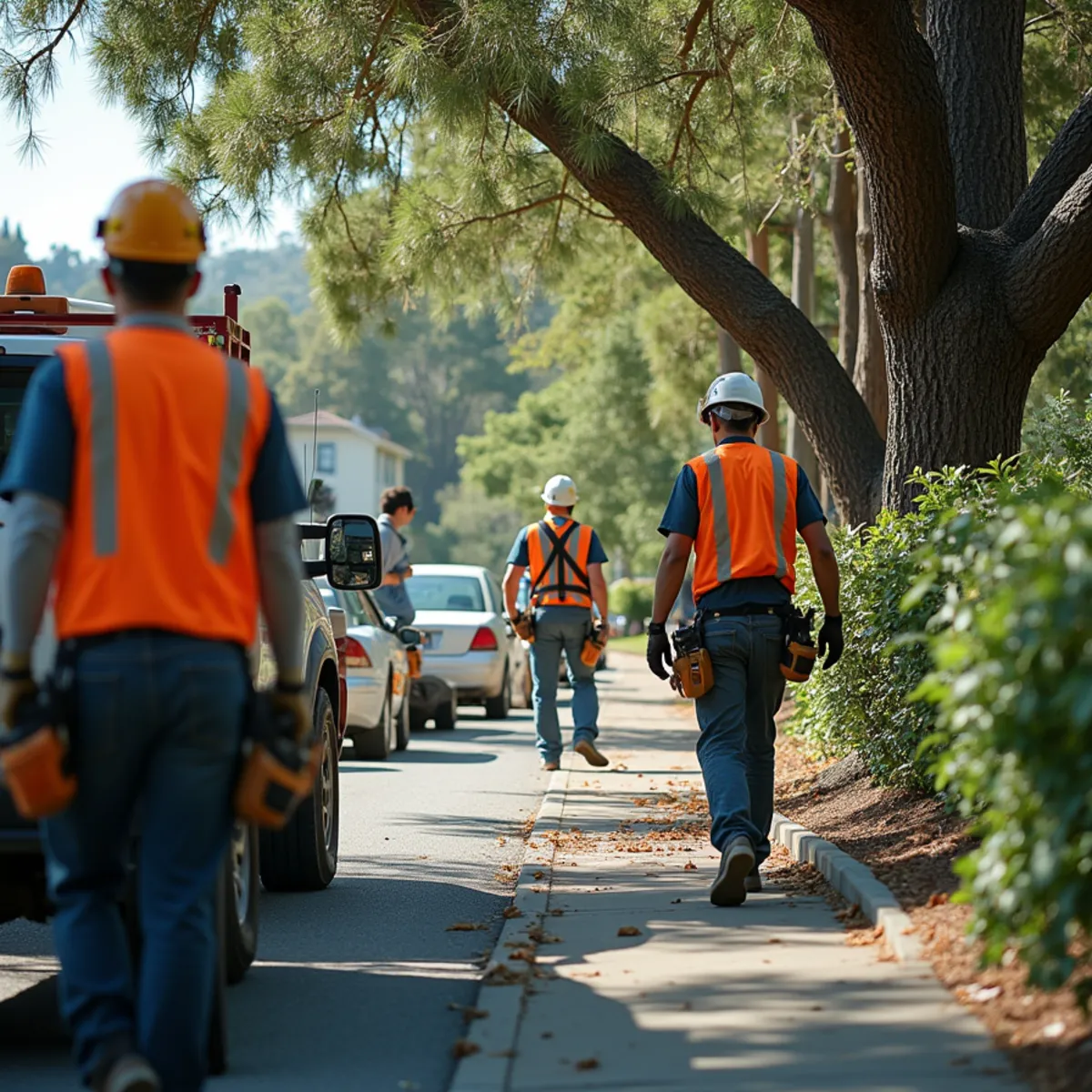
Identifying the Symptoms: When Is Commercial & HOA Tree Service Necessary in Redwood City?
Common Signs & Warning Indicators
- Surface tree roots uplifting concrete sidewalks, parking curbs, and pavers, creating severe pedestrian trip-and-fall hazards
- Low-hanging canopy limbs obstructing commercial delivery trucks, waste management haulers, or emergency vehicle access corridors
- Overgrown foliage blocking exterior parking lot security lighting, commercial tenant signage, or surveillance camera sightlines
- Repeated tenant and resident complaints regarding sticky aphid honeydew sap, heavy leaf litter, or cracked branches over parked vehicles
- Unbudgeted, emergency tree failure invoices straining HOA reserve funds after winter atmospheric river storms
- Deadwood and structural decay on common-area mature trees creating potential tort liability under California civil codes
Local Peninsula Environmental Triggers
Decades of mature landscaping in Peninsula corporate campuses, retail shopping centers, and multi-family HOA communities have outgrown their original narrow parking planters and sidewalk cutouts. Aggressive surface-rooting trees—such as liquidambars, Chinese elms, and sycamores—buckle asphalt and concrete in search of oxygen and moisture. Without a structured multi-year rotational management plan, trees develop uncorrected structural defects, excessive end-weight, and crown deadwood that fail under coastal wind loads, exposing commercial property owners to costly legal claims.
Under California law and local municipal ordinances, property owners bear legal responsibility for hazardous trees that threaten adjacent roadways, sidewalks, power lines, or neighboring structures. Early intervention by an ISA Certified Arborist prevents emergency failures during severe coastal weather.
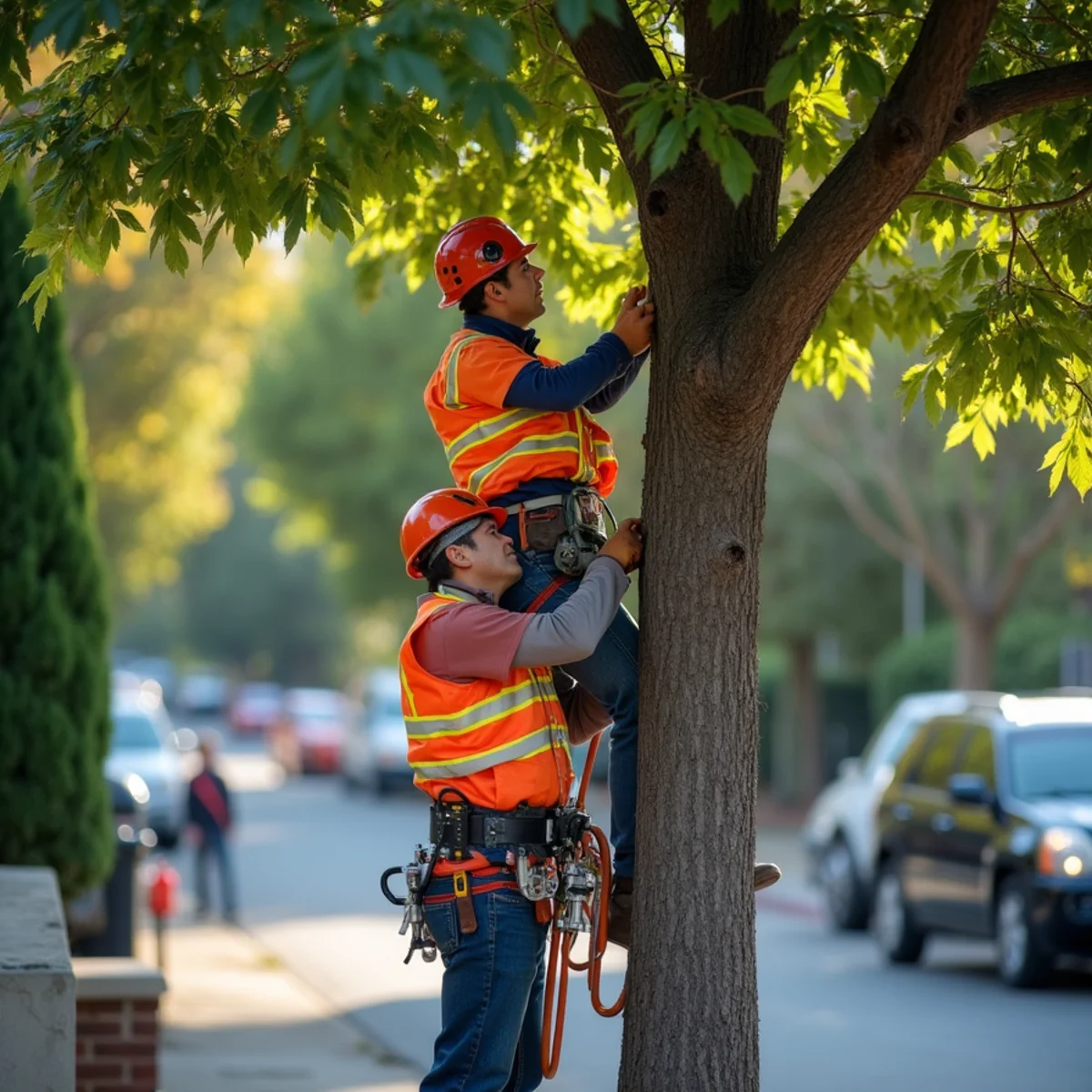
What to Do First: The First-30-Minutes Tree Emergency Checklist
When a storm strikes or a tree fails, prioritize human safety before initiating cleanup. Follow these essential field steps:
Action Checklist Before Cleanup
- 1Barricade any sidewalk, walkway, or parking stall where root upheaval exceeds 0.25 inches or broken overhead limbs are suspended.
- 2Check clearance heights: commercial driving lanes require a minimum 14-foot vertical clearance for municipal emergency and delivery vehicles.
- 3Verify that low-hanging branches do not obstruct parking lot illumination poles or security camera angles.
- 4Do not allow unlicensed landscape maintenance crews to perform topping or uncertified climbing on mature commercial trees.
- 5Call Honey Bear Trees at (213) 468-5153 to schedule a commercial property walk-through and customized HOA proposal.
What to Tell Our Dispatcher
Having these property details ready helps us deploy the appropriate crane, rigging blocks, or line-clearance equipment immediately:
- Property name, physical address, and facility type (HOA condominium community, retail shopping center, office campus, industrial park)
- Primary point of contact (on-site property manager, HOA board president, facilities director)
- Scope of immediate work (annual rotational pruning, hazard removal, sidewalk root remediation, storm damage triage)
- Preferred work schedule to prevent tenant impact (weekday business hours, off-peak hours, or Saturday scheduling)
- Insurance requirements for commercial vendor onboarding (specific additional insured endorsement wording, W-9, vendor portal access)
Common Tree Hazards in Redwood City: Causes, Signs & Immediate Safety Steps
Use this diagnostic reference to identify hazardous structural conditions and coordinate safe next steps without putting family or property at risk:
| Cause | Warning Signs | Immediate Response | Who to Call | Documentation |
|---|---|---|---|---|
| Sidewalk Root Upheaval & ADA Trip Hazard Liability | Concrete slabs lifted more than 0.25 inches by expanding surface roots; cracks running across primary pedestrian paths | Mark hazardous elevation changes with high-visibility safety paint; install temporary asphalt ramps or warning cones | Call Honey Bear Trees at (213) 468-5153 for root pruning, bio-barrier installation, and concrete preservation | Photograph lifted slab edges with a measurement ruler to document severity for insurance liability files |
| Vehicular Clearance & Delivery Lane Obstruction | Scrape marks on lower tree branches from delivery trucks; limbs hanging lower than 14 feet over drive lanes | Reroute commercial deliveries to alternative drive aisles until vertical clearance pruning can be completed | Call our commercial crew for high-clearance crown raising and clearance pruning to 14-to-16-foot standards | Photograph delivery truck pinch points and measure branch height above the asphalt driving surface |
| Security Lighting & Surveillance Blind Spots | Tree canopies casting dark shadows over parking bays; foliage obscuring building entry security cameras | Adjust security camera focus if possible; illuminate shadowed corridors with temporary solar floodlights | Contact Honey Bear Trees for selective window pruning and directional crown thinning around lighting fixtures | Take night-time photographs showing lighting coverage blocked by dense tree canopy silhouettes |
| Structural Deadwood Over Carports & Guest Parking | Brittle dead limbs over 2 inches in diameter hanging directly over parked resident vehicles or community carports | Cone off affected parking stalls; notify vehicle owners to park in designated safe auxiliary spaces | Call (213) 468-5153 for aerial bucket truck deadwood removal and comprehensive parking canopy pruning | Photograph overhanging deadwood relative to carport roofs, parking lines, and resident vehicles |
| Uncorrected Storm Damage & Multi-Tree Hazard Failures | Cracked boughs, split codominant trunks, or wind-damaged crowns threatening multi-family building walls | Establish an exclusion zone around damaged trees; coordinate immediate resident building egress | Call our 24/7 commercial emergency line at (213) 468-5153 for same-day priority stabilization and crane clearing | Photograph all damaged trees and impacted commercial infrastructure for commercial carrier insurance claims |
Request an On-Site Assessment for Commercial & HOA Tree Service
Speak with our local Redwood City dispatch team at (213) 468-5153 to discuss your tree situation and schedule an arborist evaluation.
Our Methodological Standards for Commercial & HOA Tree Service
Our ISA Certified Arborists conduct structured commercial property audits. We map your community's urban forest using GPS inventory protocols, categorize trees into prioritized risk tiers (immediate hazard, high priority, routine maintenance), inspect pedestrian corridors for Americans with Disabilities Act (ADA) clearance compliance, evaluate root-to-hardscape conflicts, and provide comprehensive reserve-study budget forecasts for HOA board presentation.
Multi-Year Rotational Pruning Cycles
Rather than performing costly, reactive pruning across an entire property in one fiscal year, we divide large HOA communities and commercial campuses into 3-year or 5-year rotational zones. This stabilizes annual maintenance budgets while ensuring every tree receives regular arborist care.
Air-Spade Root Pruning & Deep Bio-Barrier Installation
To prevent repetitive concrete sidewalk replacement costs, our certified arborists excavate along damaged walkways using supersonic compressed air. We cleanly sever offending surface roots without destabilizing the tree, then install 24-inch deep interlocking root barrier panels to deflect future root growth downward.
High-Clearance Commercial Crown Elevation
We prune parking lot and roadway canopies to achieve a minimum 14-foot vertical clearance for delivery trucks, garbage haulers, and emergency apparatus, while maintaining 8 to 10 feet over pedestrian sidewalks in full compliance with Americans with Disabilities Act (ADA) accessibility guidelines.
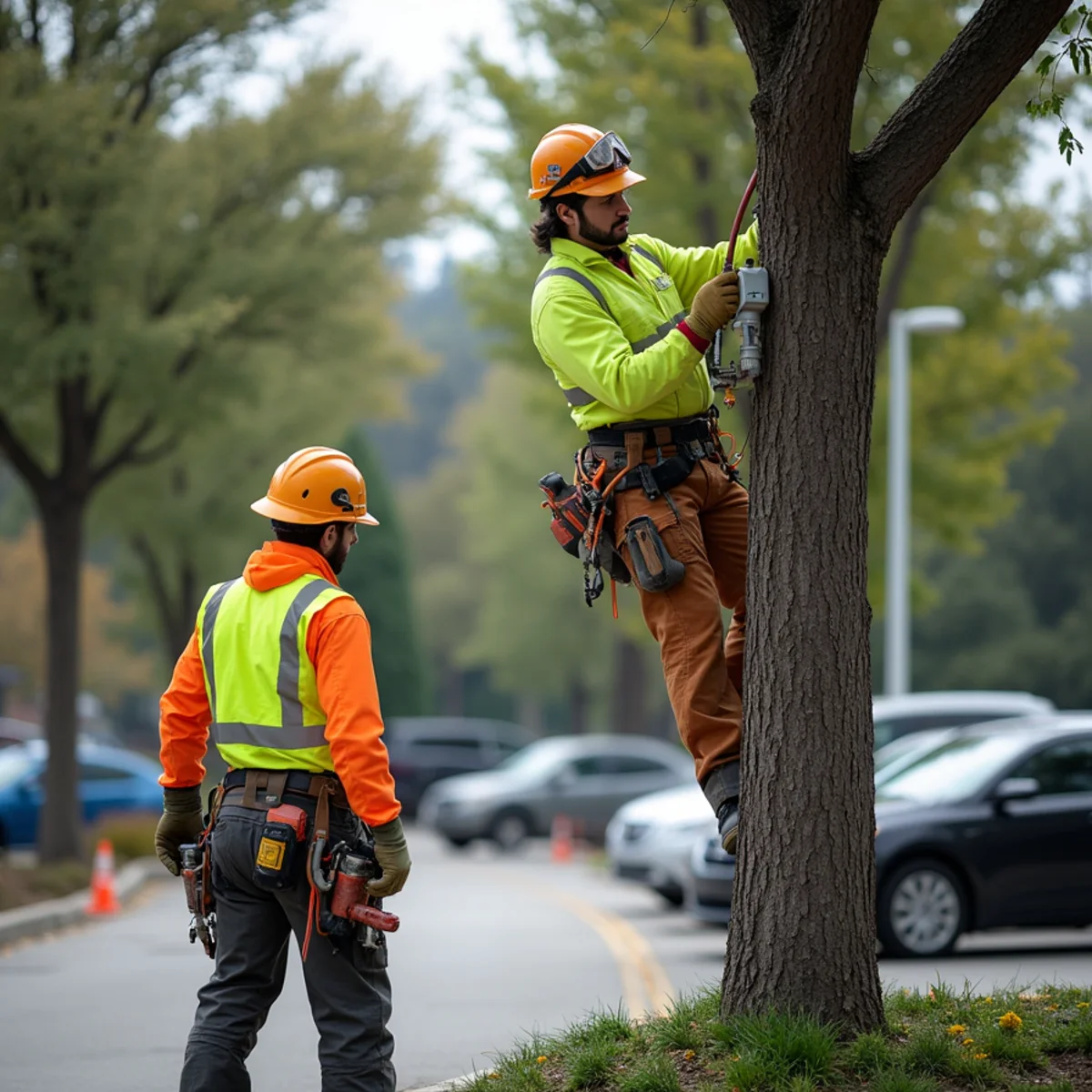
Step-by-Step Execution: From Inspection to Final Cleanup
Property Walk-Through & Inventory Audit
An ISA Certified Arborist walks the property with the facility director or HOA manager, recording tree species, health status, and clearance conflicts.
Prioritized Proposal & Budget Mapping
We deliver an itemized multi-year proposal categorized into immediate safety hazards, high-priority structural work, and routine rotational pruning.
Tenant Notification & Logistics Coordination
We provide digital work notices and timeline maps for management to distribute to residents and commercial tenants, minimizing parking disruption.
Safety Perimeter & Traffic Control Setup
Our crew establishes safety zones with high-visibility cones and signs, redirecting pedestrian traffic and coning off active work parking stalls.
Precision ANSI A300 Pruning & Rigging Execution
Climbers and aerial bucket operators execute clearance pruning, deadwood removal, and structural thinning according to national arboricultural standards.
Thorough Clean-up & Post-Work Board Documentation
All parking bays, roofs, and walkways are blown clean, and management receives a completion sign-off report with updated tree logs for HOA board files.
How Much Does Tree Service Cost in Redwood City?
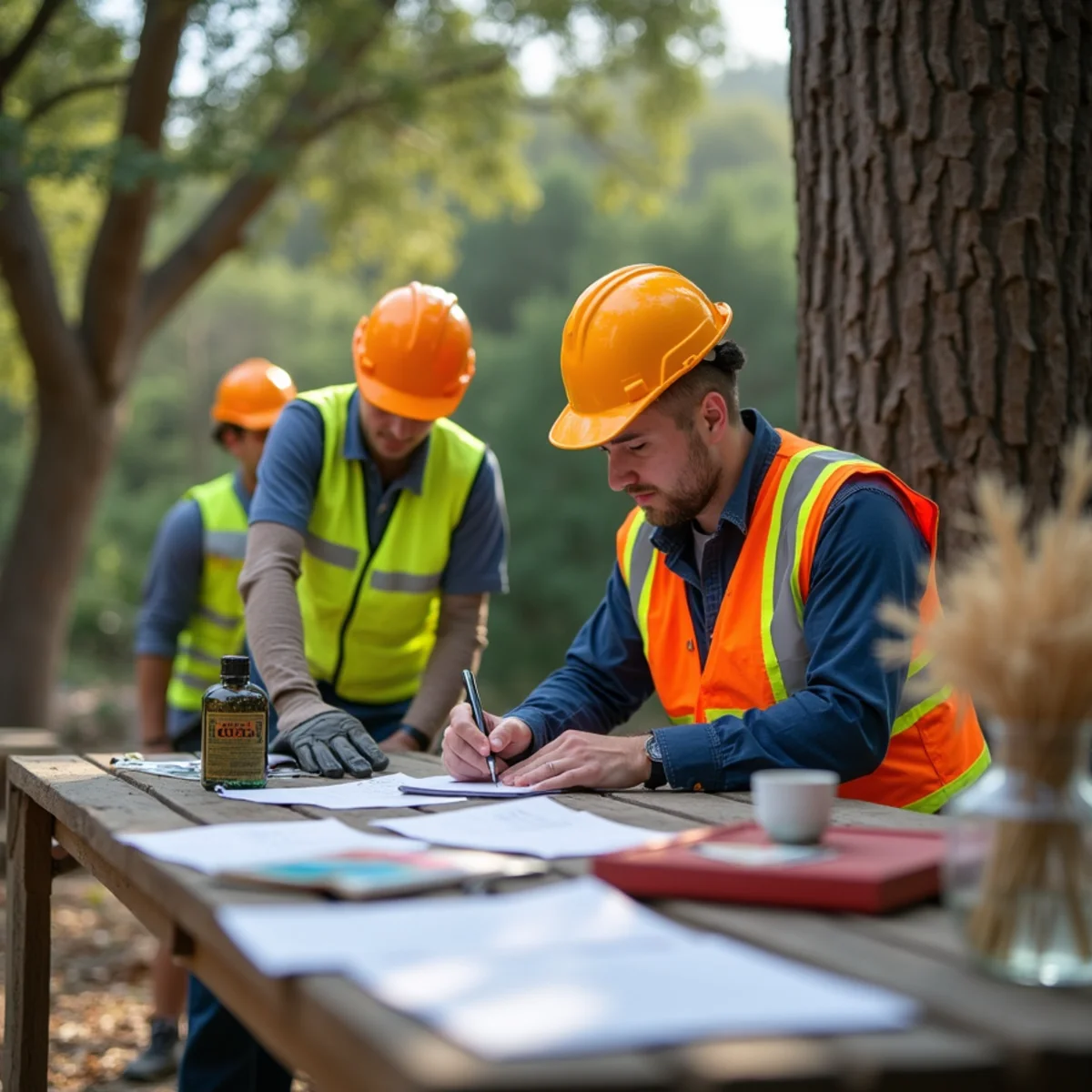
In accordance with California consumer protection standards, we do not quote arbitrary flat rates. Every estimate is custom-engineered based on the physical realities of your property:
10 to 25 parking lot trees, 14-foot delivery clearance, lighting elevation, full chipping and blow-down clean.
30 to 75 trees per rotational sector, structural deadwooding, building roof clearances, resident notification coordination.
100+ mature trees, GPS inventory mapping, 3-to-5-year phased budget scheduling, 24/7 priority storm standby.
Pneumatic air-spade soil excavation, surgical root pruning by arborist, 20-linear-foot heavy root barrier panel installation.
Local Species & Redwood City Neighborhood Risk Profiles
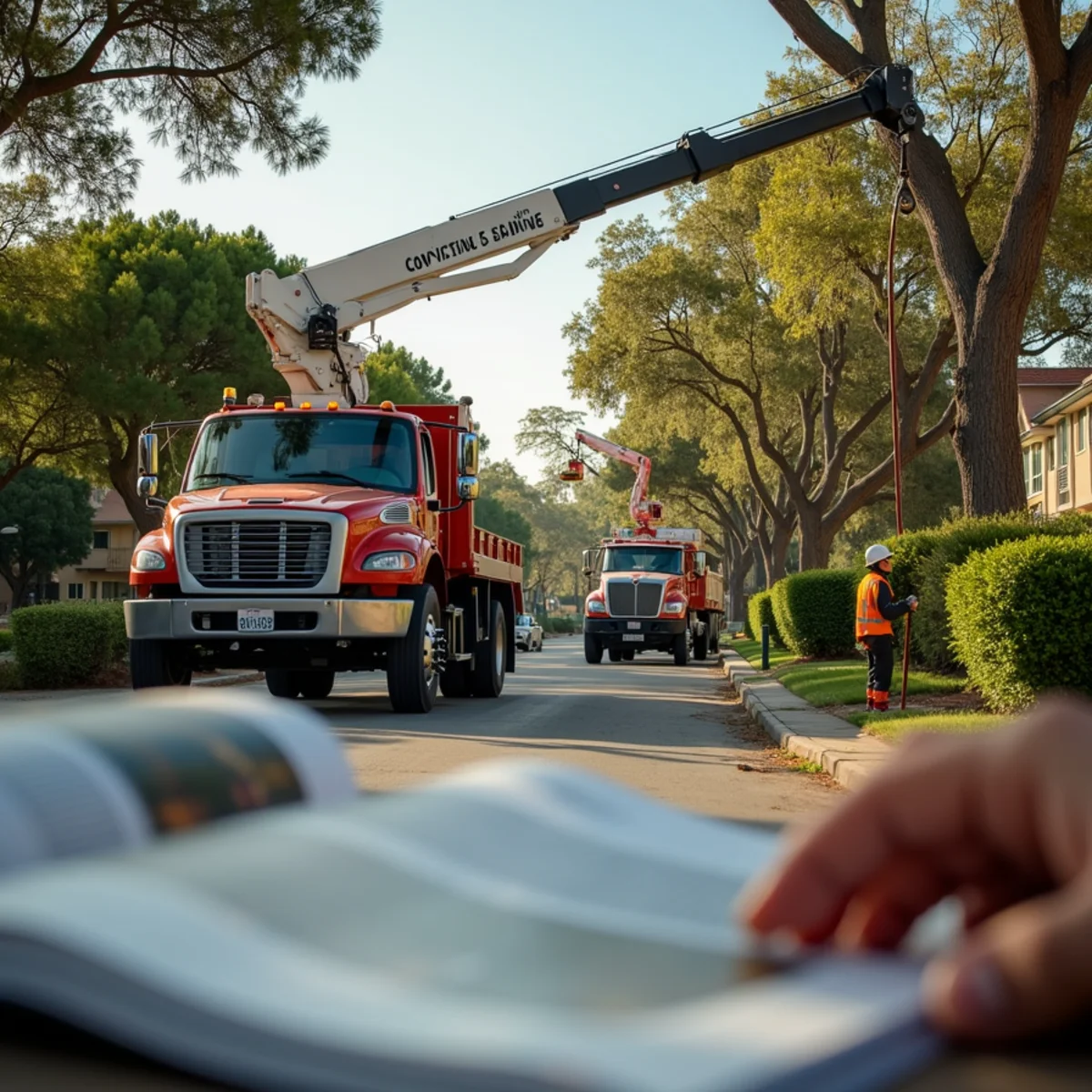
Every Redwood City neighborhood presents distinct geological, architectural, and access dynamics that dictate equipment staging and rigging methods:
Marine clay and fill soils with high groundwater table; large corporate campuses with landscaped water lagoons.
Rapidly leaning landscape trees in shallow soils; aggressive surface roots breaking pavers along walking paths.
Urbanized alluvial soils with tight sidewalk tree wells, high pedestrian traffic, and strict street tree ordinances.
ADA sidewalk clearance trip hazards; delivery truck strikes on mature Chinese elms and london plane trees.
Engineered lagoon developments with expansive condominium complexes and multi-family residential communities.
Dense mature liquidambars and maples causing severe sidewalk uplift and tenant complaints of honeydew sap.
Valley floor industrial parks and hillside business offices with tight parking lots and high-tonnage truck traffic.
Low-hanging canopy limbs striking tractor trailers; deadwood falling on commercial fleet vehicles.
Key Tree Species Considerations in Redwood City
American Sweetgum (*Liquidambar styraciflua*)
Aggressive, shallow surface roots that lift concrete sidewalks and asphalt parking bays; spiky seed pods create pedestrian slip hazards.
London Plane Tree (*Platanus × acerifolia*)
Massive canopy spread blocking parking lot lights; heavy leaf litter clogging commercial storm drains and roof gutters.
Chinese Elm (*Ulmus parvifolia*)
Broad weeping canopy that rapidly drops below 14-foot truck clearance standards; brittle wood prone to splitting in windstorms.
Coast Redwood (*Sequoia sempervirens*) in Turf
Planted in confined commercial turf strips, shallow root plates heave curbing and suckers repeatedly block walkways.
Municipal Permit Compliance & Contractor Credentials
Commercial property owners and HOA boards in California carry a legal duty of care under California Civil Code Section 1714 to maintain grounds safely and prevent foreseeable injury from falling limbs or sidewalk trip hazards. The Americans with Disabilities Act (ADA) mandates a minimum vertical clearance of 80 inches along all accessible pedestrian routes. Honey Bear Trees complies fully with Redwood City commercial tree trimming codes, ANSI A300 pruning standards, and ANSI Z133 safety regulations, providing full certificates of insurance with Additional Insured endorsements.
Questions to Verify Before Hiring Any California Tree Service Contractor:
- ISA Certified Arborist (Credential WE-12849A): Credentialed arborist overseeing all commercial tree inventories, pruning specifications, and board risk reports.
- California State Contractors License (CSLB): Active C-61 / D49 Tree Service specialty license (Honey Bear Trees Lic #1084291) in full legal standing.
- $2,000,000 Commercial General Liability & Workers' Comp: Commercial liability with additional insured endorsement certificates issued naming property managers and HOAs.
- Traffic & Pedestrian Safety Control Protocols: Professional high-visibility signage, traffic cones, barricades, and groundsmen to maintain safe public pedestrian detours.
- Off-Peak & Weekend Scheduling Capability: Flexible crew deployment to conduct noisy chipping and bucket truck operations without disturbing office tenants or retail patrons.
Frequently Asked Questions About Commercial & HOA Tree Service
Yes. We design customized 1-year, 3-year, and 5-year rotational tree maintenance plans tailored for HOA boards and property managers. By dividing your property into logical annual zones, we level out capital reserve expenditures, eliminate surprise budget shortfalls, and ensure every tree on the property receives regular ISA Certified Arborist care.
Related Tree Services, Local Guides & Service Areas
Helpful Tree Care Articles
Primary Service Locations
Get a Free Estimate for Commercial & HOA Tree Service
Call (213) 468-5153 to speak directly with our arborist team. We answer calls around the clock and provide fast on-site evaluations across Redwood City and San Mateo County.