Crown Thinning vs. Topping: Why Topping Hurts Bay Area Trees
Tree topping vs crown thinning explained by certified arborists. Learn why topping harms trees, causes decay and raises storm risks. Call (213) 468-5153.
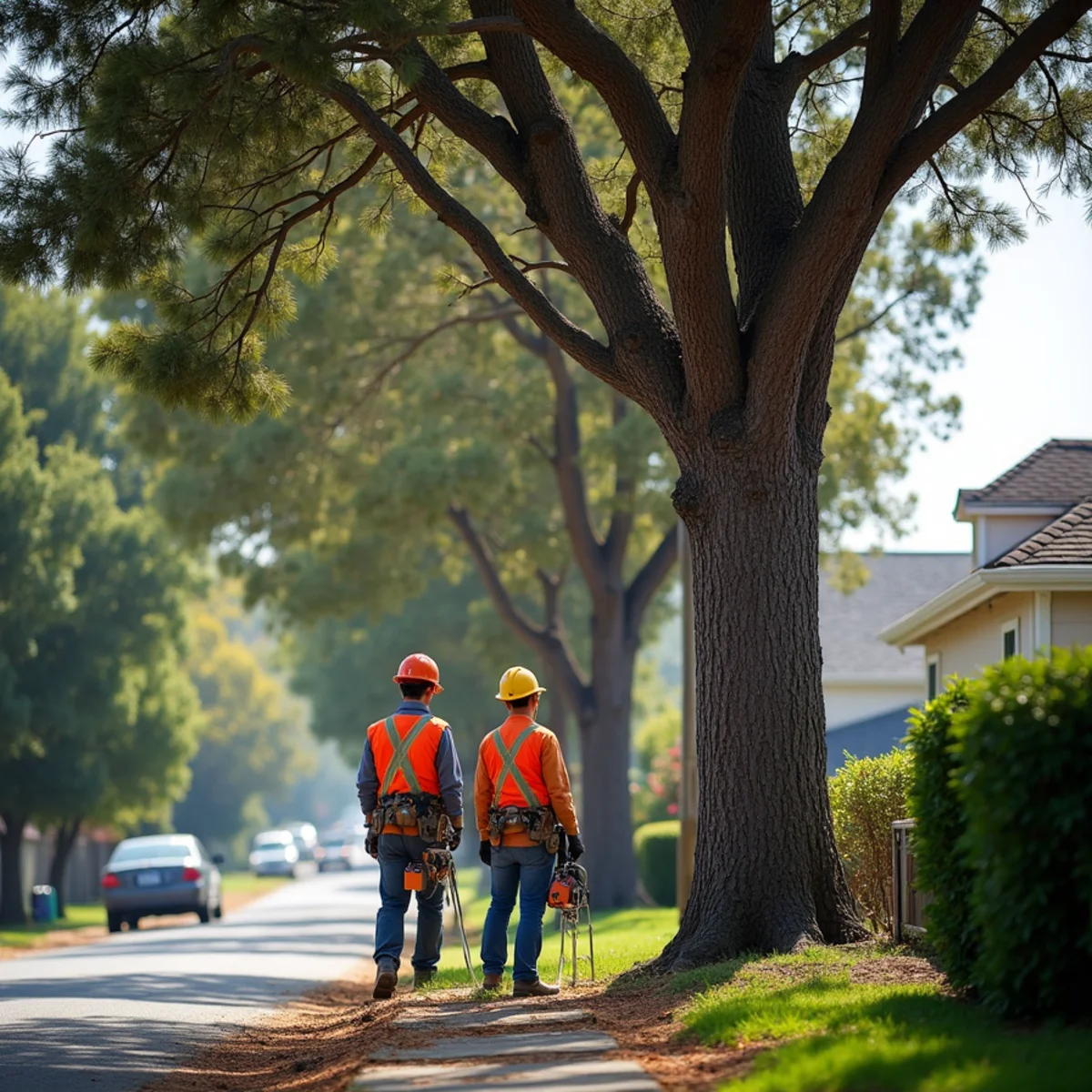
What Is Tree Topping? Anatomy of Canopy Mutilation
Tree topping—also known colloquially as heading, stubbing, hat-racking, or rounding-over—is the indiscriminate cutting back of mature tree branches to arbitrary stubs or small lateral branches that are not large enough to assume the terminal role. It is among the most destructive, biologically harmful practices in arboriculture, yet unqualified handymen and unlicensed tree cutters continue to market it to Peninsula homeowners under the false promises of 'reducing tree size' or 'preventing storm blow-down'.
When a tree is topped, 50% to 100% of its leaf-bearing crown is abruptly sheared away. The remaining exposed branch stubs lack terminal buds to regulate growth hormones, initiating a downward spiral of physiological shock, internal wood decay, and heightened structural hazard.
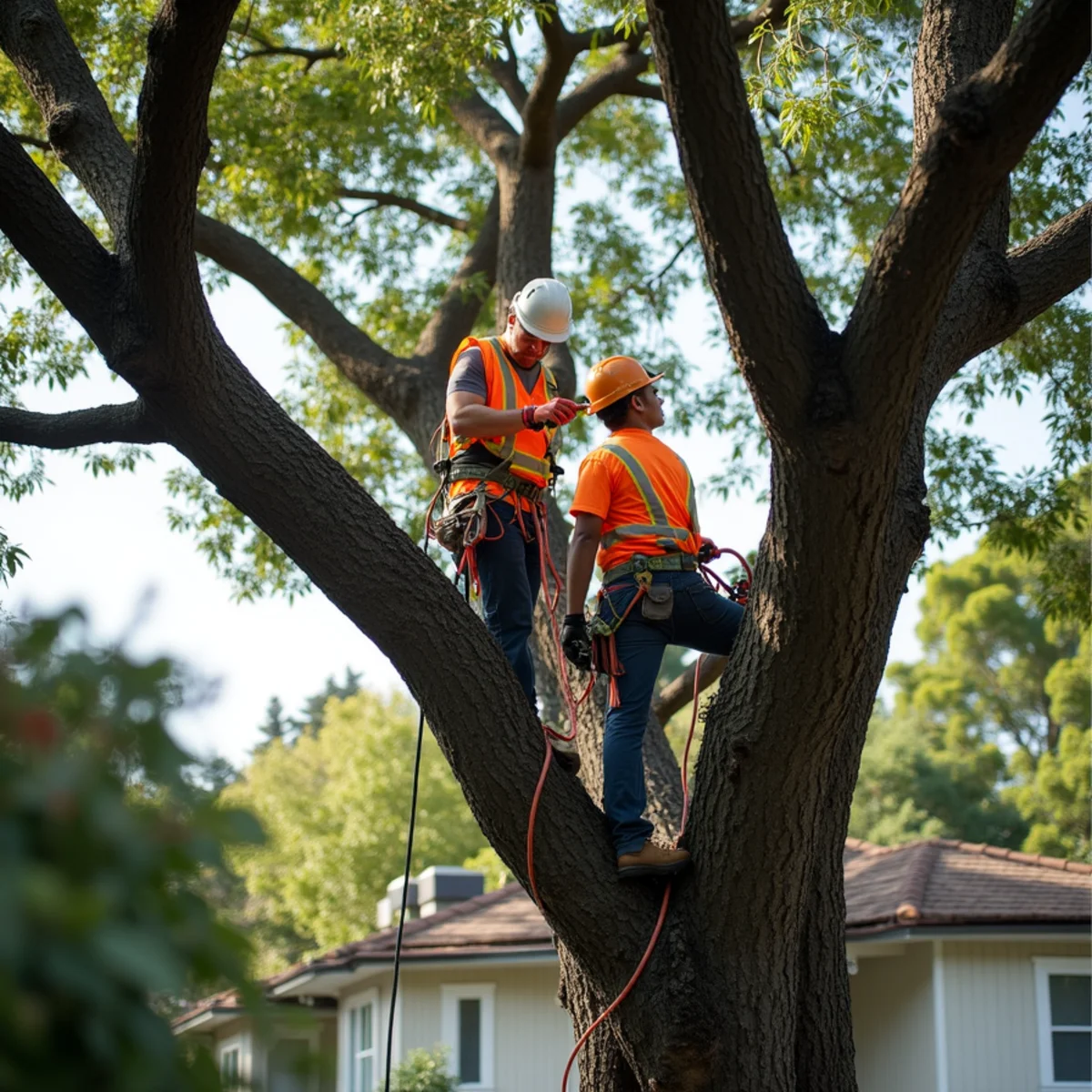
Need Hands-On Arborist Help in Redwood City?
Call (213) 468-5153 to speak directly with our team. We provide rapid emergency dispatch and free written estimates across San Mateo County.
Why Topping Destroys Tree Biology & Structural Integrity
The physiological damage inflicted by tree topping is catastrophic on multiple biological fronts:
1. Severe Starvation: Leaves are the photosynthetic food factories of a tree. Stripping the crown deprives the root system and trunk of vital carbohydrates, depleting stored starch reserves and weakening natural defense systems. 2. Extreme Sunscald: Mature tree bark is protected from intense ultraviolet radiation by the upper canopy. Sudden removal of the foliage canopy exposes tender interior bark to solar radiation, causing bark necrosis, wood cracking, and cambium death. 3. Massive Internal Trunk Rot: Large heading cuts bypass the branch collar—the specialized anatomical swelling containing chemical defense zones that compartmentalize decay. The exposed flat stubs cannot produce callus wood, allowing wood-decay fungi to penetrate straight down into heartwood columns. 4. Panic Sprouting (Watersprouts): In a desperate survival response, the tree activates thousands of dormant adventitious buds beneath the bark, pushing rapid, dense vertical shoots (epicormic watersprouts).
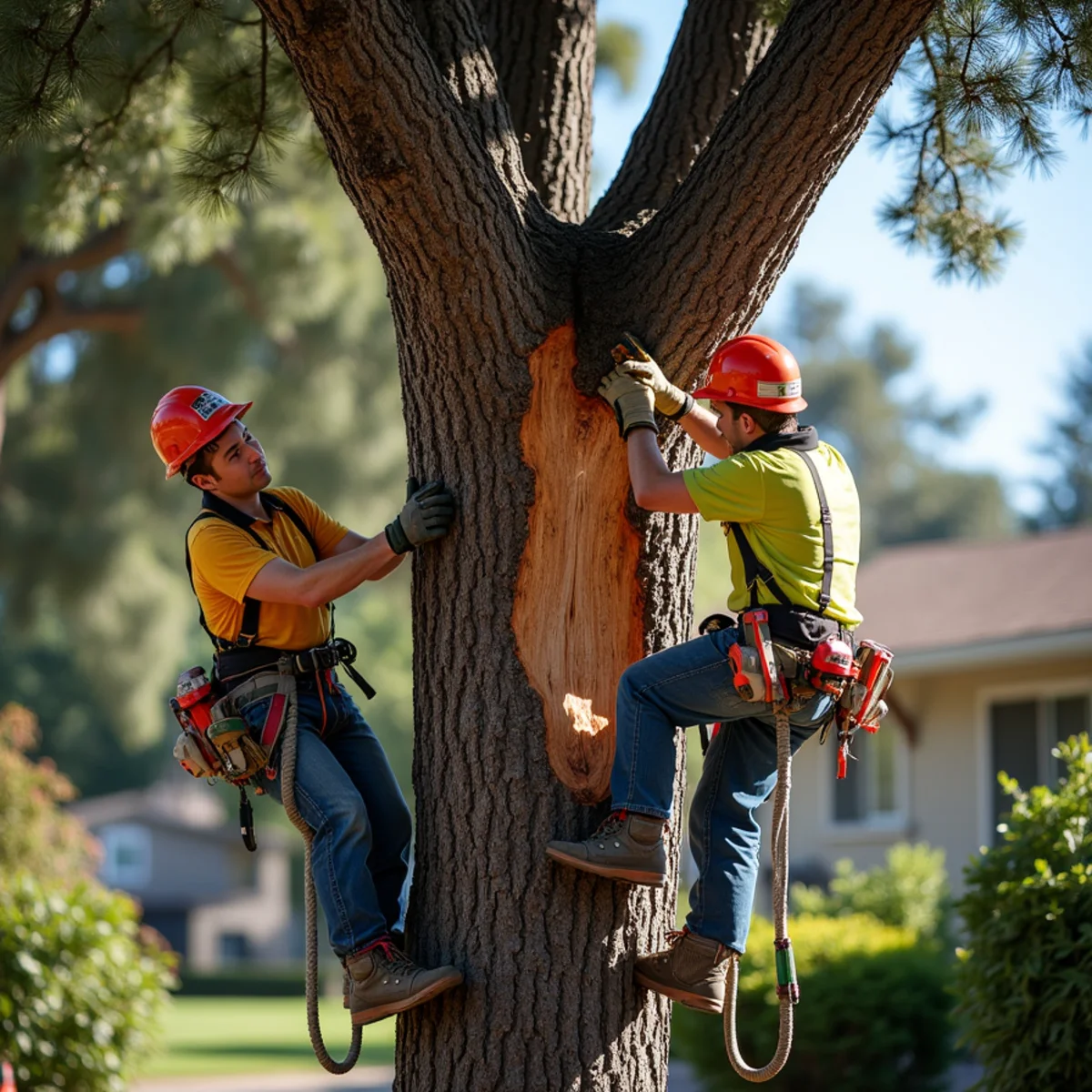
The Rebound Paradox: Topped Trees Become MORE Hazardous
Homeowners who top trees out of fear that tall branches will blow down in winter storms achieve the exact opposite outcome. Within two to three seasons, topped trees become significantly more hazardous than unpruned trees:
Because epicormic watersprouts grow at explosive rates (often 6 to 10 feet in a single season) to replace lost leaf area, the tree rapidly re-establishes its original height. However, unlike original branches that grew over decades with deep interlocking wood rings fused into the heartwood, watersprouts are anchored only in the thin, superficial outer layer of new sapwood.
As these shoots grow into multi-ton upright limbs atop hollow, rotting stubs, their weak attachment points cannot withstand moderate winter storm winds, frequently shearing off and crashing into roofs and cars.
ANSI A300 Crown Thinning: The Professional Alternative
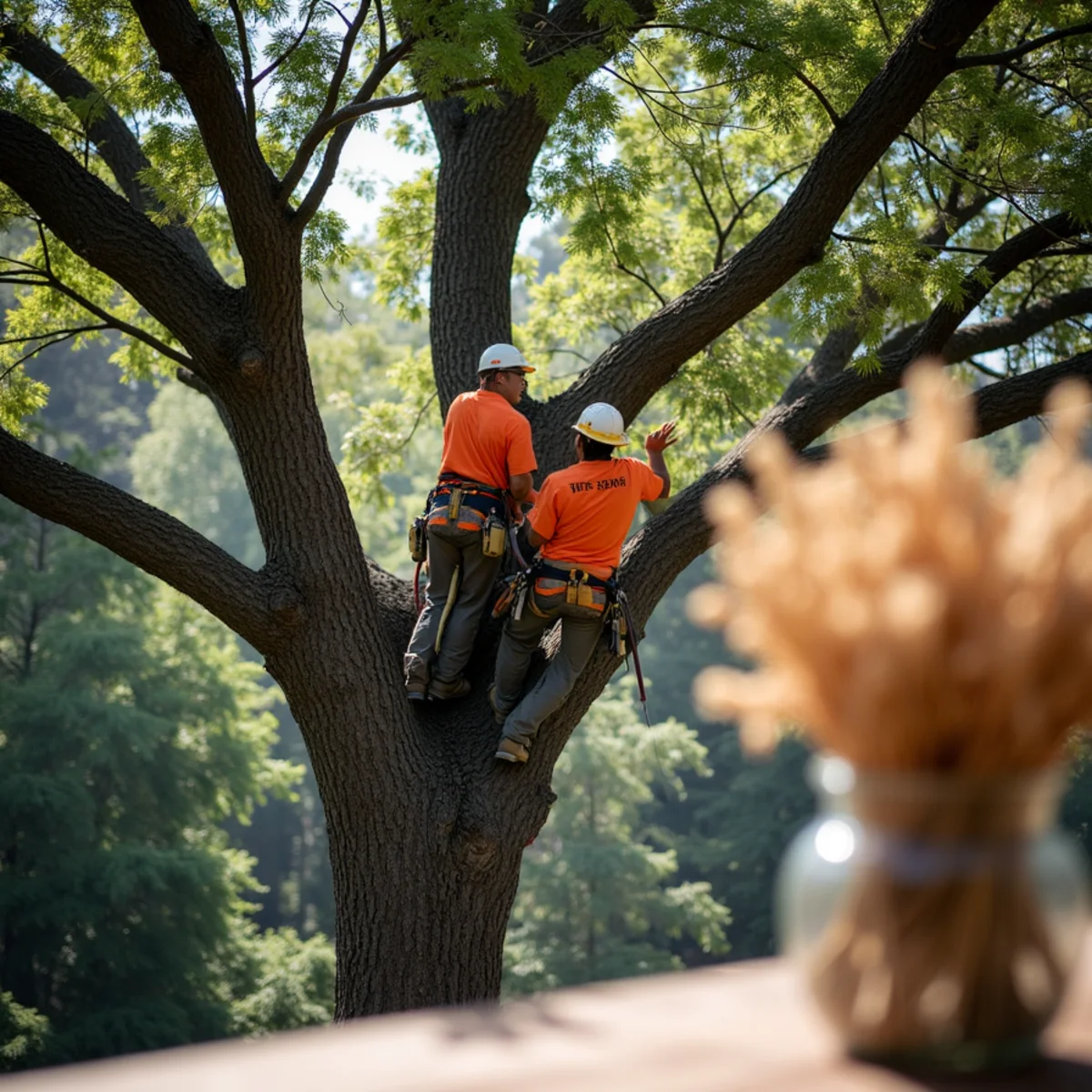
When a tree's canopy is too dense, blocks sunlight from garden beds, or catches excessive wind, the scientifically approved solution under ANSI A300 pruning standards is Crown Thinning:
Crown thinning involves the selective removal of small, competing interior lateral branches (typically 1 to 2.5 inches in diameter) throughout the canopy. Thinning opens up light penetration, enhances air circulation, and significantly reduces the canopy's aerodynamic 'sail effect' during winter storms without compromising the tree's natural architecture, branch unions, or energy reserves. No more than 15% to 20% of live foliage is removed during a single thinning cycle.
Crown Reduction: Safely Lowering Tree Height
When a tree has genuinely outgrown its physical space—such as encroaching on utility wires, rooflines, or second-story balconies—the appropriate technique is Crown Reduction (also known as drop-crotch pruning):
Rather than hacking branches into flat stubs, our arborists prune terminal stems back to substantial lateral branch junctions that are at least one-third the diameter of the parent stem being cut. This preserves apical dominance, maintains natural hormone flow, allows the branch collar to seal properly against fungal rot, and directs future growth into existing, structurally sound limbs.
Restoring Topped Trees: Multi-Year Arborist Retraining
If your trees were topped by a previous owner or an unqualified contractor, they do not necessarily have to be removed immediately. Certified arborists can execute a multi-year crown restoration program:
We assess the crowded clusters of watersprouts arising from each cut stub, selectively removing approximately one-third of the weakest shoots while preserving the strongest, best-oriented branches to assume terminal dominance. Over two to three pruning cycles spaced two years apart, this gradual retraining rebuilds natural canopy architecture and strengthens branch attachments.
In addition to selective shoot training, our arborists evaluate the structural integrity of the rotting stubs beneath the new shoots. Where internal decay threatens to undermine heavy limb attachments, we install dynamic Cobra crown support systems or flexible tether cabling to support the recovering canopy during Peninsula winter storms.
Related Services & Coverage Areas
Related Services
Nearby Service Areas
Frequently Asked Questions
Recovery requires years of specialized arborist crown restoration pruning. Arborists selectively thin dense watersprouts, training the strongest shoots to become new scaffold limbs over multiple pruning cycles, though internal stub rot can never be reversed.
Schedule Your Tree Assessment Today
Call (213) 468-5153 for prompt arborist inspections, permit assistance, and transparent estimates in Redwood City and the Peninsula.