
Tree Touching Power Lines: When to Call PG&E and When to Call an Arborist
Tree touching power lines in California? Know when to call PG&E and when to hire a certified line-clearance arborist. Inquiries: (213) 468-5153.
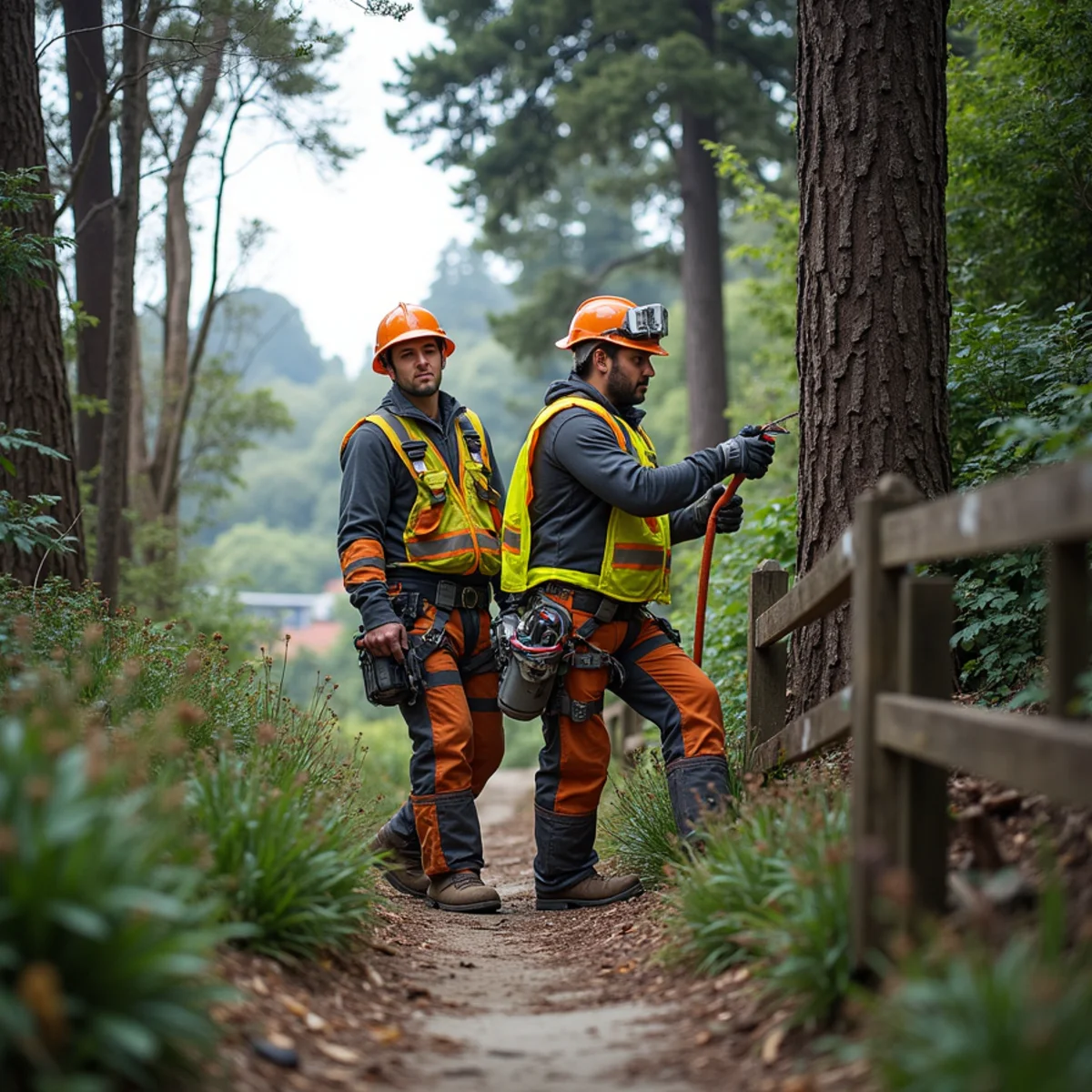
High-Voltage Distribution Lines vs Low-Voltage Drops
When tree branches encroach on overhead utility wires in Redwood City or across San Mateo County, determining who to contact depends entirely on the type of wire involved. Overhead utility poles carry multiple distinct wire layers with vastly different voltage levels and legal maintenance responsibilities:
• High-Voltage Distribution Primaries (Top of Pole): These uninsulated lines carry 12,000 to 21,000 volts of electricity. By California state law, maintenance within the primary zone is exclusively the legal responsibility of Pacific Gas and Electric (PG&E). Private tree companies without Line Clearance Tree Trimmer (LCTT) credentials and utility authorization are strictly prohibited from touching these conductors. • Low-Voltage Secondary Lines (Middle Tier): Located below the distribution transformer, these lines carry 120/240 volts between poles. PG&E monitors these lines for fire hazard clearance under CPUC guidelines. • Residential Service Drops (Pole to House): The triplex insulated service drop running from the neighborhood utility pole directly to your home's roof weatherhead is the legal maintenance responsibility of the property owner in California. • Telecommunications & Cable (Bottom Layer): Telephone and fiber-optic cables carry low electrical voltage, but tree limb friction can sever communication links or tear weatherheads off roof fascias during winter storms.
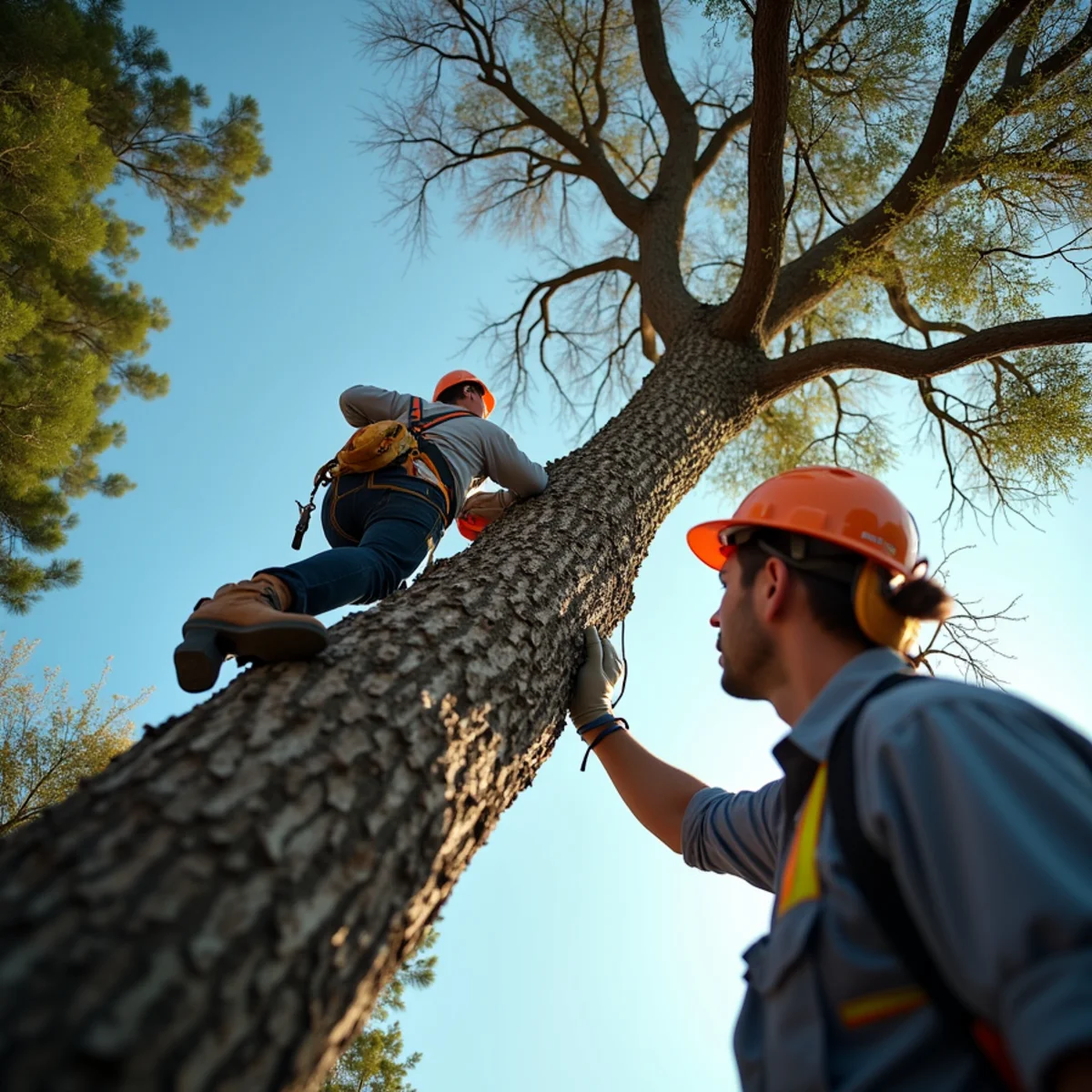
Need Hands-On Arborist Help in Redwood City?
Call (213) 468-5153 to speak directly with our team. We provide rapid emergency dispatch and free written estimates across San Mateo County.
California CPUC General Order 95 Mandate
The California Public Utilities Commission (CPUC) enforces strict vegetation clearance mandates under General Order 95, Rule 35. These regulations require utility operators to maintain specific radial clearances between vegetation and energized electrical conductors at all times:
In standard suburban and urban environments across Redwood City, San Carlos, and Menlo Park, the minimum legal clearance between high-voltage lines and tree canopies is 4 feet radial distance at time of inspection, with a recommended 12-foot clearance trimmed to account for multi-year growth.
In designated High Fire-Threat Districts (HFTD Tier 2 and Tier 3)—which encompass the hillside terrain of Emerald Lake Hills, Woodside, Portola Valley, and Skyline Boulevard—the CPUC mandates a minimum 12-foot year-round clearance around high-voltage power lines, with mandatory 10-foot radial clearance down to the ground around utility poles.
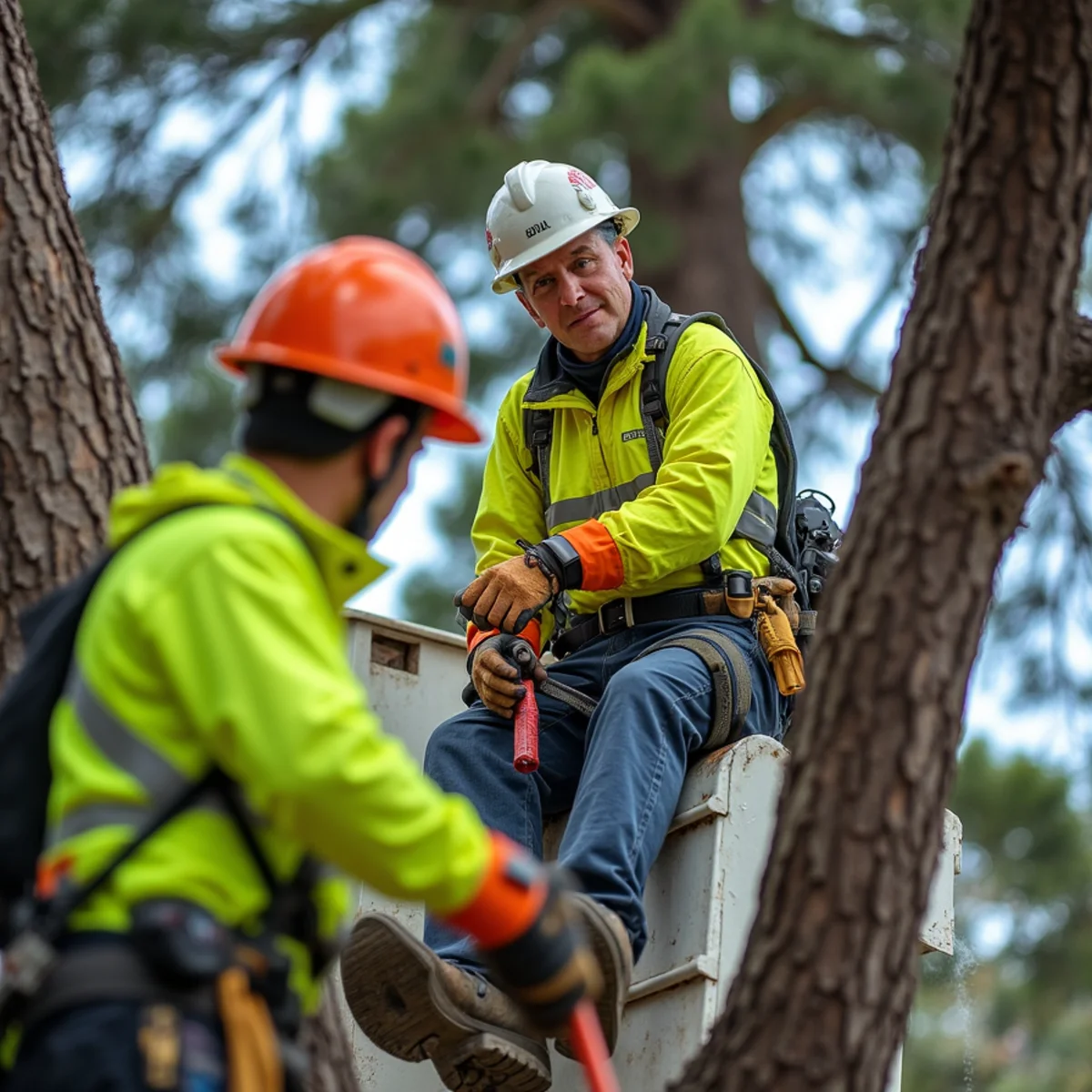
When to Call PG&E (1-800-743-5000) vs a Private Arborist
Knowing who to call prevents dangerous delays and unnecessary utility dispatches:
• Immediately Call PG&E (1-800-743-5000) or 911 If: You see visible electrical arcing, sparks shower from tree branches, smoke or flames emanate from contact points, a tree has fallen directly onto power lines, or power lines are snapped and lying on the ground. Keep all persons at least 30 feet away from the area. • Request a PG&E Routine Tree Inspection If: Limbs are growing within 4 feet of the high-voltage primary wires at the top of the pole, or within 10 feet in hillside fire zones. PG&E will dispatch their utility forestry contractors to prune clearance at no direct cost to the homeowner. • Call Our Private Licensed Arborists at (213) 468-5153 If: Trees are encroaching on the residential service drop connecting the street pole to your home, overhanging communication lines, or growing within 10 to 15 feet of utility corridors where selective crown reduction or complete tree removal is needed before branches cause an outage.
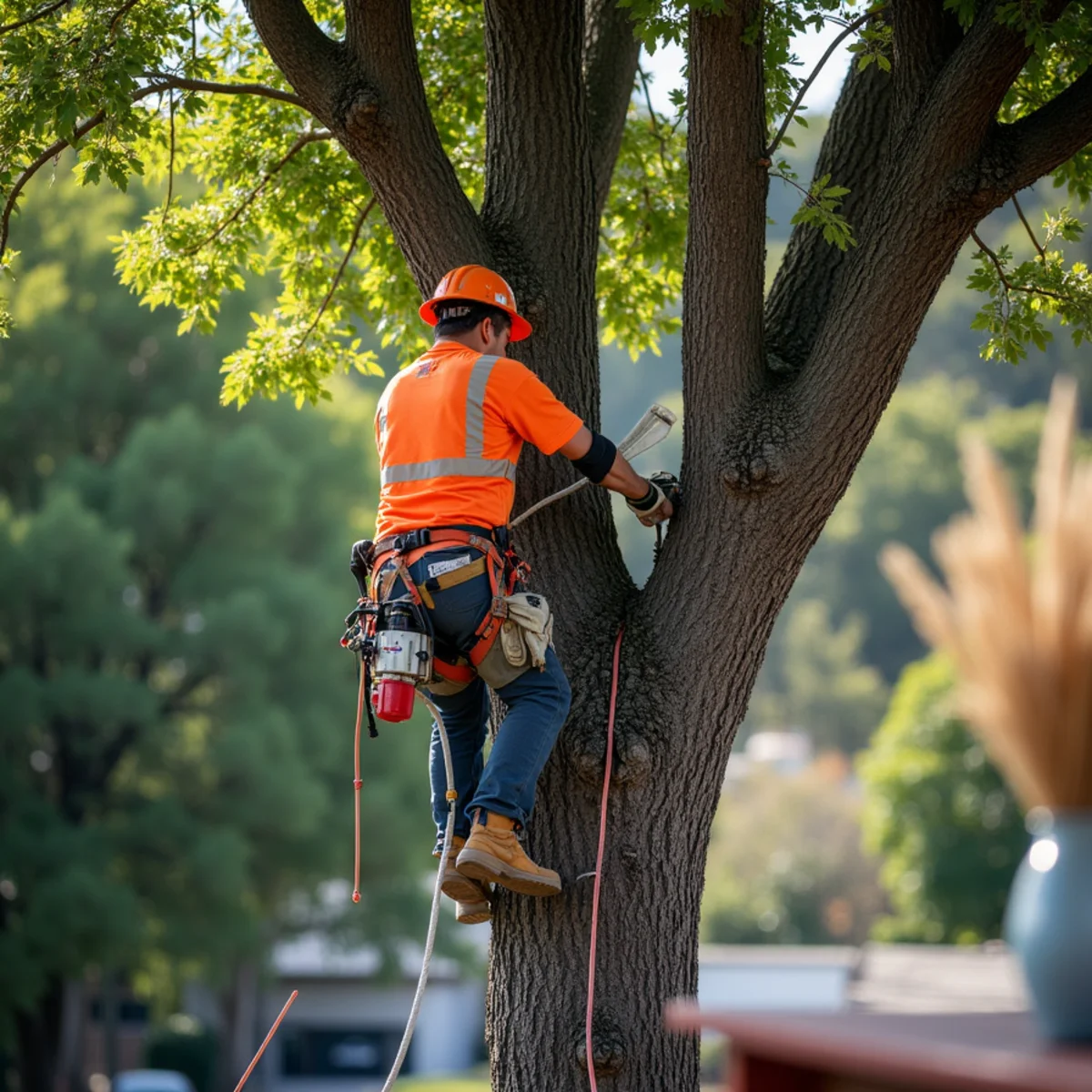
OSHA & ANSI Z133 Electrical Hazard Regulations
Tree trimming near energized electrical conductors is strictly regulated by federal and state occupational safety laws. Under OSHA 29 CFR 1910.269 and ANSI Z133 safety standards, unqualified tree trimmers, landscapers, or handymen are legally prohibited from working within 10 feet of any energized conductor carrying up to 50,000 volts.
Our certified tree crews follow rigorous ANSI Z133 protocols. When pruning trees adjacent to residential service lines, we use non-conductive fiberglass pole tools, insulated aerial bucket trucks, and specialized rope rigging systems to control falling timber away from utility corridors. When necessary, we coordinate with PG&E to temporarily drop or de-energize the service line while our team executes heavy sectional removals.
The Dangerous Illusion of Insulated Service Drops
Many homeowners believe that because the service drop line running to their roof has a black rubber jacket, it is safe to push branches off with a metal pole or prune branches around it with household tools. This is a life-threatening misconception.
The black neoprene jacket on residential service drops is designed solely for weatherproofing against sun and rain, not as certified mechanical insulation against physical abrasion. Over years of wind, constant friction from swaying tree limbs wears through this thin protective coating, exposing live 240-volt copper conductors.
Living tree wood contains sap and high moisture levels, making it an excellent electrical conductor. Touching a tree branch that is energized by a compromised wire can transmit lethal electric current directly into your body or ground through garden ladders.
Safe Directional Clearance Pruning Techniques
Rather than disfiguring trees with crude flat-topping or 'V-cutting' that triggers weak, rapid-growing watersprout shoots directly back into power lines, our certified arborists employ ANSI A300 directional pruning techniques.
We prune branches back to strong natural lateral branch unions that grow away from the utility corridor. This directs future canopy elongation away from power lines while preserving the tree's natural compartmentalization barriers against fungal rot. For high-risk species like blue gum eucalyptus or fast-growing Monterey pines planted directly beneath utility lines, complete tree removal and replacement with utility-compatible dwarf shade trees is often the safest long-term investment.
Related Services & Coverage Areas
Related Services
Nearby Service Areas
Frequently Asked Questions
Generally, no. PG&E only trims vegetation around primary high-voltage distribution lines. The service drop running from the pole to your house is the property owner's responsibility. However, PG&E will disconnect the service line temporarily at no charge so our private arborist can trim safely.
Schedule Your Tree Assessment Today
Call (213) 468-5153 for prompt arborist inspections, permit assistance, and transparent estimates in Redwood City and the Peninsula.