Identifying the Symptoms: When Is Hazardous Tree Removal & Risk Assessment Necessary in Redwood City?
Common Signs & Warning Indicators
- Sudden new lean or freshly mounded soil cracking across the root plate boundary opposite the lean
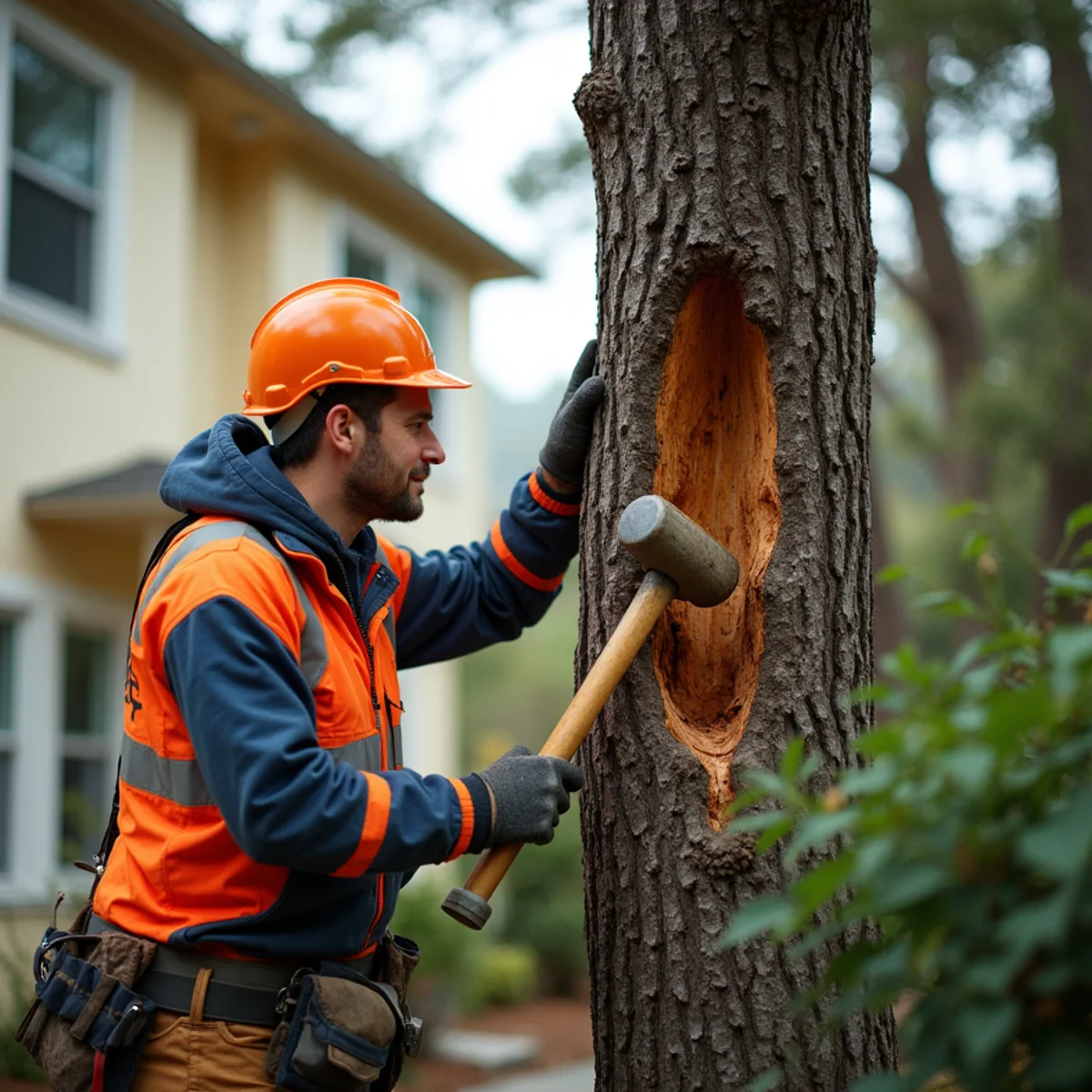
- Deep vertical trunk fissures, weeping seams, or hollow resonance when sound-tested with an arborist mallet
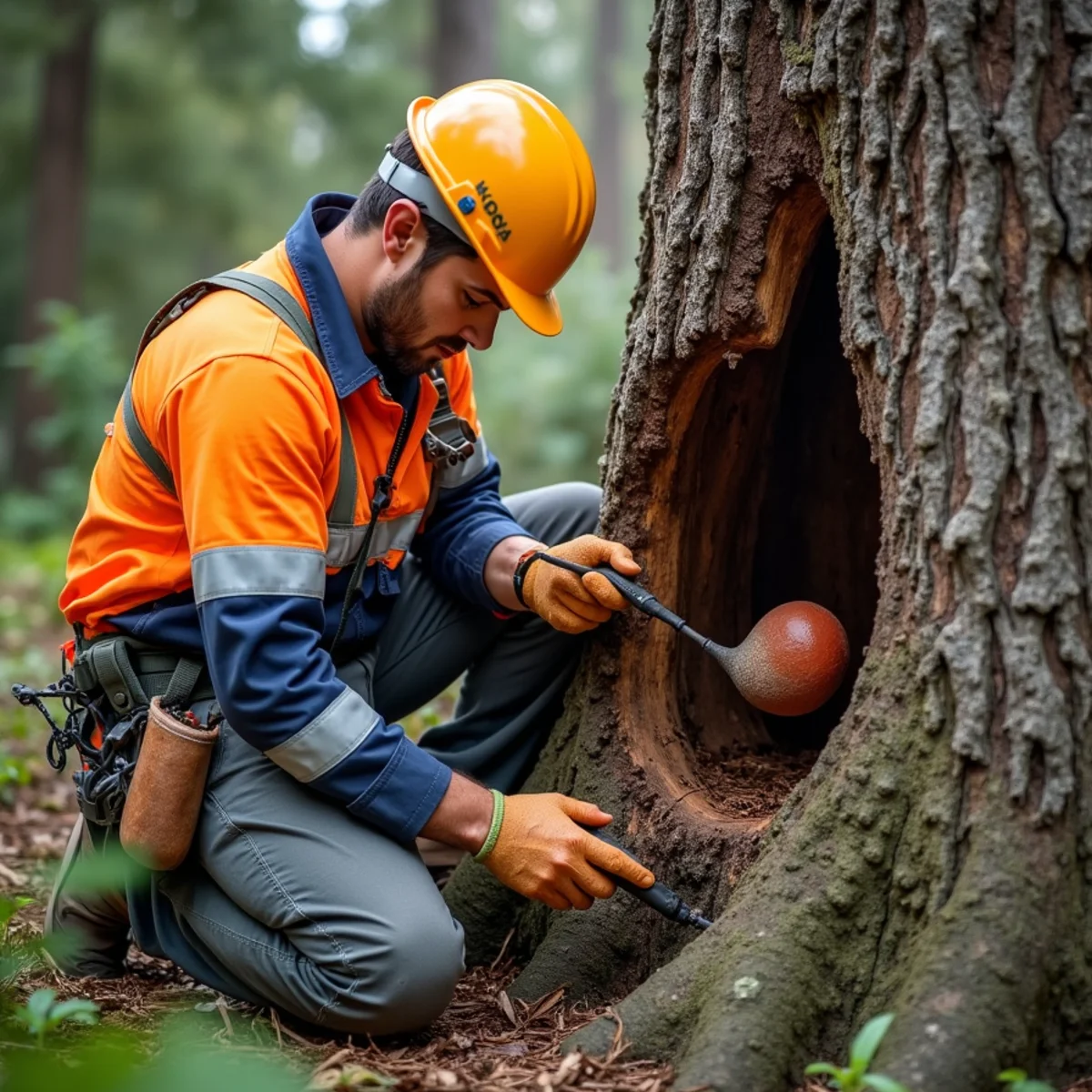
- Shelving fungal brackets, conks, or mushroom clusters (Ganoderma or Armillaria) fruiting at the root flare
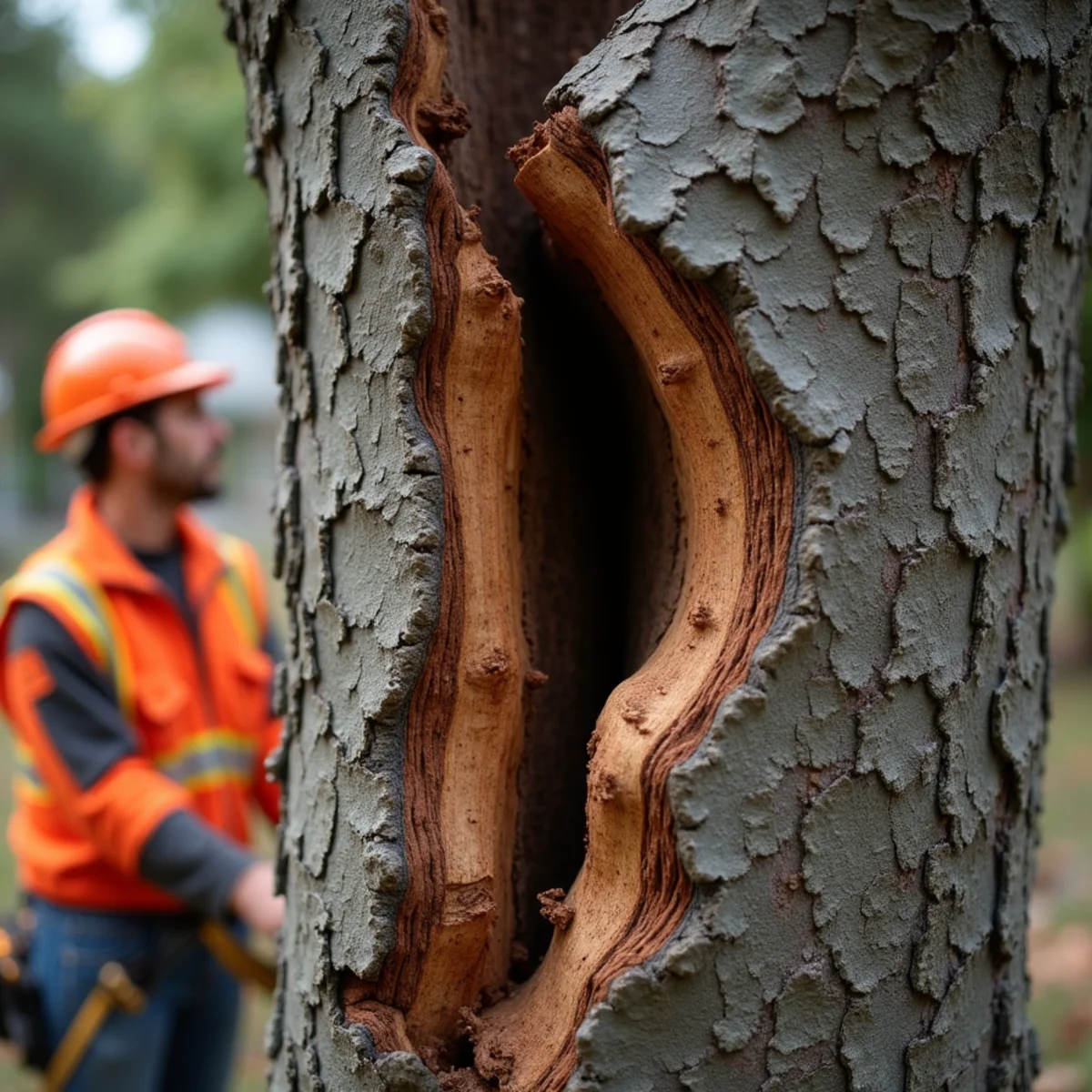
- V-shaped codominant stem unions displaying included bark, active weeping, and longitudinal stress cracks
- Heavy canopy deadwood overhanging rooflines, bedrooms, driveways, or primary electrical service drops
- Extensive bark sloughing, cambium death, or severe hydraulic canopy dieback across upper crown tiers
Local Peninsula Environmental Triggers
Decades of severe California drought alternating with torrential atmospheric river rainfall place extreme mechanical stress on mature San Mateo County trees. In hill neighborhoods like Emerald Lake Hills and Farm Hill, expansive adobe clay soils swell when soaked, weakening root anchorage while gale-force winds exert immense leverage on heavy evergreen canopies. Furthermore, wood-decay pathogens such as Ganoderma applanatum and Armillaria mellea silently consume internal structural cellulose, creating hazardous hollow cores behind seemingly healthy outer bark.
Under California law and local municipal ordinances, property owners bear legal responsibility for hazardous trees that threaten adjacent roadways, sidewalks, power lines, or neighboring structures. Early intervention by an ISA Certified Arborist prevents emergency failures during severe coastal weather.
What to Do First: The First-30-Minutes Tree Emergency Checklist
When a storm strikes or a tree fails, prioritize human safety before initiating cleanup. Follow these essential field steps:
Action Checklist Before Cleanup
- 1Keep all family members, tenants, and pets at a safe distance—at least 1.5 times the total height of the hazardous tree.
- 2Inspect the ground around the trunk base: if soil is freshly lifting, cracking, or exposing roots, structural failure may be imminent.
- 3Check overhead utility lines: if branches are rubbing against high-voltage lines or arcing, call 911 and PG&E immediately at 1-800-743-5000.
- 4Never attempt amateur tree felling, rope winching, or chainsaw relief cuts on structurally compromised or decayed timber.
- 5Call Honey Bear Trees at (213) 468-5153 for an immediate ISA Certified Arborist hazard evaluation and crane extraction plan.
What to Tell Our Dispatcher
Having these property details ready helps us deploy the appropriate crane, rigging blocks, or line-clearance equipment immediately:
- Exact property address and access conditions (hillside driveway, tight side yard gate, narrow lane)
- Visible structural symptoms (fresh severe lean, hollow trunk cavity, split codominant union, fungal conks)
- Immediate targets at risk (residential roof, children's play structure, garage, driveway, neighboring home)
- Approximate tree species, height, and trunk diameter (e.g., 60-foot eucalyptus, 36-inch DBH heritage oak)
- Equipment accessibility for crane outriggers, aerial lift trucks, or chipper hauling units
Common Tree Hazards in Redwood City: Causes, Signs & Immediate Safety Steps
Use this diagnostic reference to identify hazardous structural conditions and coordinate safe next steps without putting family or property at risk:
| Cause | Warning Signs | Immediate Response | Who to Call | Documentation |
|---|---|---|---|---|
| Basal Decay Cavity & Fungal Fruiting Bodies (Ganoderma / Armillaria) | Shelf conks at base, soft punk-wood inside hollow trunk, hollow thud under acoustic mallet sounding | Avoid walking near the root zone; do not lean ladders against or apply rope tension to the weakened trunk | Call Honey Bear Trees at (213) 468-5153 for TRAQ wood sound testing and emergency crane pick planning | Photograph fungal brackets, open cavities, and measured opening dimensions relative to trunk circumference |
| Acute Structural Lean with Root Plate Uplift | Fresh ground humping opposite the lean direction, severed surface roots, leaning exceeds 15 degrees | Evacuate bedrooms and living areas within the fall arc; move vehicles from the driveway immediately | Call (213) 468-5153 for immediate priority dispatch and structural stabilization rigging | Take wide-angle photographs showing the tree lean relative to vertical roof gutters and plumb walls |
| Splitting Codominant Stems with Included Bark | Deep vertical seam between twin trunks, sap weeping from the joint, widening crack after high wind events | Do not climb into the canopy; keep people off patios and walkways directly beneath both twin stems | Call our arborist team to assess dynamic cabling support options versus emergency sectional removal | Photograph the junction fissure close-up and document whether daylight can be seen through the split |
| Massive Suspended Canopy Deadwood ('Widow-Makers') | Large broken boughs hung up in lower branches, dried leafless limbs over 4 inches in diameter above targets | Rope off the drop zone below; avoid parking vehicles or placing outdoor furniture beneath canopy | Call (213) 468-5153 for aerial bucket truck or climber-assisted precision deadwood rigging and removal | Capture photographs from the ground showing the diameter and position of hung limbs over structures |
| Underground Root Severance from Trenching or Excavation | Recent utility trenching within the critical root zone, sudden crown wilting, loose trunk sway in moderate breezes | Halt excavation within the tree protection zone immediately; do not backfill severed root trenches before inspection | Contact Honey Bear Trees for an urgent arborist root damage assessment and structural stability scoring | Photograph severed root diameters and measure the trench distance from the tree's main trunk base |
Request an On-Site Assessment for Hazardous Tree Removal & Risk Assessment
Speak with our local Redwood City dispatch team at (213) 468-5153 to discuss your tree situation and schedule an arborist evaluation.
Our Methodological Standards for Hazardous Tree Removal & Risk Assessment
Our ISA Certified Arborists conduct systematic Tree Risk Assessment Qualification (TRAQ) Level 2 and Level 3 evaluations. We examine the root collar, main bole, scaffold limb attachments, and upper crown using sounding mallets, depth probes, and acoustic analysis where necessary. Every evaluation quantifies three precise variables: the likelihood of failure, the likelihood of impacting a defined target (homes, decks, cars, pedestrians), and the potential severity of structural damage.
Crane-Assisted Vertical Extraction
When a decayed tree cannot safely support a climbing arborist or directional ground drop, we deploy mobile hydraulic cranes. Straps balance each canopy section before the cut is executed, lifting timber vertically up and over residential structures without impact shock.
Precision Aerial Sectional Rigging
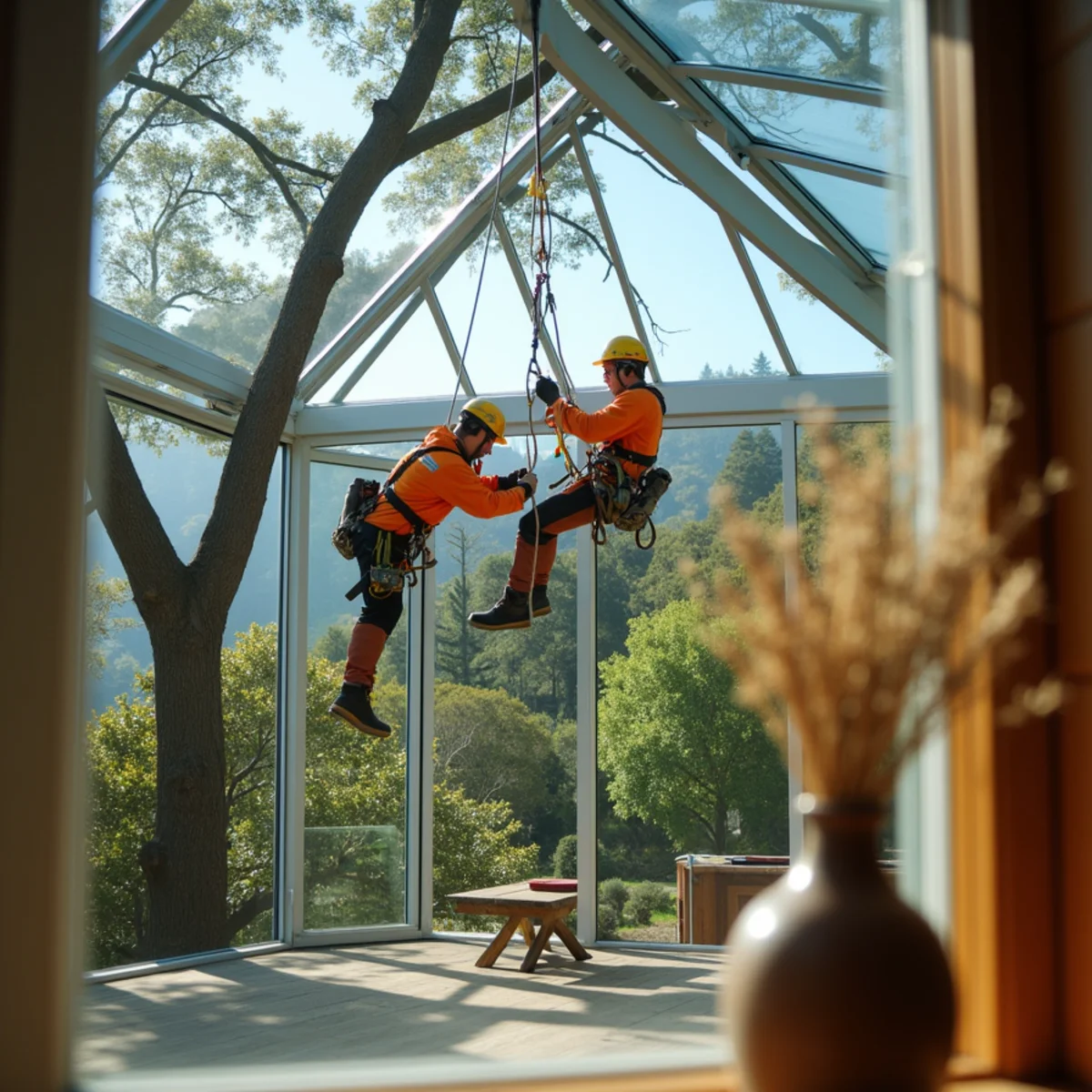
In tight Peninsula yards where cranes cannot reach, our certified arborists utilize arborist friction brakes (Port-a-Wrap) and high-modulus arborist rigging lines to dismantle heavy limbs in compact, controllable sections, lowering them gently into designated drop zones.
Air-Spade Root Flare Sounding & Cavity Evaluation
For questionable trees where the root collar is buried, we use supersonic compressed air to safely remove soil without damaging tender root bark. This reveals hidden Armillaria mycelial fans, girdling roots, and basal decay cavities for precise TRAQ risk scoring.
Step-by-Step Execution: From Inspection to Final Cleanup
ISA TRAQ Hazard Diagnostic Assessment
An ISA Certified Arborist performs a comprehensive Level 2 structural inspection, sounding the trunk, assessing root heave, evaluating canopy dieback, and calculating target failure risks.
Municipal Hazard Permit & Exemption Filing
We prepare photographic and diagnostic documentation showing the tree meets Redwood City's immediate hazard criteria, expediting city review and securing mandatory permits or emergency waivers.
Rigging Architecture & Safety Perimeter Setup
Our crew establishes a secure drop zone, sets up turf protection mats, tests structural anchor points, and coordinates crane outrigger placements with neighboring clearances.
Precision Sectional Canopy Dismantling
Climbers and aerial bucket operators systematically de-weight the crown, removing heavy lateral limbs piece-by-piece using controlled friction lowering systems to prevent shock loads.
Controlled Trunk Billeting & Hydraulic Lowering
The main trunk bole is carefully sectioned into manageable billets. Highly decayed or hollow wood is rigged with specialized balance straps to eliminate unexpected fracture risks.
Low-Impact Debris Processing & Site Restoration
All brush is chipped into nutrient-rich mulch, heavy logs are loaded with mini-skid steers onto hauling trucks, the work area is thoroughly raked and swept, and stump grinding is completed.
How Much Does Tree Service Cost in Redwood City?
In accordance with California consumer protection standards, we do not quote arbitrary flat rates. Every estimate is custom-engineered based on the physical realities of your property:
Diameter under 18 inches DBH, clear drop zone, standard manual sectional rigging, full debris chipping and haul-away.
Trunk diameter 20 to 36 inches DBH, proximity to rooflines, light power service drop rigging, aerial friction control.
Eucalyptus or historic pine, advanced internal rot prohibiting climber tie-off, mobile hydraulic crane pick, street closure permit.
ISA TRAQ Level 2/3 written risk assessment, certified arborist diagnostic report, expedited Redwood City hazard exemption submittal.
Local Species & Redwood City Neighborhood Risk Profiles
Every Redwood City neighborhood presents distinct geological, architectural, and access dynamics that dictate equipment staging and rigging methods:
Steep hillside slopes with shallow rocky loam over fractured sandstone; high atmospheric wind exposure.
Top-heavy Monterey pines and mature eucalyptus with shallow root plates vulnerable to windthrow and basal shear.
Expansive serpentinite clay soils prone to heavy seasonal shrink-swell movement and saturated waterlogging.
Ancient coast live oaks suffering from subterranean Armillaria root rot and brittle codominant stem splits.
Engineered marine fill and bay mud with high water table and elevated salinity levels.
Rapidly leaning ornamental trees and wind-strained evergreens with flat, unanchored root plates in saturated soils.
Deep alluvial loam in established residential lots with dense infrastructure, sidewalks, and utility lines.
Century-old heritage oaks with severe hollow cavities, included bark, and extensive root loss from historic driveway paving.
Key Tree Species Considerations in Redwood City
Coast Live Oak (*Quercus agrifolia*)
Cryptic internal heart rot caused by Inonotus dryophilus or Ganoderma; heavy horizontal limb failure during hot dry spells (summer branch drop).
Monterey Pine (*Pinus radiata*)
Pitch canker infestation, bark beetle girdling, and whole-tree root plate tipping during high-wind winter atmospheric rivers.
Blue Gum Eucalyptus (*Eucalyptus globulus*)
Massive brittle branch shear, excessive canopy weight, explosive trunk splits, and rapid failure in saturated hillside clays.
Valley Oak (*Quercus lobata*)
Massive structural scaffold limb collapse, severe codominant stem separation at V-crotches, and basal decay in residential turf zones.
Municipal Permit Compliance & Contractor Credentials
Redwood City Municipal Code Chapter 35 protects trees with a trunk diameter of 12 inches or greater measured 54 inches above natural grade (heritage oaks 38 inches DBH). If a protected tree poses an imminent hazard to life or property, Honey Bear Trees prepares certified arborist photographic documentation and TRAQ risk ratings to secure emergency hazard removal permits from the Redwood City Community Development Department before or immediately following removal.
Questions to Verify Before Hiring Any California Tree Service Contractor:
- ISA Certified Arborist & TRAQ Qualification: Mandatory: ISA Credential WE-12849A with formal Tree Risk Assessment Qualification to evaluate structural thresholds.
- California State Contractors License (CSLB): Active C-61 / D49 Tree Service specialty contractor license (Honey Bear Trees Lic #1084291) verified with CSLB.
- Comprehensive Commercial Liability & Workers' Comp: $2,000,000 general liability insurance and active workers' compensation covering tree climbing, felling, and crane rigging.
- Hydraulic Crane & Heavy Rigging Equipment: In-house rigging gear, negative-rigging friction bollards, and licensed mobile crane access for structurally compromised trunks.
- Local Municipal Permitting Mastery: Direct experience navigating Redwood City Tree Protection Ordinance (Ch. 35) and San Mateo County hazard exemption filings.
Frequently Asked Questions About Hazardous Tree Removal & Risk Assessment
Primary warning signs include a sudden new lean, freshly cracked or mounding soil along the root plate, deep vertical fissures in the main trunk, shelf-like fungal conks fruiting at the base, and large dead scaffold branches suspended in the canopy. If you notice any of these symptoms, call Honey Bear Trees at (213) 468-5153 immediately for an ISA Certified Arborist evaluation.
Related Tree Services, Local Guides & Service Areas
Helpful Tree Care Articles
Primary Service Locations
Get a Free Estimate for Hazardous Tree Removal & Risk Assessment
Call (213) 468-5153 to speak directly with our arborist team. We answer calls around the clock and provide fast on-site evaluations across Redwood City and San Mateo County.