
Atmospheric River Warning: Signs a Tree Could Fail in the Next Storm
Watch for signs a tree will fall in a storm: root plate lifting, trunk cracks, hollows and saturated soil warnings. Inspect now: Call (213) 468-5153.
The Atmospheric River Threat on Peninsula Soils
Winter storms on the San Francisco Peninsula are increasingly dominated by atmospheric river events—prolonged meteorological corridors that dump 3 to 7 inches of continuous rainfall across Redwood City, Emerald Lake Hills, and Woodside within 48 to 72 hours. While healthy native trees are adapted to wet winters, prolonged saturation alters soil mechanics dramatically.
Peninsula soils are rich in expansive Franciscan clay and sedimentary shale. When saturated to field capacity, clay particles lose shear strength, transforming from a dense structural anchor into a slick, fluid slurry. As gale-force wind gusts exceeding 45 to 60 mph strike dense evergreen canopies, the sail effect exerts hundreds of thousands of foot-pounds of rotational torque on the root plate, leading to catastrophic whole-tree windthrow.
Need Hands-On Arborist Help in Redwood City?
Call (213) 468-5153 to speak directly with our team. We provide rapid emergency dispatch and free written estimates across San Mateo County.
Sign 1 & 2: Basal Soil Cracking & Fresh Unnatural Leaning
The two most urgent indicators of imminent whole-tree failure are physical changes around the root plate and trunk axis:
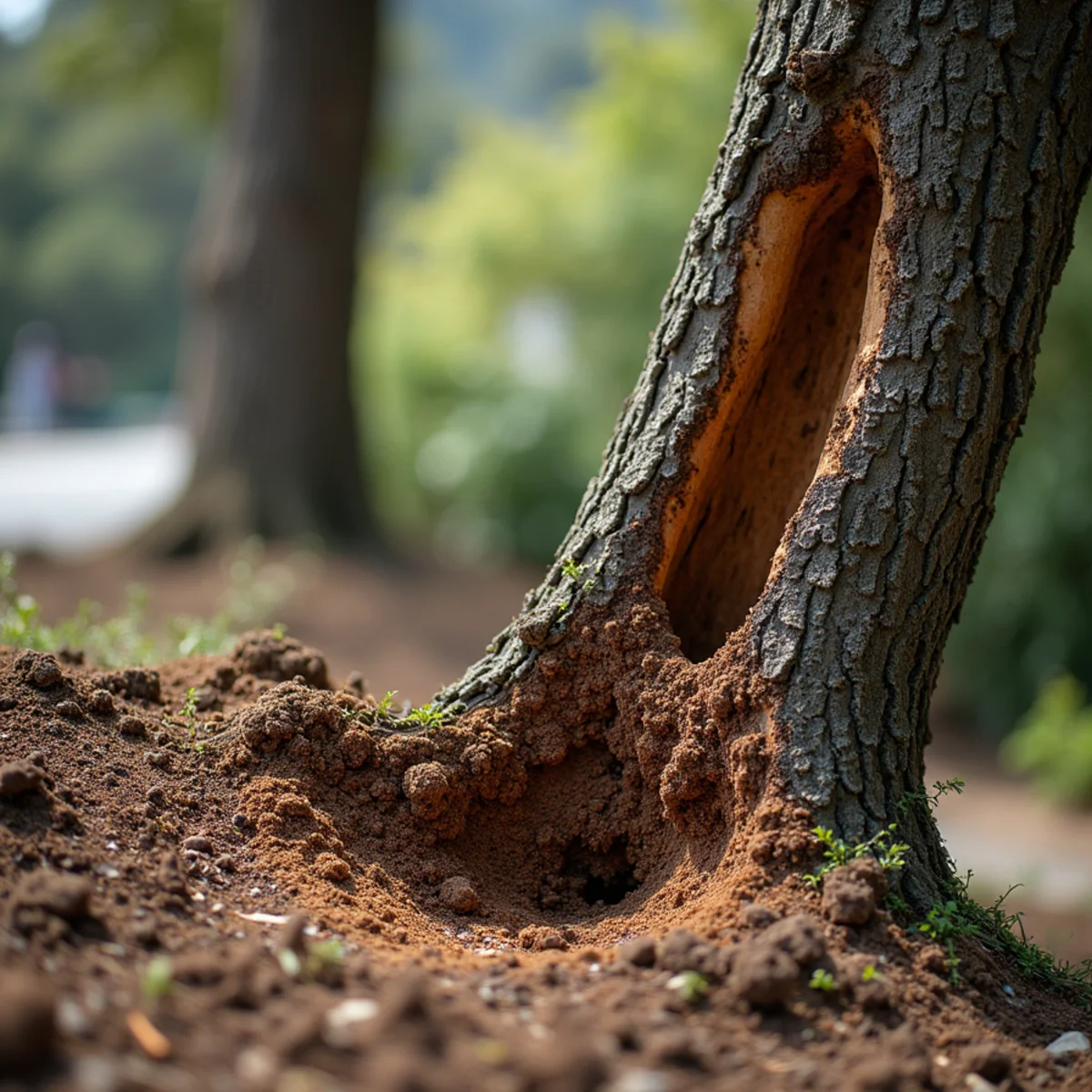
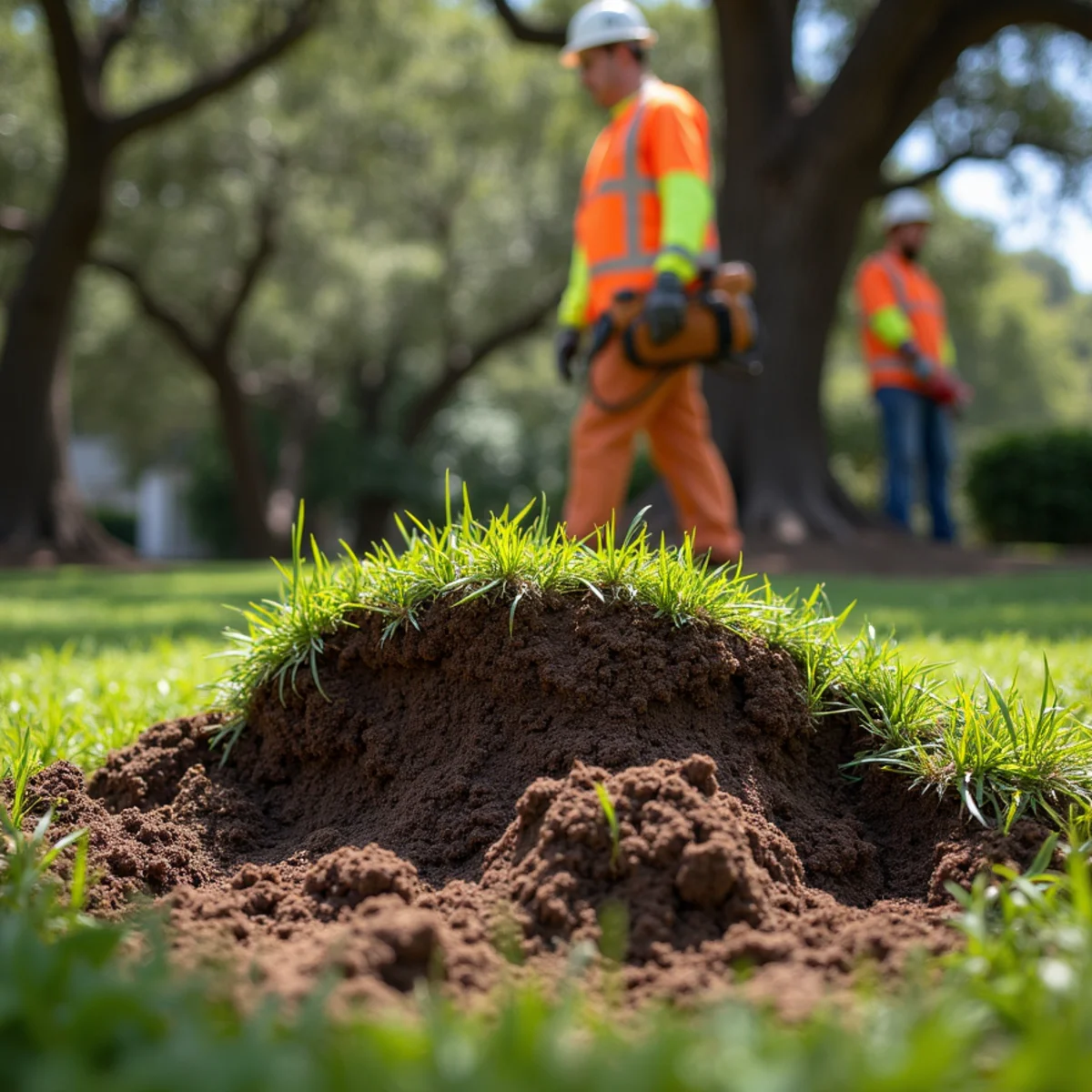
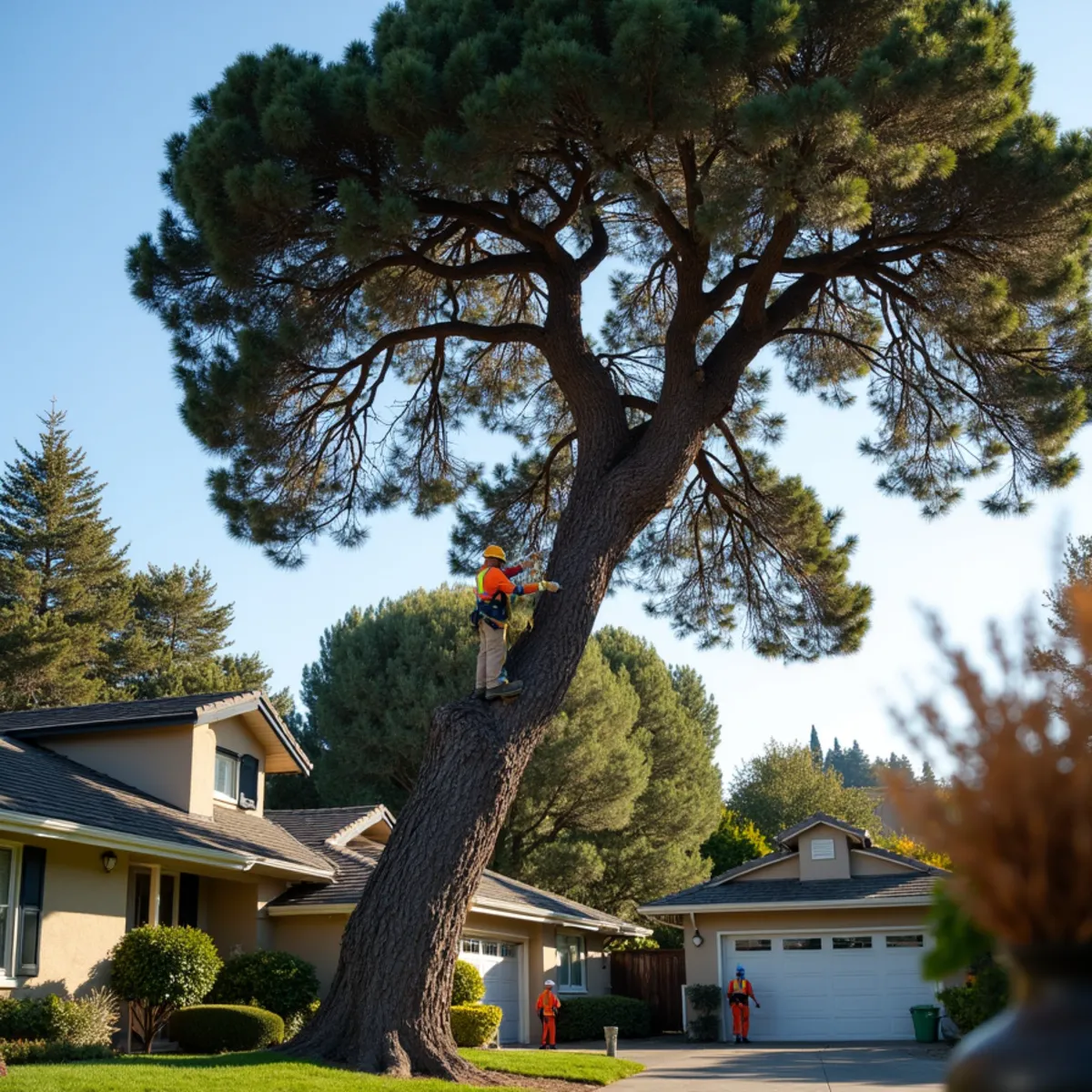
• Fresh Unnatural Lean: While many trees develop a gradual, natural lean over decades to reach sunlight (evidenced by a curved trunk that straightens vertically toward the sky), a sudden, fresh lean with a straight trunk indicates active root failure beneath the surface. If a tree has visibly shifted angle following heavy rain, structural collapse can occur within hours. • Basal Soil Mounding & Tension Cracks: Inspect the soil on the side opposite the lean (the tension side). Look for freshly cracked, lifted earth, mounded sod, or newly exposed white anchor roots tearing free from the ground. If water is bubbling up through a soil crack around the trunk base during a storm, the root plate is actively pumping and detaching from the substrate.
Sign 3 & 4: Co-Dominant Stems & Fungal Conks
Structural timber defects that go unnoticed during calm summer months become fatal failure points during high-wind winter storms:
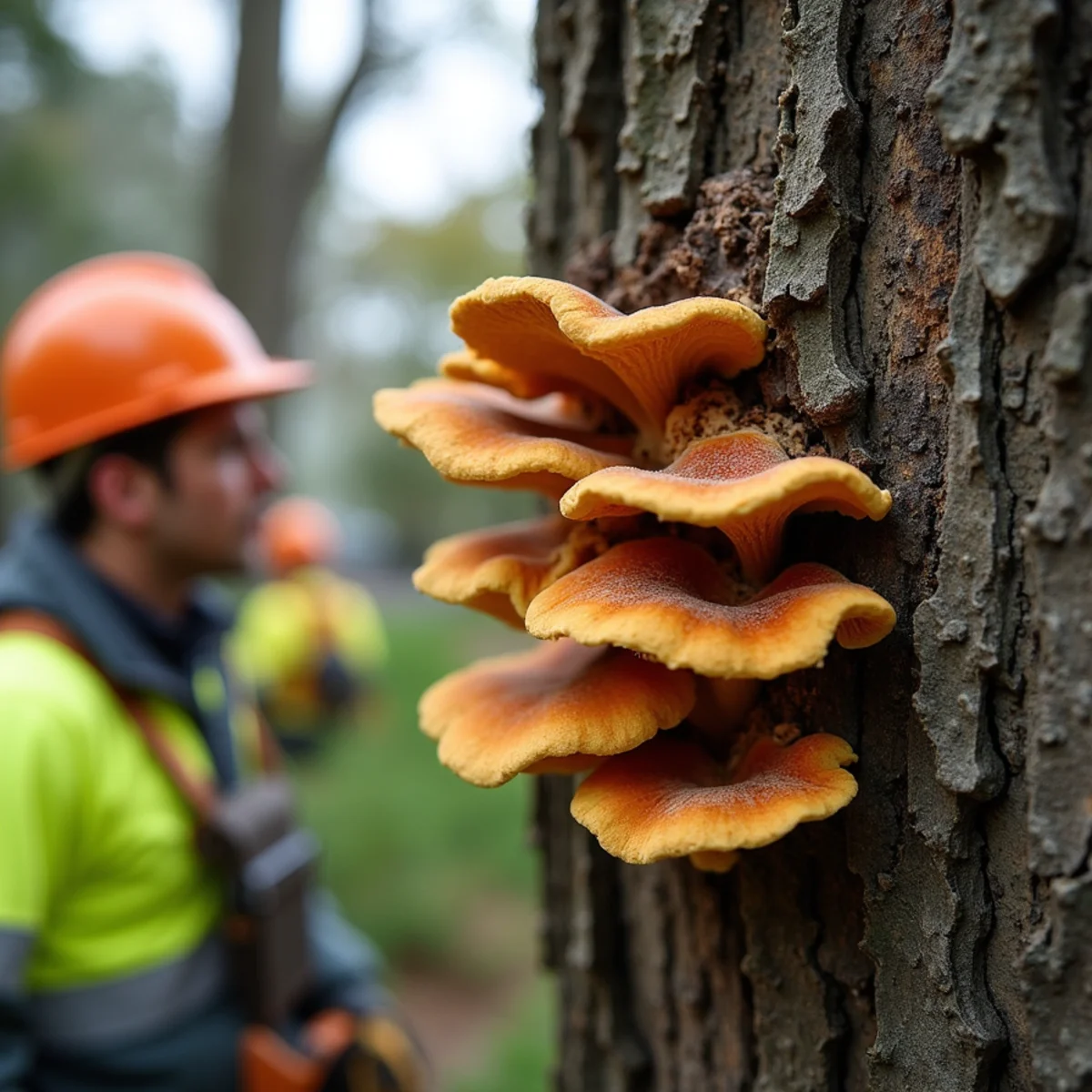
• Co-Dominant Trunks with Included Bark: When a tree divides into two or more main trunks of similar size forming a tight 'V' shape rather than a strong 'U' union, bark becomes pinched between the stems as they expand. This 'included bark' prevents wood fibers from fusing together, creating an internal wedge defect. During windstorms, torsional twisting forces split these trunks down the middle, shearing half the canopy onto roofs or driveways. • Fungal Conks & Bracket Mushrooms: The presence of shelf mushrooms (such as Ganoderma applanatum or Inonotus dryadeus) at the root collar or lower trunk flare is definitive biological proof of advanced internal heartwood or root rot. By the time fungal conks emerge, wood-decay fungi have often consumed 30% to 50% of the tree's structural lignin, leaving brittle cellulose incapable of supporting storm loads.
Sign 5 & 6: Heavy Deadwood & Canopy Wind Asymmetry
Canopy health directly reflects root stability and structural risk:
• Accumulation of Large Deadwood: Large dead branches measuring 3 inches or greater in diameter are prime storm hazards. Dry, dead wood lacks flexibility and snaps cleanly during wind gusts. Falling deadwood can penetrate roof shingles or severely injure pedestrians below. • Lopsided, Asymmetrical Canopy Balance: Trees that have been severely pruned on one side (often due to clearance around utility lines or neighbor encroachments) suffer from uneven aerodynamic loading. When strong winds strike the heavy side, the unbalanced rotational moment exerts extreme torsional shear stress on the root flare.
Sign 7: Trunk Cavities, Woodpecker Holes & Carpenter Ants
Hollow trunks and wood-boring insect activity signal significant loss of structural holding wood. While a hollow tree can remain standing if it possesses sufficient sound outer shell wood, arborist standards apply the 'one-third residual shell rule': if the sound outer wood wall thickness is less than one-third of the trunk's radius, structural failure risk under wind loading rises exponentially.
Look for active sawdust (frass) piling up around the root flare, large clusters of woodpecker holes in the main trunk column, or deep horizontal fissures in the bark. These signs indicate internal trunk decay and nesting carpenter ants that hollow out core timber.
Emergency Pre-Storm Mitigation Steps
If you observe any of these warning signs on your property, take immediate action before the next atmospheric river arrives:
1. Do Not Park or Walk Under the Tree: Move vehicles into garages or street parking away from the fall zone and keep children and pets indoors. 2. Call a Certified Arborist for Priority Assessment: Contact our Redwood City dispatch team at (213) 468-5153. We provide rapid emergency assessments to evaluate whether crown reduction pruning or complete crane-assisted extraction is necessary. 3. Crown Thinning & Weight Reduction: For structurally sound trees with excessive wind resistance, our crews perform selective crown thinning, removing up to 15% to 20% of interior lateral foliage to allow wind to pass freely through the canopy rather than acting as a solid sail.
Related Services & Coverage Areas
Related Services
Nearby Service Areas
Frequently Asked Questions
Once basal soil cracking or root plate lifting is visible, complete tree failure can happen in minutes to hours. Saturated clay soil provides zero lateral resistance once anchor roots snap. Evacuate the fall zone immediately.
Schedule Your Tree Assessment Today
Call (213) 468-5153 for prompt arborist inspections, permit assistance, and transparent estimates in Redwood City and the Peninsula.