
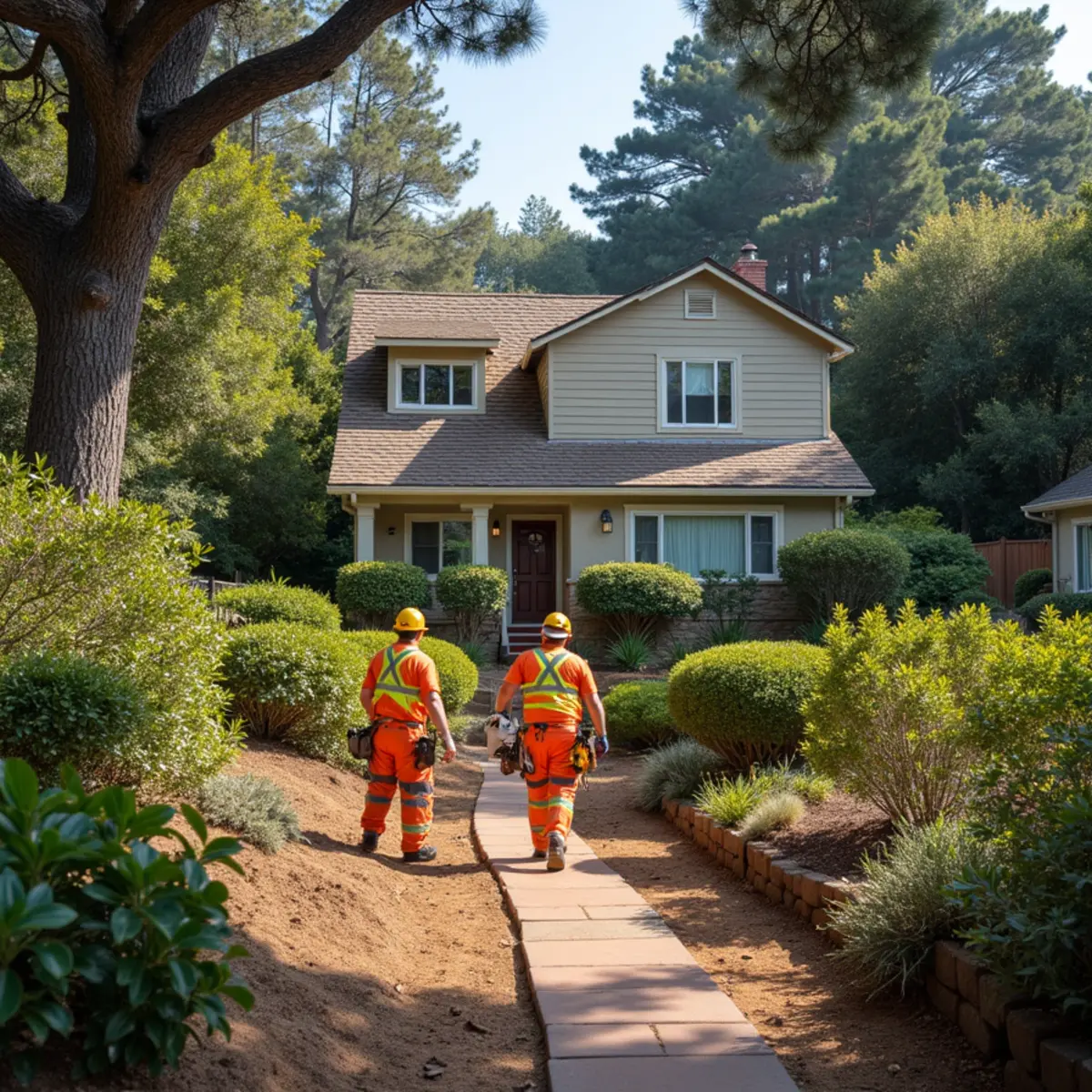
Identifying the Symptoms: When Is Defensible Space & Fire-Safe Tree Clearing Necessary in Redwood City?
Common Signs & Warning Indicators
- Tree branches overhanging rooflines, touching exterior siding, or growing within 10 feet of chimneys
- Dense, continuous brush and understory vegetation directly connecting ground grass to tree canopies (ladder fuels)
- Thick mats of dry pine needles, eucalyptus leaves, and dead twigs covering roofs and gutter valleys
- Overcrowded hillside tree clusters with interlocking canopies that allow crown fire to spread rapidly uphill
- Overgrown pyrophytic ornamental shrubs (such as junipers or cypress) planted against exterior wooden walls
- Receipt of an official Fire Hazard Abatement Notice or defensible space inspection warning from local fire agencies
Local Peninsula Environmental Triggers
Communities across the San Mateo County foothills—including Emerald Lake Hills, Woodside, Portola Valley, and Belmont Hills—sit squarely inside designated Cal Fire Very High Fire Hazard Severity Zones (VHFHSZ). These wildland-urban interface (WUI) neighborhoods feature steep canyon topography that acts as a natural chimney during wildfires. Decades of heavy vegetation growth, dry Mediterranean summer conditions, and invasive species like French broom and Tasmanian blue gum create immense fuel beds capable of igniting intense crown fires during dry autumn offshore wind events.
Under California law and local municipal ordinances, property owners bear legal responsibility for hazardous trees that threaten adjacent roadways, sidewalks, power lines, or neighboring structures. Early intervention by an ISA Certified Arborist prevents emergency failures during severe coastal weather.
What to Do First: The First-30-Minutes Tree Emergency Checklist
When a storm strikes or a tree fails, prioritize human safety before initiating cleanup. Follow these essential field steps:
Action Checklist Before Cleanup
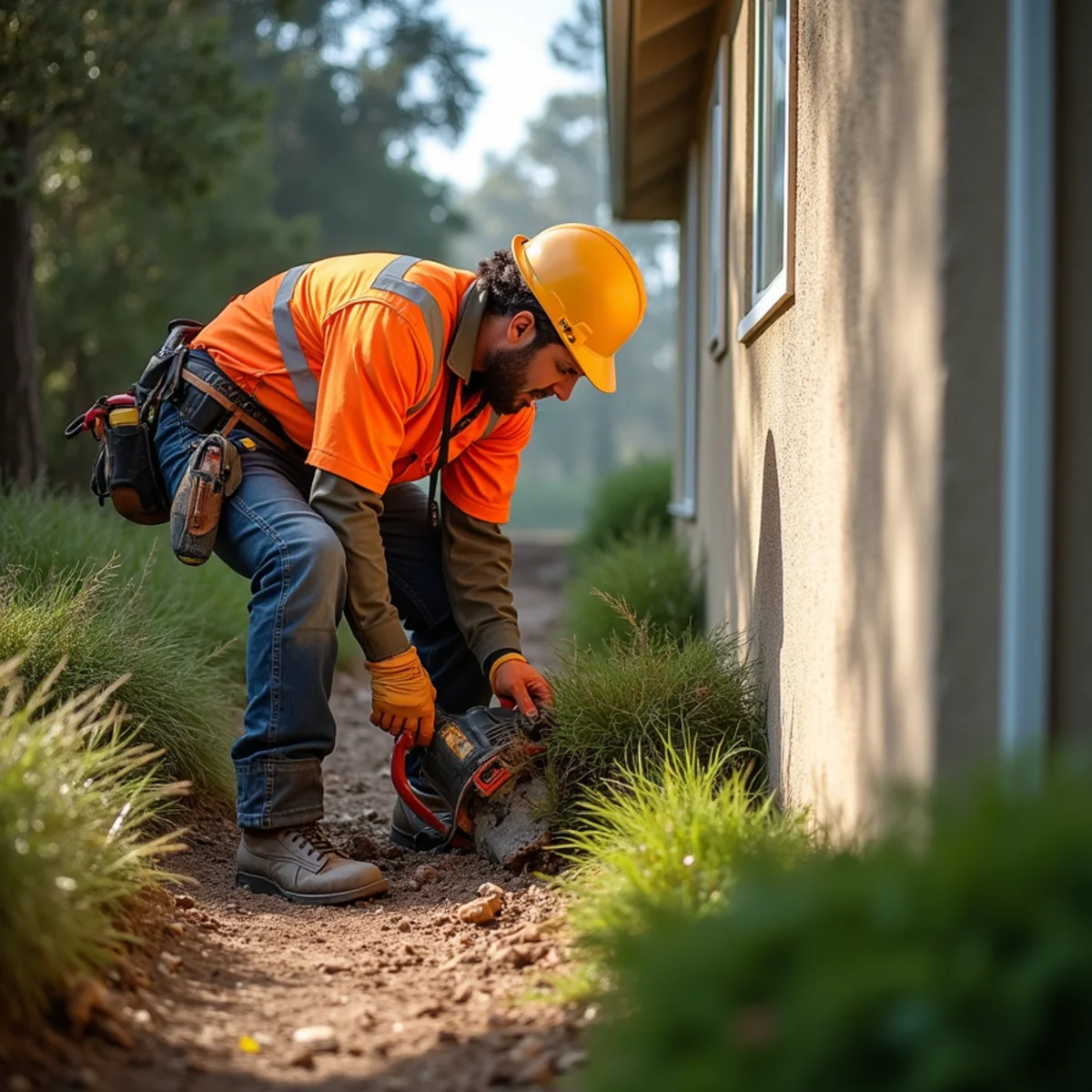
- 1Clear all dead leaves, pine needles, and combustible mulch from Zone 0—the first 5 feet immediately surrounding your home siding, decks, and foundation.
- 2Inspect your chimney: prune all tree limbs back to establish a mandatory 10-foot radial clearance in all directions.
- 3Clear gutters and roof valleys of all accumulated dry pine needles and eucalyptus leaves to eliminate primary ember ignition traps.
- 4Limb up mature trees: remove lower branches up to 6 feet (or one-third of the tree's height) from ground level to break the fire ladder.
- 5Call Honey Bear Trees at (213) 468-5153 to schedule a certified defensible space audit and fire district compliance clearing.
What to Tell Our Dispatcher
Having these property details ready helps us deploy the appropriate crane, rigging blocks, or line-clearance equipment immediately:
- Exact property address and parcel size (e.g., 0.25 acre, 1 acre hillside, 5-acre estate)
- Local fire agency jurisdiction (Redwood City Fire Department, Woodside Fire Protection District, San Mateo County Fire, Cal Fire)
- Did you receive an official inspection notice or citation with specific required abatement items?
- General slope terrain (flat parcel, moderate incline, steep 30%+ canyon grade)
- Site access constraints for commercial wood chippers, grapple trucks, or tracked mini-loaders
Common Tree Hazards in Redwood City: Causes, Signs & Immediate Safety Steps
Use this diagnostic reference to identify hazardous structural conditions and coordinate safe next steps without putting family or property at risk:
| Cause | Warning Signs | Immediate Response | Who to Call | Documentation |
|---|---|---|---|---|
| Zone 0 Ember-Ignition Perimeter (0 to 5 Feet from Foundation) | Vegetation touching siding, combustible wood bark mulch against stucco, dead vines climbing walls | Remove flammable mulch; replace with gravel, bare dirt, or concrete pavers; pull dead vines off siding | Call Honey Bear Trees at (213) 468-5153 for complete foundation zone clearing and woody plant extraction | Photograph foundation perimeter, identifying all vegetation within 5 feet of structural exterior walls |
| Vertical Ladder Fuels (Connecting Ground Brush to Upper Canopies) | French broom, coyote brush, or ornamental shrubs growing directly beneath the low-hanging branches of mature oaks or pines | Do not burn or leave cut brush in piles; cut low-growing shrubs flush with the soil surface | Call our crew to prune lower tree limbs 6 to 10 feet up and clear brush to prevent ground fires from crowning | Photograph understory brush height relative to lower tree branches before clearing operations |
| Horizontal Canopy Overcrowding on Steep Slopes (>20% Grade) | Dense, touching tree canopies on hillside slopes below homes; fire travels twice as fast up a 20% slope | Identify trees that can be safely thinned without compromising hillside soil and root plate stability | Contact our certified arborists for selective canopy thinning, crown spacing, and TRAQ stability reviews | Measure slope incline and document crown spacing between adjacent trees across the property boundary |
| Overhanging Branches & Inadequate Chimney Clearances | Heavy tree limbs extending over roof shingles or branches within 10 feet of a wood-burning chimney flue | Keep spark arrestor chimney caps clean; do not use fireplaces until encroaching limbs are cleared | Call Honey Bear Trees for aerial bucket truck precision pruning to establish certified 10-foot clearances | Photograph roof overhangs from multiple angles showing distance from shingles and chimney sparks |
| Dense Pyrophytic Plantings (Juniper, Cypress, Pine, Eucalyptus) | Hedge of Italian cypress or sprawling tam junipers loaded with volatile oils planted against decks or fences | Keep fire hoses accessible; prune out dead interior needle wood until full removal can be scheduled | Call (213) 468-5153 for hazardous pyrophytic shrub removal, root extraction, and fire-safe replanting advice | Document proximity of flammable hedge plantings to wooden fences, decks, and neighbor dwellings |
Request an On-Site Assessment for Defensible Space & Fire-Safe Tree Clearing
Speak with our local Redwood City dispatch team at (213) 468-5153 to discuss your tree situation and schedule an arborist evaluation.
Our Methodological Standards for Defensible Space & Fire-Safe Tree Clearing
Our ISA Certified Arborists conduct comprehensive perimeter audits aligned with California Public Resources Code Section 4291 and local fire protection district standards. We assess three mandatory perimeters: Zone 0 (the critical 0-to-5-foot ember-resistant perimeter around foundation walls), Zone 1 (the 5-to-30-foot lean, clean, and green zone), and Zone 2 (the 30-to-100-foot fuel reduction zone), measuring slope-adjusted canopy spacing and vertical ladder fuel clearances.
Zone-by-Zone Canopy Limbing & Vertical Separation
We systematically prune lower tree branches 6 to 10 feet off the ground (or one-third of total tree height for younger trees). This creates a minimum vertical gap between ground vegetation and the tree canopy, ensuring surface fires cannot ignite tree crowns.
Slope-Adjusted Crown Spacing & Canopy Thinning
Wildfires burn faster and hotter as slope steepness increases. On steep 20% to 40% hillside slopes, our arborists thin tree clusters to maintain a minimum of 10 to 20 feet of horizontal space between crowns, stopping canopy-to-canopy fire leap.
On-Site High-Capacity Chipping & Biomass Removal
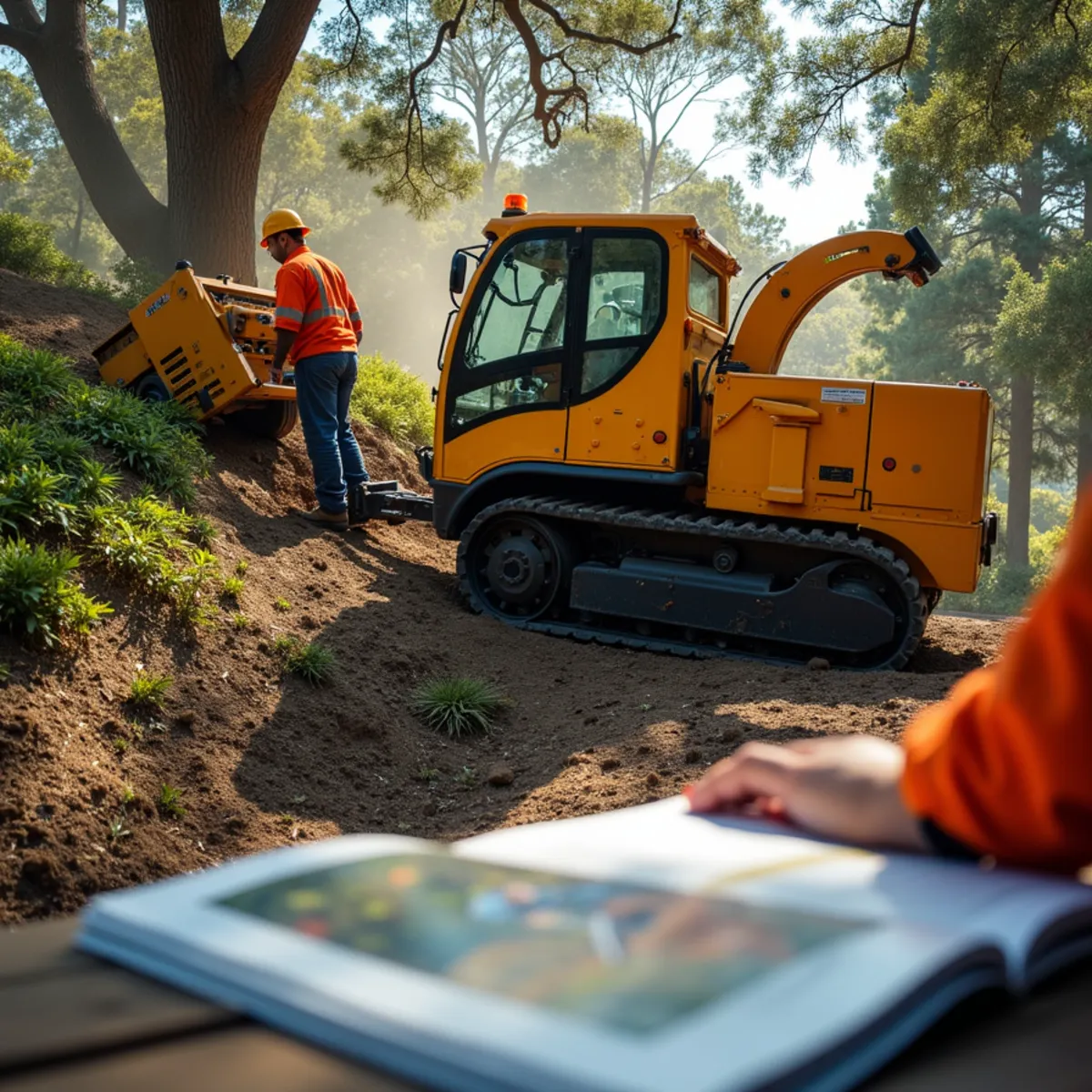
All cleared brush, limbs, and ladder fuels are fed through industrial chippers. We can broadcast fine wood chips across designated restoration areas (kept 30 feet back from structures) or haul all organic biomass off-site to local commercial compost facilities.
Step-by-Step Execution: From Inspection to Final Cleanup
Cal Fire PRC 4291 Perimeter Audit & Mapping
An ISA Certified Arborist surveys your property lines, measuring distances from all structures to map out Zone 0 (0-5 ft), Zone 1 (5-30 ft), and Zone 2 (30-100 ft).
Zone 0 Ember-Resistant Perimeter Clearing
We remove all combustible vegetation, tree branches touching walls, and organic mulches within 5 feet of foundations, decks, and siding.
Roof, Eave & Chimney Clearance Pruning
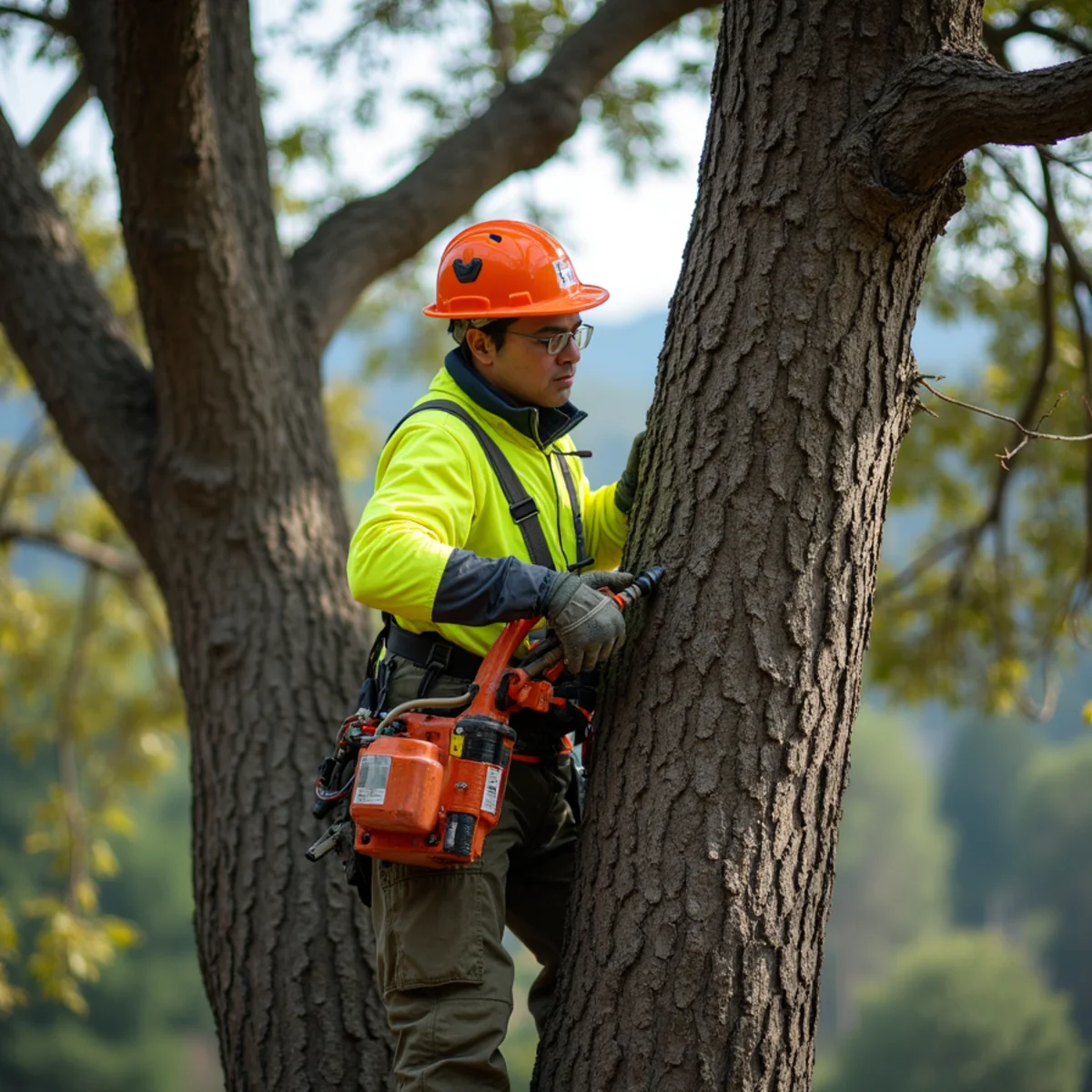
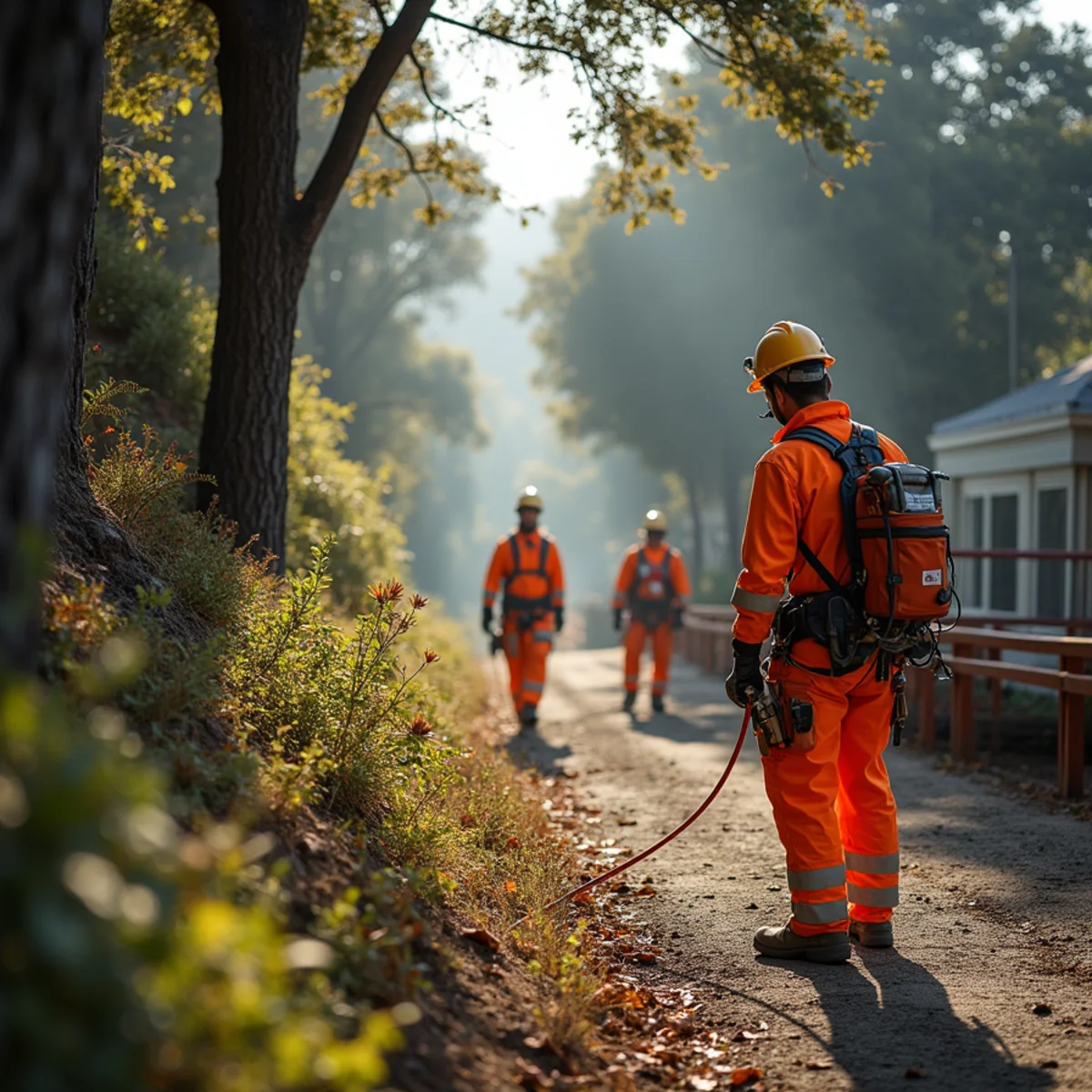
Climbers and bucket crews prune all overhanging limbs to establish a minimum 10-foot clear zone around chimneys and remove dead branches over roofs.
Vertical Ladder Fuel Elimination (6-10 Ft Limbing)
Our team cuts away lower branches of mature trees up to 6-10 feet from grade and removes all understory brush growing beneath tree drip lines.
Canopy Spacing & Crown Thinning on Slopes
We selectively thin overcrowded tree canopies to establish horizontal crown separation appropriate for the slope gradient under Cal Fire guidelines.
Biomass Chipping & Fire District Compliance Sign-Off
All debris is chipped and hauled away, leaving clean ground contours ready to pass official fire district defensible space inspections.
How Much Does Tree Service Cost in Redwood City?
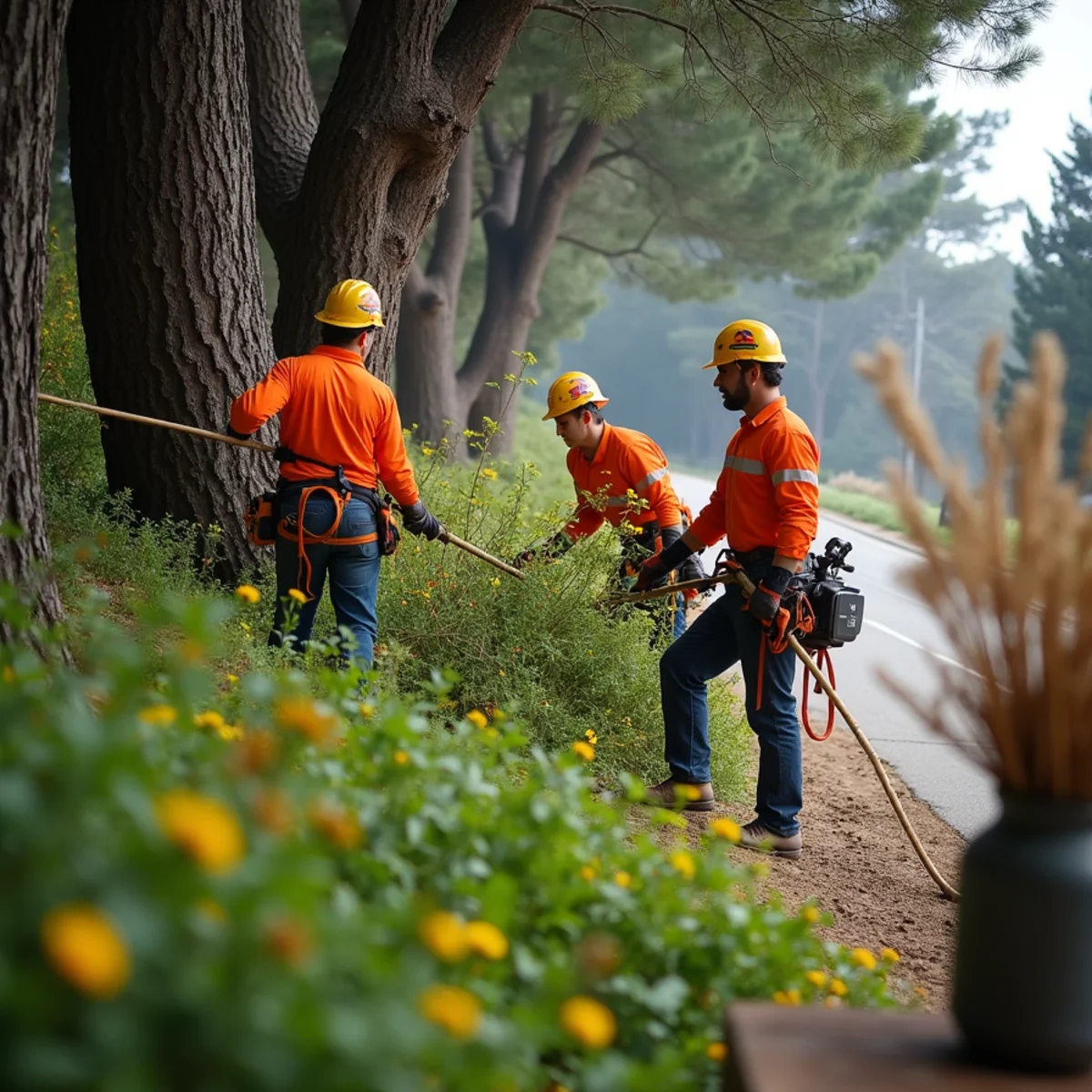
In accordance with California consumer protection standards, we do not quote arbitrary flat rates. Every estimate is custom-engineered based on the physical realities of your property:
Roof clearance pruning, limbing up trees to 6-8 feet, weed whipping grass, on-site brush chipping and disposal.
Steep slopes requiring safety harnesses, heavy French broom clearing, selective tree canopy thinning, ladder fuel removal.
Acreage properties in Woodside or Portola Valley, perimeter fire breaks, eucalyptus stand thinning, tracked forestry mulching.
Targeted abatement of specific violation checklist items issued by Woodside Fire or San Mateo County Fire inspectors.
Local Species & Redwood City Neighborhood Risk Profiles
Every Redwood City neighborhood presents distinct geological, architectural, and access dynamics that dictate equipment staging and rigging methods:
Steep mountain terrain with thick conifer and oak forest litter, deep ravines, and high fuel loads.
Strict Woodside Fire Protection District enforcement; extreme ladder fuels and heavy Monterey pine deadfall.
Elevated valley floor and rolling grassy hills bordered by dense native chaparral and heritage oak woodlands.
Rapidly spreading grass and brush fires climbing into low-hanging oak canopies along property lines.
Narrow, winding hillside roads with steep residential parcels, rocky soils, and dense mature tree cover.
Limited evacuation corridors; dense eucalyptus and pine canopies overhanging narrow private driveways.
Expansive hillside estate parcels with steep slope gradients and heavy natural underbrush growth.
Long driveway access corridors requiring 14-foot vertical vehicle clearance and extensive 100-foot Zone 2 buffers.
Key Tree Species Considerations in Redwood City
French Broom (*Genista monspessulana*)
Highly invasive flammable shrub that forms dense continuous thickets acting as a direct fire bridge into tree canopies.
Coyote Brush (*Baccharis pilularis*)
Native chaparral shrub that accumulates large volumes of dead, dry woody fuel beneath outer green leaves.
Monterey Pine (*Pinus radiata*)
Resin-rich conifer that sheds heavy carpets of flammable needles; dead lower branches carry fire into crowns.
Tam Juniper & Italian Cypress (*Cupressus sempervirens*)
Volatile ornamental plants with dense combustible oils; burn with extreme heat when ignited by drifting embers.
Municipal Permit Compliance & Contractor Credentials
California Public Resources Code (PRC) Section 4291 mandates that property owners maintain 100 feet of defensible space around all structures in State Responsibility Areas. Local ordinances, including Woodside Fire Protection District and San Mateo County Fire regulations, enforce stringent Zone 0 (0-5 ft ember-resistant buffer), Zone 1 (5-30 ft lean and clean), and Zone 2 (30-100 ft fuel reduction) standards. Trimming limbs and clearing brush for fire safety does not require city permits, but removing protected trees (12+ inches DBH in Redwood City) requires arborist documentation.
Questions to Verify Before Hiring Any California Tree Service Contractor:
- ISA Certified Arborist (Credential WE-12849A): Credentialed arborist on site to ensure fire clearing prunes trees properly without destabilizing structural branch health.
- California State Contractors License (CSLB): Active C-61 / D49 Tree Service specialty license (Honey Bear Trees Lic #1084291) in full legal standing.
- $2,000,000 Commercial General Liability Insurance: Comprehensive coverage protecting high-value hillside real estate during mechanized clearing and tree work.
- Low-Impact Tracked Hillside Equipment: Commercial wood chippers, mini-skid steers, and winch-assisted rigging tools suited for steep 30%+ grades.
- Local Fire Protection District Protocol Mastery: Direct working relationships and compliance expertise with Woodside Fire, San Mateo County Fire, and Cal Fire inspectors.
Frequently Asked Questions About Defensible Space & Fire-Safe Tree Clearing
California Public Resources Code Section 4291 requires 100 feet of defensible space around all occupied structures in fire-hazard zones. This is divided into Zone 0 (0 to 5 feet: ember-resistant perimeter free of combustible materials), Zone 1 (5 to 30 feet: lean, clean, and green zone with manicured plants and cleared deadwood), and Zone 2 (30 to 100 feet: reduced fuel zone with limbed-up trees and spaced canopies). Honey Bear Trees brings your parcel into full compliance.
Related Tree Services, Local Guides & Service Areas
Helpful Tree Care Articles
Primary Service Locations
Get a Free Estimate for Defensible Space & Fire-Safe Tree Clearing
Call (213) 468-5153 to speak directly with our arborist team. We answer calls around the clock and provide fast on-site evaluations across Redwood City and San Mateo County.